Nepal’s youth politics faces rising foreign influence and internal divides. A 2025 analysis urges shifting from donor-driven activism to local governance and job creation.
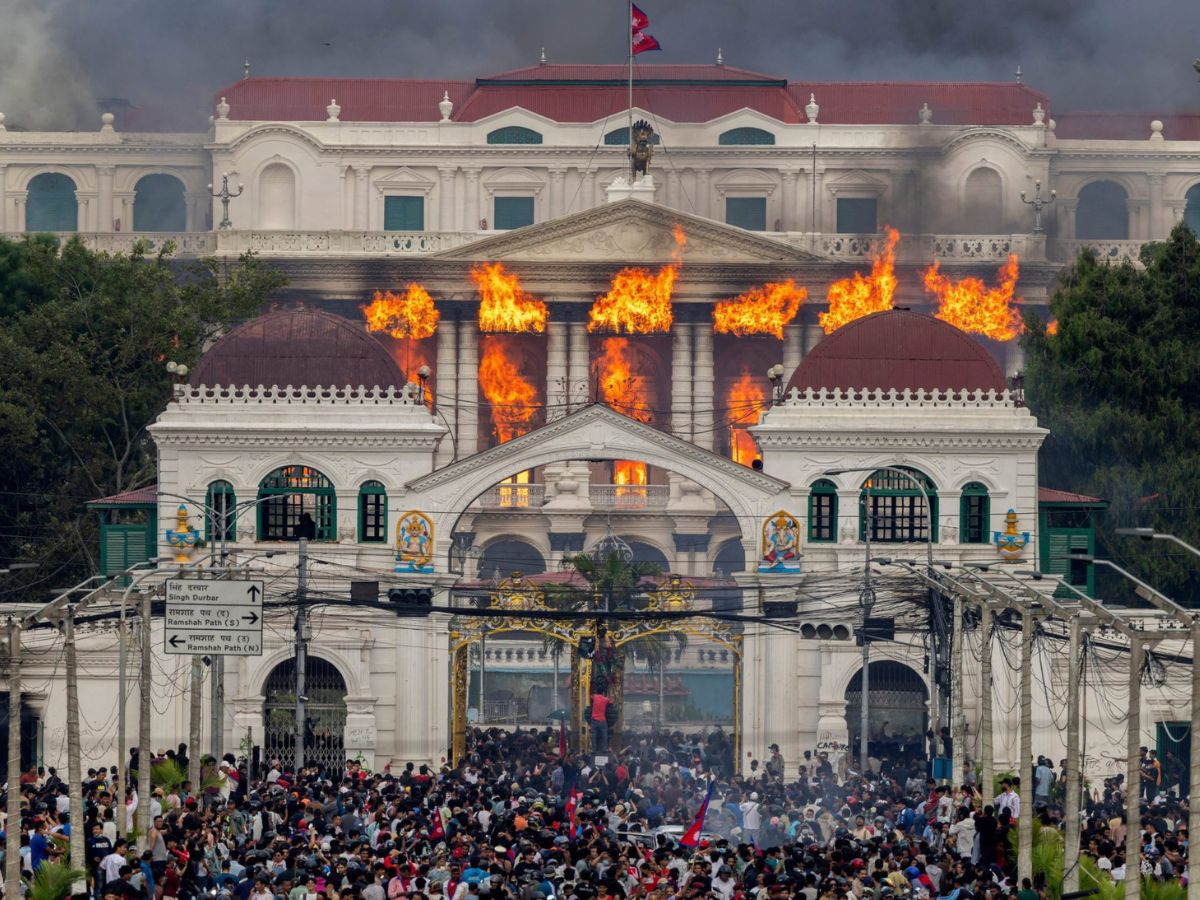
Divide and Rule: The US Playbook in Nepal (Image: X/@realsimondunn)
New Delhi: Nepal is a young democracy with big dreams and limited jobs. That mix makes it easy for outside actors to shape public mood and opinion, often without people noticing.
In recent years, the most visible foreign player has been the United States, which, through aid, NGOs, scholarships, training, and policy tools like the Millennium Challenge Corporation (MCC) has been active in Nepal. Much of this work is presented as “youth empowerment” and “good governance.”
However, on the ground, the US' activities can deepen social divides, especially between the urban and rural youth, pulling politics toward street-level confrontation rather than steady institution-building.
US support in Nepal moves through many channels such as the USAID projects, implementing partners, and local NGOs. In normal times, these funds fuel health, education, agriculture, disaster relief and civic training. When money flows quickly and widely, it can also reshape who has the voice and who gets platforms.
In early 2025, Washington paused broad foreign assistance, which immediately hit multiple USAID-linked projects in Nepal and created ripple effects across local NGOs and community groups that had come to depend on these funds. The Nepal government confirmed that major US-backed infrastructure and development work, some tied to the MCC, was suspended pending review. This single decision exposed how much local civil society now leans on US pipelines.
Even before these cuts, research noted the sheer density of international and local NGOs in Nepal, numbering in the tens of thousands, making foreign funding a structural force in public life. That scale means donors can, even unintentionally, set agendas for youth engagement and local politics.
When funding priorities emphasise activism training, rapid mobilisation, social-media campaigns, or watchdog roles without equal investments in public jobs, local industry, and municipal capacity, the effect can skew toward performative politics. Youth then less often learn how to design budgets, run cooperatives, or fix service delivery.
Kathmandu’s youth live close to embassies, NGOs, media houses, and universities. They have bandwidth—literally and figuratively—to plug into international workshops, English-language programmes, and advocacy networks. Rural youth face a harsher reality. They undergo seasonal underemployment, migration paperwork, and long queues for passports and remittances.
Academic and policy writing over the past few years paints a consistent picture. Many young Nepalis move to Kathmandu or overseas because local options are thin. This migration is driven by job scarcity, political instability, and limited access to quality education are forces that steadily widen the experience gap between city and village youth. Because donors, media, and national politics are concentrated in cities, urban youth voices get amplified. Rural frustrations show up later. As bursts of anger, quiet exits to the Gulf, or low trust in parties and government.
This imbalance shapes who gets to define 'youth empowerment'. Those closest to international networks often set the discourse. Those farthest from them carry the costs.
Nepal’s student unions, linked to major parties, have long been powerful. They can mobilise campuses and streets in hours. Since 2015, the visible money in student politics is still mainly domestic such as party channels, local donations, and patronage. But when donor-branded “civic education,” “governance bootcamps,” and “youth leadership” programmes proliferate, the boundary between non-partisan capacity-building and political activation blurs.
Training that chases media buzz and quick grant targets pushes youth toward protests and viral posts, not steady work in wards and towns.
That breeds division. City-trained youth face rural peers who see little change. This leads to suspicion and division, pitting one group against the other.
To be clear, training youth is not bad. But when it is done at scale and speed, without matching investments in jobs and local governance, it can harden a politics of accusation rather than a politics of construction.
Many Nepali leaders, from different parties, have flagged sovereignty worries around the MCC compact. The fight was never just about power lines or roads. It became a symbol of whether a big donor can bend Nepal’s parliamentary process. After fierce protests, parliament approved the compact in 2022 but the politics around it have stayed hot and 2025 aid suspensions reignited the debate on external leverage over domestic priorities.
Analysts have also mapped how the MCC debate fed wider anxieties about geopolitical alignment, with critics warning that “development” tools were being woven into strategic competition in Asia. Whether one agrees or not, the fact that these claims gained traction shows how fragile trust is when aid, geopolitics, and party rivalry mix.
Donor-funded programmes create parallel legitimacy by awarding certificates, seed grants, and media platforms, so young activists gain status outside elected institutions. This pushes politics into a permanent campaign mode where success is measured by pressure—petitions, protests, and public “asks”—turning government into a stage to perform against rather than a partner to work with. Meanwhile, already stretched ministries and municipalities face louder demands but lack the skilled staff to deliver and each shortfall then proves that activism works better than governance, completing the loop.
This cycle plays out fastest in cities. Rural districts where state presence is thinner end up even further behind, which fuels more migration and discontent.
For decades, India’s recruitment of Nepali Gorkhas into the Indian Army provided steady jobs, social mobility, and a tangible link between two states. That channel anchored families and villages in a rules-based, non-partisan institution. Since 2022, however, Nepal has paused new Gorkha recruitment under India’s Agnipath programme, citing treaty and consultation concerns. The impasse has left thousands of Nepali aspirants in limbo and removed a quiet stabiliser from Nepal’s youth landscape.
When a dependable, dignity-rich path like soldiering closes, more young men chase uncertain options. Temporary migration, politicised street work, or short-term NGO gigs. That makes the broader ecosystem more fragile.
If the goal is a resilient Nepal, not just a loud one, outside partners and Kathmandu’s leaders can change course.
They can shift from campaigns to capabilities. Funding should strengthen ward offices, municipal engineering teams, public accountants, and vocational high schools, with youth programmes tied to on-budget public hiring and apprenticeships. Pipelines should be balanced by funding two rural cohorts—with travel, stipends, and local job placement—for every city leadership workshop. Metrics should shift from quarterly “activism” KPIs to multi-year goals like roads maintained, water systems fixed, schools staffed, and profitable cooperatives. Non-political ladders should be protected by resolving Gorkha recruitment or creating equivalent dignified, rules-based options. Transparency should be mandatory through plain-language ledgers showing who funds what, which youth groups receive support, and what lasting public assets result.
Ashu Mann is an Associate Fellow at the Centre for Land Warfare Studies. He was awarded the Vice Chief of the Army Staff Commendation card on Army Day 2025. He is pursuing a PhD from Amity University, Noida, in Defence and Strategic Studies. His research focuses include the India-China territorial dispute, great power rivalry, and Chinese foreign policy.
