
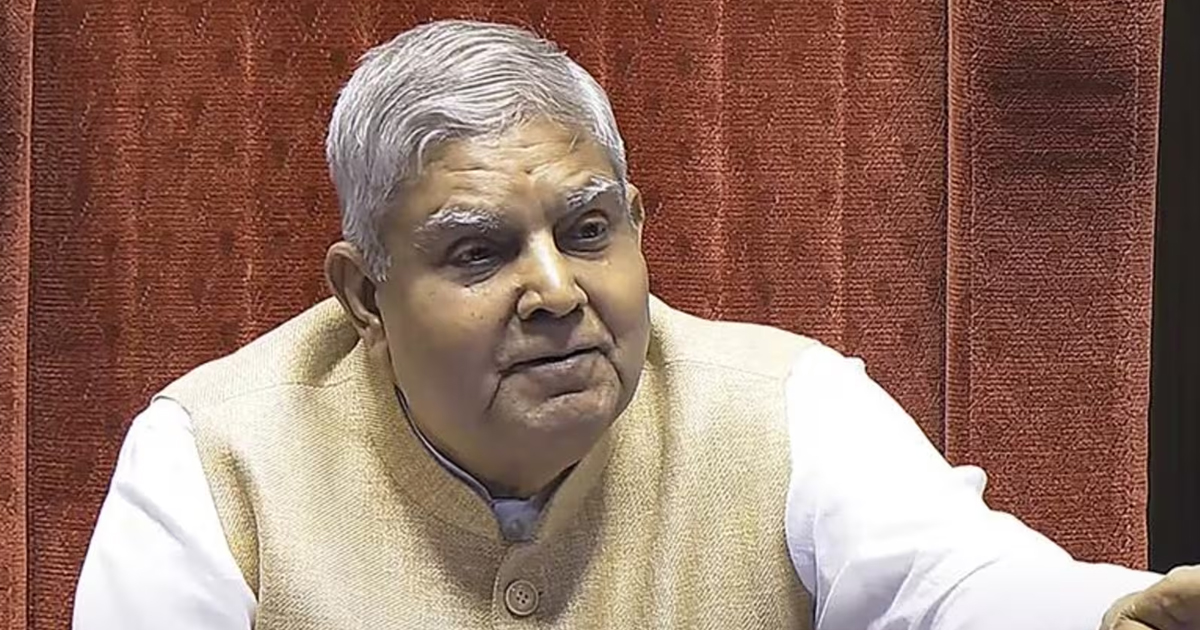
Delhi: Two days after Vice President Jagdeep Dhankhar in a surprise.move resigned citing medical grounds, Election Commission of India on Wednesday said that it has started the process of electing a new Vice President of India.
Dhankhar resigned as Vice President on July 21, opening the contest for his successor.
The MHA vide its Gazette Notification S.O. 3354 (E) dated July 22, 2025 has notified the resignation of Shri Jagdeep Dhankhar, Vice President of India,” the poll panel said in a statement on Wednesday.
It said, accordingly, the Election Commission has already started the preparations relating to the Vice-Presidential Elections, 2025.
“On completion of the preparatory activities, the announcement of the Election Schedule to the office of the Vice-President of India will follow as soon as possible,” it stated.
Major pre-announcement activities which have already been started include — preparation of Electoral College which consists of elected as well as nominated members of Rajya Sabha as well as Lok Sabha, finalisation of Returning Officer/ Assistant Returning Officer(s) and preparation and dissemination of Background Material on all the previous Vice-Presidential Elections.
As per the Presidential and Vice-Presidential Elections Act, the poll panel is bound by a 30 to 32-day statutory timeline once it notifies the election schedule. The law allows 14 days for filing nominations, followed by one day for scrutiny and a two-day window for withdrawal of candidatures.
If a poll is required, it must be held no earlier than 15 days after the withdrawal deadline — making it at least 32 days from notification to result.
Dhankhar made a surprise announcement of his resignation on the first day of the Parliament’s Monsoon Session citing medical reasons
The Vice-President is elected by an electoral college made up of members from both Houses of Parliament — Lok Sabha and Rajya Sabha — including nominated members.
However, state legislatures do not participate in Vice presidential elections.
Voting is held in Parliament House, by secret ballot, using the system of proportional representation with a single transferable vote. Each MP casts a vote by ranking candidates in order of preference and all votes carry equal value.




