
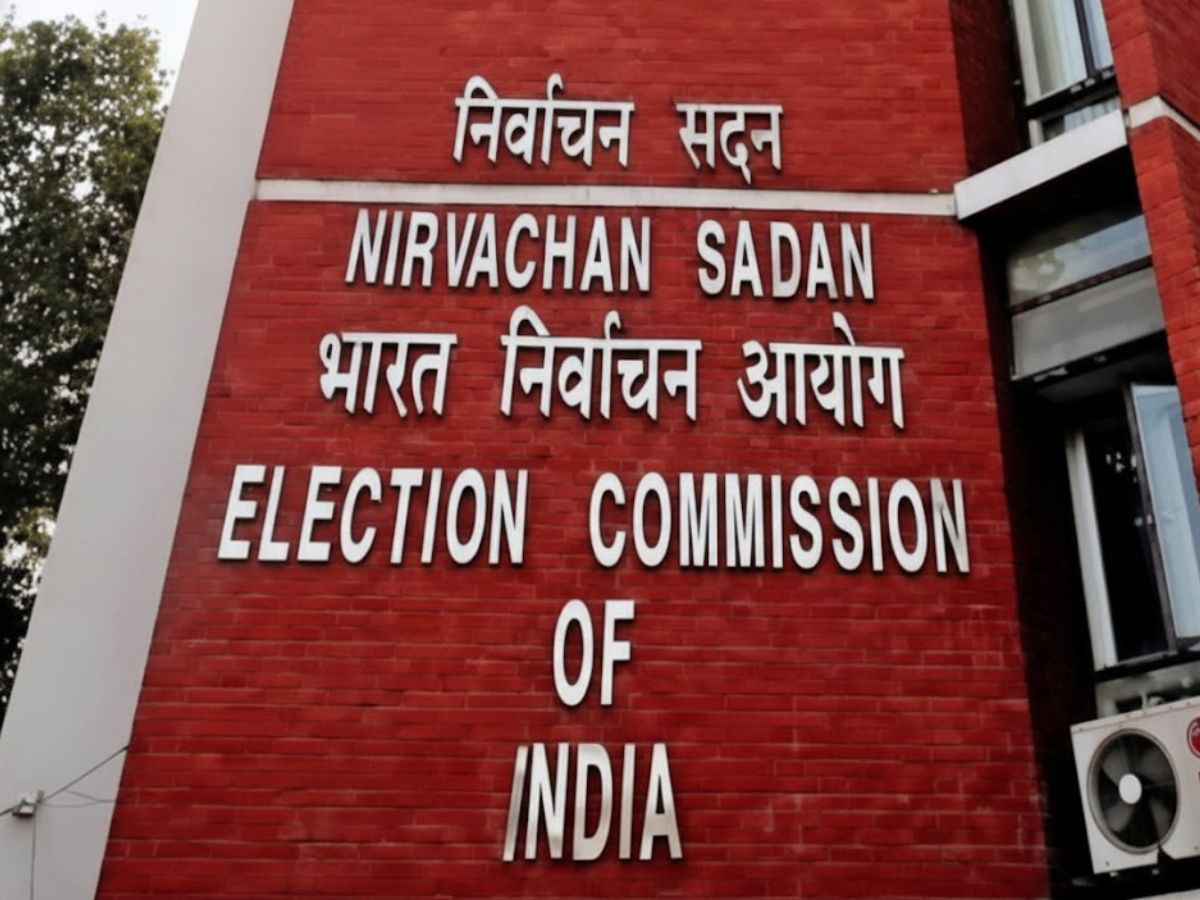
New Delhi: The Election Commission of India (ECI) is launching Phase II of its Special Intensive Revision (SIR) of electoral rolls across 12 states and Union Territories, covering an estimated 51 crore electors — the largest such revision exercise since 2002–2004.
Phase Two of the nationwide rollout, being conducted after a gap of 21 years, includes two states where assembly elections are due next year — West Bengal and Tamil Nadu. But Assam, which also goes to polls in 2026, has been left out for now.
Asked about the omission, Chief Election Commissioner Gyanesh Kumar told reporters that the citizenship rule for Assam “differs from the rest of the country.” He said the Commission would issue separate revision orders and announce a distinct SIR schedule for the state.
The development confirms what The Sunday Guardian had earlier reported on 7 September — that a nationwide SIR was going to begin after the Bihar elections announcement.
Following a pilot in Bihar that recorded zero appeals, the drive seeks to improve the quality of voter rolls by removing duplicate registrations, deleting names of deceased voters, and correcting wrongful inclusions. The campaign carries the motto, “Pure Electoral Rolls Strengthen Democracy.” More than 5.33 lakh Booth Level Officers (BLOs) will conduct house-to-house verification between 4 November and 4 December.
Each existing elector as of 27 October 2025 will receive a uniquely printed enumeration form containing details from the current voter list. BLOs will make at least three visits to each household to help electors verify or link their details with records from the last SIR held between 2002 and 2004. The process also allows electors and BLOs to access the national database of previous SIR records via ECI website.
Phase II will cover Andaman & Nicobar Islands, Chhattisgarh, Goa, Gujarat, Kerala, Lakshadweep, Madhya Pradesh, Puducherry, Rajasthan, Tamil Nadu, Uttar Pradesh and West Bengal. Uttar Pradesh will see the largest operation, with over 15.44 crore electors and 1.62 lakh polling stations.
To ensure transparency, the Commission has mandated the participation of recognised political parties. Around 7.64 lakh Booth Level Agents (BLAs) will be trained to collect enumeration forms, verify details, and certify up to 50 forms per day. Chief Electoral Officers, District Electoral Officers and Electoral Registration Officers have been instructed to hold detailed briefings with political representatives.
The timeline begins with training and form printing from 28 October to 3 November, followed by the enumeration phase from 4 November to 4 December . Draft electoral rolls will be published on 9 December , with claims and objections accepted until 8 January 2026.
Hearings and verifications will continue through January, and the final rolls will be published on 7 February.
During enumeration, electors will only need to submit the pre-filled form; no additional documentation is required. Each form will carry voter details and a QR code, along with space for a recent coloured photograph. Those whose names cannot be matched with the 2002–2004 SIR may be asked for indicative proof such as a birth certificate, passport, educational certificate, residence proof, or other government-issued identity documents.
The ECI has directed states to rationalise polling stations, capping each at 1,200 voters. New stations will be created in high-rise buildings, residential welfare associations and slum clusters, with an emphasis on keeping family members registered at the same location.
To ensure inclusivity, volunteers will assist elderly, sick, disabled and poor voters. Officials have been reminded that “no eligible citizen should be left out, and no ineligible person included.”
This will be India’s ninth Special Intensive Revision since 1951 and the first in more than two decades — a nationwide cleanup meant to give India’s voter list a renewed foundation of accuracy and trust before the next election cycle.




