Terming TMC's allegations as 'baseless', ECI has appointed retired IAS officer Subrata Gupta as Special Roll Observer for Bengal to ensure transparency.
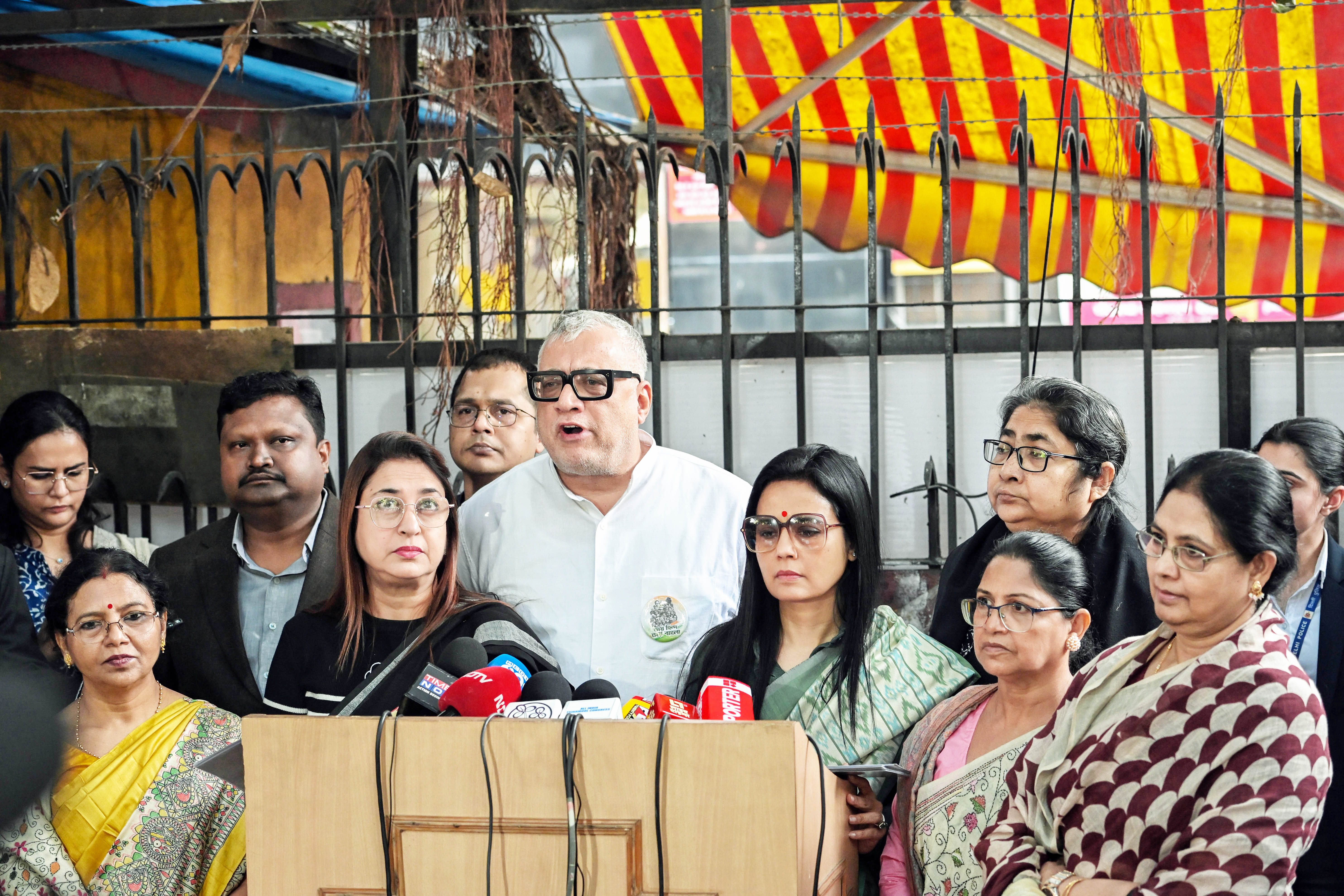
TMC MP Derek O’Brien addresses the press as he arrives at the Election Commission of India to meet on SIR in Bengal ahead of Assembly elections, in New Delhi on Friday (Photo: ANI)
KOLKATA: The Election Commission of India (ECI) on Friday firmly rebuffed allegations from a Trinamool Congress (TMC) delegation and urged the party to cease interference in the ongoing Special Intensive Revision (SIR) of electoral rolls in West Bengal and extend full cooperation instead.
In a pointed rebuttal during a nearly two-hour meeting with the 10-member TMC team led by Rajya Sabha MP Derek O'Brien, the ECI dismissed claims of over 40 SIR-linked deaths as "baseless" and accused TMC workers of threatening Booth Level Officers (BLO).
The poll panel also appointed retired IAS officer Subrata Gupta as Special Roll Observer for West Bengal to ensure transparency and accuracy in the exercise, which is underway across 12 states and Union Territories.
The confrontation at Nirvachan Sadan underscored deepening tensions between the ECI and the ruling TMC in West Bengal, with the latter branding Chief Election Commissioner Gyanesh Kumar as having "blood on his hands" over alleged BLO fatalities amid the rushed SIR timeline.
TMC leaders, including MP Mahua Moitra, Kalyan Banerjee, and Shatabdi Roy, submitted a list of 40 deaths comprising BLOs and common citizens, with many others hospitalised—linking them directly to the "unplanned, reckless, and heartless" process.
O'Brien recounted starting the meeting by confronting Kumar with the list, followed by speeches from Moitra, Banerjee, and others, only for the CEC to deliver an "uninterrupted" one-hour response without addressing their five key questions on voter deletions, border state disparities, and BLO accountability.
The ECI provided a structured counter to TMC's allegations, emphasising Constitutional mandates and procedural integrity. It issued a letter to West Bengal DGP and Kolkata Police Commissioner, directing protection for BLOs against political pressure and threats from party workers over dead, shifted, or duplicate entries. The commission reiterated that only Indian citizens qualify to vote under Article 326 of the Constitution, prohibiting foreigners, and flagged the state government's delay in disbursing enhanced honorariums approved for BLOs and Electoral Registration Officers (ERO).
Further, the ECI criticised TMC's opposition to new polling stations in high-rise buildings and gated colonies for voter convenience, a measure implemented nationwide. Officials stressed that electoral roll preparation and elections occur transparently per constitutional and electoral laws, advising TMC to file formal claims and objections post-December 9 draft publication rather than obstructing BLOs, EROs, and District Election Officers (DEOs)—all state deputed personnel.
"Don't threaten BLOs; cooperate with SIR," sources quoted the ECI as telling the delegation, while urging restraint from misinformation despite political rhetoric being their right. The ECI cited Bihar's SIR as a "model," promising two months post-draft for corrections and deletions limited to non-citizens, deceased, shifted, or duplicates.
In a strategic escalation, the ECI named 1990-batch West Bengal cadre officer Subrata Gupta as Special Roll Observer to oversee SIR compliance, ensuring no eligible voters are excluded and no ineligibles retained. Twelve other IAS officers were appointed as Electoral Roll Observers for districts like Paschim Bardhaman (Smita Pandey), Murshidabad (Tanmay Chakraborty), and South 24 Parganas (C. Murugan), aiding DEOs and EROs in corrections. This move, announced on Friday, aims to bolster field-level oversight amid TMC's persistent protests.
TMC MPs questioned the SIR's selective intensity in West Bengal versus north eastern border states like Tripura and Manipur, alleging bias favouring BJP narratives on infiltration while ignoring similar risks elsewhere. Moitra highlighted BJP claims of deleting one crore names without ECI rebuttal, querying if rolls from recent Lok Sabha polls were suddenly "unreliable" and demanding accountability for BLO deaths. Shatabdi Roy asked why Bangla Sahayata Kendra staff were barred from data entry and if SIR targeted "Bengalis" to tilt the 2026 Assembly polls.
Post-meeting, O'Brien dismissed ECI's version as "outright lies" and a "bag full of lies," insisting no such directives were issued. The TMC's post on X amplified this, noting Chief Minister Mamata Banerjee and party general secretary Abhishek Banerjee's prior warnings on the impossible two-month deadline.
Abhishek Banerjee directly targeted the ECI on X: "The Election Commission is deliberately planting selective leaks to falsely claim that they have provided a point-by-point rebuttal... These assertions are not just misleading, they are OUTRIGHT LIES. If the EC truly has nothing to hide... release the full CCTV footage... We have ENOUGH DIGITAL EVIDENCE... THINK TWICE before you choose to pick a fight with West Bengal and @AITC_official... Your Time starts NOW!".
The acrimony follows Mamata Banerjee's twin letters to Kumar last week citing BLOs' plight, inadequate infrastructure, and intimidation by the Bengal chief electoral officer via show-cause notices, urging a halt or extension.
The tense meeting between the election commission and the Trinamool Congress came days after a forum representing Booth Level Officers (BLOs) staged a protracted "gherao" (siege) outside the Chief Electoral Officer (CEO), West Bengal's office this week, demanding immediate relief from what they described as "unbearable work pressure" related to the ongoing SIR of electoral rolls.
The demonstrations, led by the BLOs Adhikar Raksha Committee—a body some sources have linked to the ruling Trinamool Congress (TMC)—began on Monday, November 24, and included a sit-in that lasted for over 30 hours, effectively blockading the office entrance. Protesters attempted a symbolic gesture of locking the CEO's office gates using chains and locks, leading to clashes with police forces who had erected barricades around the premises. The core demands centred on securing an audience with CEO Manoj Agarwal and pushing for an extension to the December 4 deadline for completing the enumeration process.
