
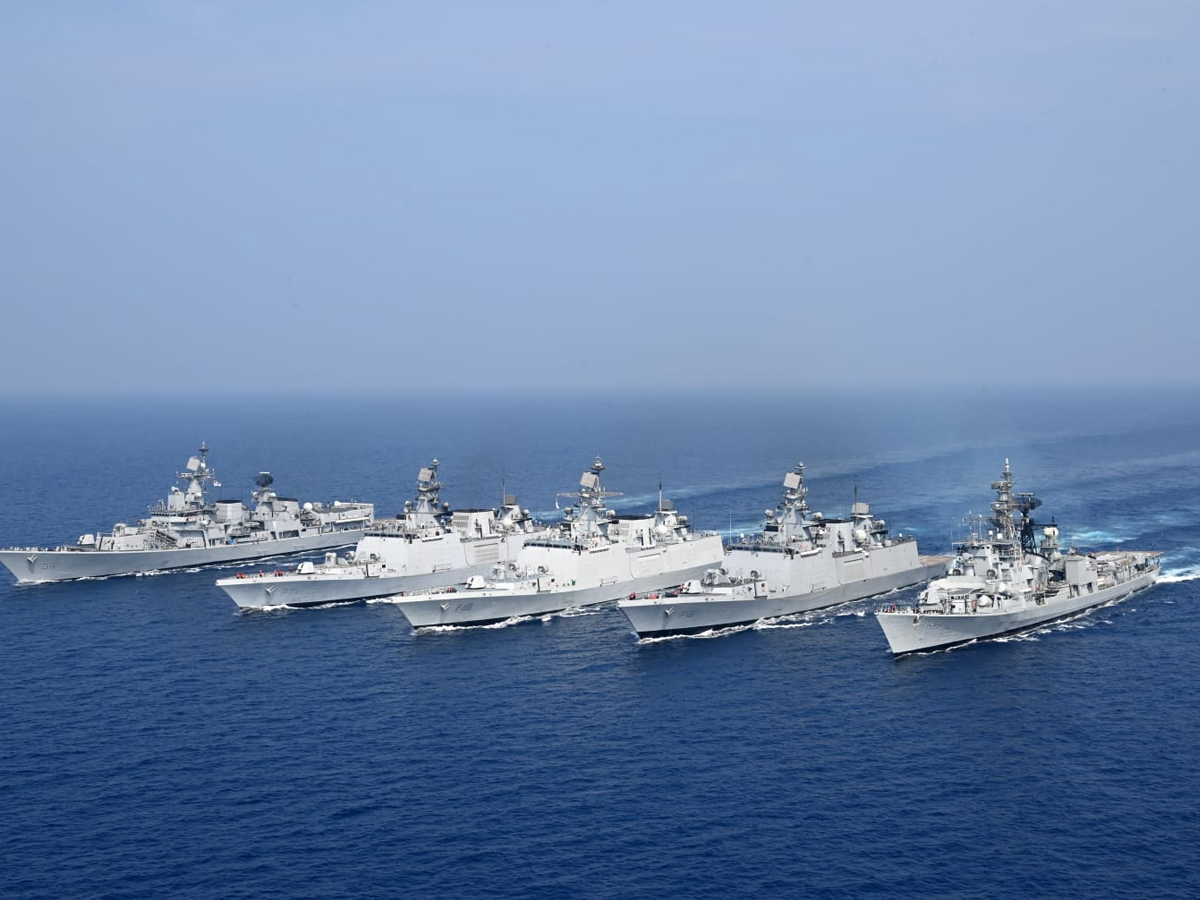
In the vast, silent stretches of the Andaman Sea, a distress signal is never just a call for help–it’s a test of the Indian Navy’s reach. On January 4th, 2025, when the INS Kirch transferred fuel to a Malaysian-flagged sailing vessel with a Chinese crew, it was a display of more than a logistics manoeuver. In a high-stakes logistics manoeuvre, the Indian Navy didn’t just provide a tow; it transferred 1,000 litres of fuel in challenging sea conditions, ensuring the vessel could safely reach its next port. This wasn’t just a refuelling mission; it was a diplomatic handshake.
Again in June 2025, MV Wan Hai 503 caught fire off the Kerala coast; the Navy executed a daring aerial insertion. In a prompt response, the salvage team members embarked on board a Seaking helicopter at INS Garuda, Kochi. The naval helicopter successfully inserted the team on the vessel amidst challenging sea conditions and fire onboard.
Later Chinese Embassy spokesperson Yu Jing posted on X, thanking the Indian Navy and Mumbai Coast Guard for their rescue efforts. “Of the total 22 crew members on board, 14 are Chinese, including 6 from Taiwan. We wish further search operations successful and the injured crew members a speedy recovery,” the statement added.
At the heart of this success is a brain that never sleeps: the Information Fusion Centre – Indian Ocean Region (IFC-IOR) in Gurugram. The INS Kirch mission wasn’t a lucky encounter; it was a surgical response triggered by the IFC-IOR’s unique ecosystem.
The IFC-IOR, established in December 2018, has emerged as a key platform for enhancing safety and security in the IOR. Since it was established, the Centre has hosted International Liaison Officers from 15 countries. It collaborated with 57 maritime security constructs and 25 partner nations. By hosting liaison officers from over a dozen countries, the IFC-IOR has turned the Indian Navy into a collaborative hub, sharing maritime domain awareness to ensure that no distress signal in the Indian Ocean goes unanswered.
Looking back over the last ten years, these incidents are just individual stitches in a much larger tapestry. Since 2016, India’s naval diplomacy has been defined by the SAGAR (Security and Growth for All in the Region) vision. The scale of achievement is staggering: the MILAN exercises have grown from a small regional gathering to a 50-nation mega-event. India has gifted ships like the INS Kirpan to Vietnam and Fast Interceptor Crafts to Mozambique, not as charity, but as a way to empower partners to secure their own waters. From the freshwater crisis in the Maldives to the cyclone relief in Sri Lanka (Operation Sagar Bandhu), the Navy has solidified its role as the “First Responder”.
Ultimately, India demonstrates that maritime power is defined less by firepower than by the trust it commands. By conducting hydrographic surveys for smaller nations and being the first to arrive when the earth shakes or the fuel runs dry, the Indian Navy is rewriting the script of naval diplomacy. It is a strategy built on the realisation that in the 21st century, the most effective way to lead is to be the one who ensures that the sea remains a safe, open, and shared commons for everyone.




