
New Delhi: The Uttar Pradesh government is transforming the Yamuna Expressway Industrial Development Authority (YEIDA) region into one of the country’s most ambitious multi-modal transport and industrial hubs, aiming to position the state as a globally competitive destination for investment, logistics and employment.
Central to this integrated plan is the upcoming Noida International Airport at Jewar, which is expected to emerge as North India’s largest aviation and logistics gateway. The airport forms the backbone of the government’s strategy to leverage world-class connectivity for industrial expansion and large-scale job creation.
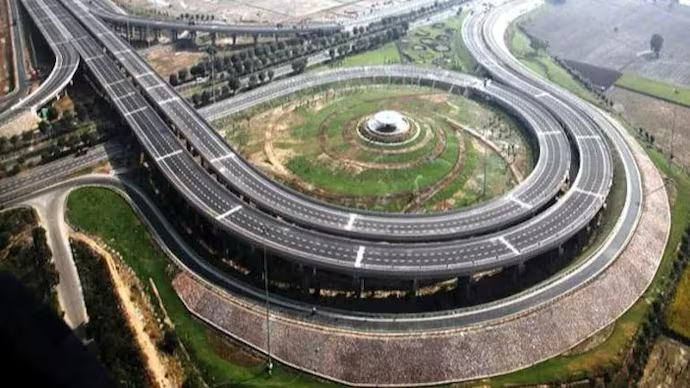
YEIDA chief executive officer Rakesh Singh said the state government is prioritising seamless five-mode connectivity—air, road, rail, RRTS and expressways. As part of this effort, the eight-lane Yamuna Expressway has been directly connected to the airport, significantly reducing travel time to Delhi and western Uttar Pradesh.
The road network is being further strengthened through the Eastern Peripheral Expressway, providing direct access to Haryana and Uttarakhand, while the Delhi–Mumbai Expressway, via the Ballabhgarh interchange, will link Jewar Airport to the country’s largest industrial corridor, enhancing logistics efficiency and trade.
To streamline cargo operations, dedicated North and East Access Roads are being developed exclusively for air freight, enabling heavy vehicles to reach the airport directly without passing through urban areas. Connectivity within the state is also being expanded by linking the Ganga Expressway and NH-34 with YEIDA sectors and the Yamuna Expressway, improving access across eastern, central and western Uttar Pradesh.
Urban mobility is another key focus, with the proposed RRTS network set to connect Delhi, the NCR, YEIDA sectors and the Noida International Airport. Rail infrastructure is also being developed, including direct links to the Delhi–Howrah and Delhi–Mumbai corridors, aimed at reducing logistics costs and boosting exports.
Backed by pro-industry policies, the region is witnessing strong investment momentum, particularly in electronics, semiconductors, automobiles and electric mobility. Investments by the HCL–Foxconn group, Havells, Dixon Technologies, Escorts Kubota, Minda Corporation and Ninjas Electric are positioning YEIDA as a high-tech manufacturing and employment hub.
Renewable energy and green manufacturing are also gaining traction, with companies such as SAEL Solar, Amber Enterprises and the Electric Vehicle Manufacturers Welfare Trust investing in the area. Projects by Pine Valley Venture and Deki Electronics are further strengthening the textile and electronic components sectors.
Officials said that improved connectivity, modern logistics and a business-friendly ecosystem are expected to generate employment for lakhs of youth, support Uttar Pradesh’s push towards a one-trillion-dollar economy and firmly establish YEIDA as North India’s leading industrial and logistics hub.




