Nearly 3 tonnes of explosives and arms linked to JeM-AGuH were seized in a multi-state probe after Srinagar posters led police to a terror module spanning NCR and Kashmir.
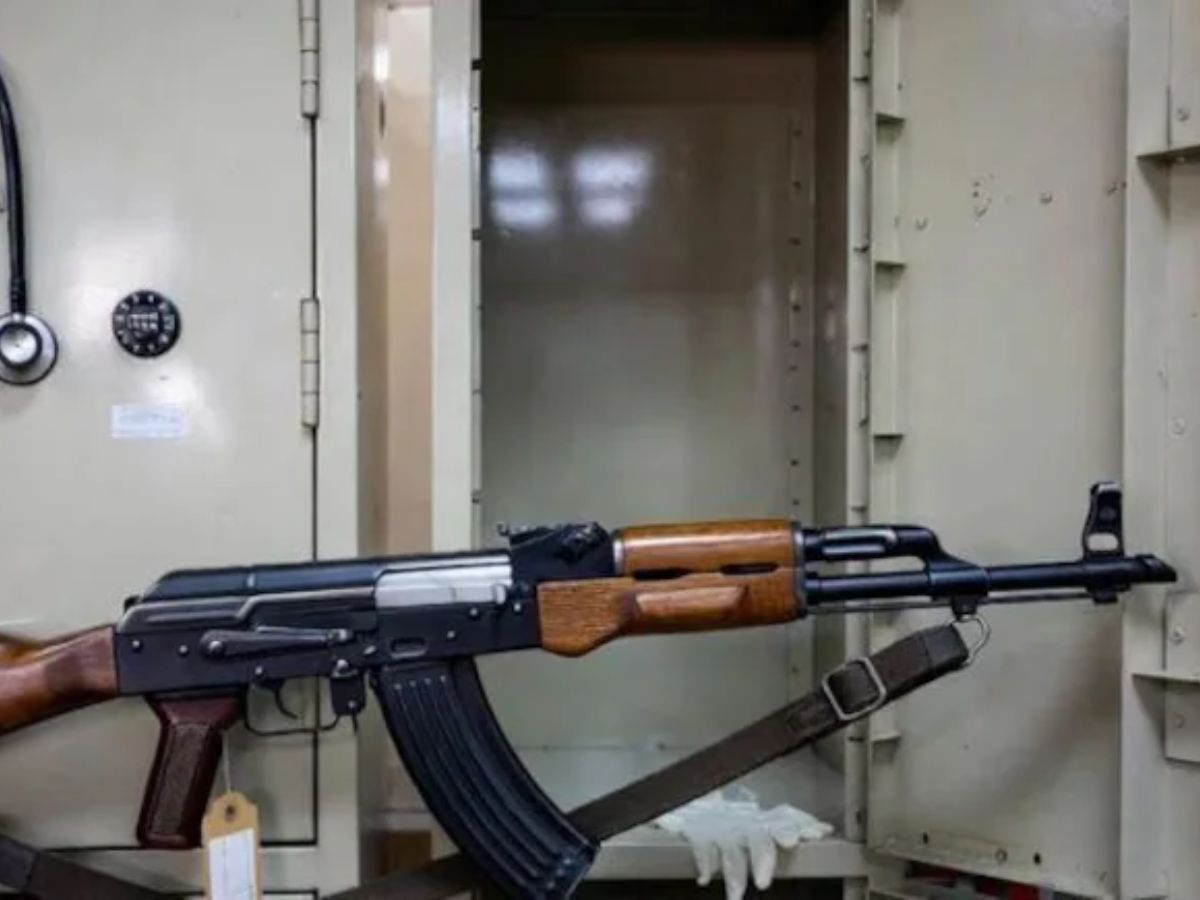
Foiled Faridabad terror plot reveals deep cracks in intelligence shield (Image: X/@ShowkatKoshur06)
New Delhi: Nearly three tonnes of explosive material, assault rifles and pistols moved undetected through India’s National Capital Region and Kashmir—passing security checkpoints during multiple high-security periods including Independence Day and Diwali—before a chance discovery of posters in a Srinagar neighbourhood triggered an investigation that exposed how close the country came to a major terror attack.
On 10 November , the Jammu & Kashmir Police announced that it had dismantled an interstate and trans-national terror module linked with the banned outfits Jaish-e-Mohammad (JeM) and Ansar Ghazwat-ul-Hind (AGuH).
Faridabad Police Commissioner Satender Kumar Gupta, in a press conference on Monday, shared details of the joint operation that had been running for about 15 days across Jammu & Kashmir, Haryana and Uttar Pradesh. He said the module’s safehouse in Faridabad yielded a massive cache of arms, ammunition and explosive materials that had been quietly moved into the NCR region over the past few weeks.
According to Gupta, the critical raid took place on 9 November, when police searched a room in Dhoj village, Faridabad, rented by Dr Mujammil Shakeel, a resident of Koil village in Pulwama who was pursuing studies at Al-Falah University, Faridabad. Shakeel had taken the room about three months earlier purely to store material. During the raid, police recovered around 360 kilograms of suspected ammonium nitrate, later confirmed not to be RDX, but capable of being used for IED fabrication.
The recovery, Gupta said, also included 20 timers, four timers fitted with batteries, 24 remote-control devices, walkie-talkies, and other such components. Weapons seized from the site included one assault rifle with three magazines and 83 live rounds, one pistol with eight live rounds, two empty cartridges, and two additional magazines.
The wider investigation had begun weeks earlier. On 19 October, police in Srinagar’s Bunpora Nowgam area discovered JeM posters threatening security forces.
The incident led to FIR No. 162/2025 under the Unlawful Activities (Prevention) Act, Bharatiya Nyaya Sanhita, Explosive Substances Act and Arms Act. Acting on those leads, J&K Police carried out searches across Srinagar, Anantnag, Ganderbal and Shopian, with simultaneous raids in Faridabad (Haryana) and Saharanpur (Uttar Pradesh).
On 7 November, J&K Police arrested Dr Adil Ahmad Rather from Saharanpur. Rather, a resident of Anantnag, had earlier practised medicine at Government Medical College Anantnag, resigning in 2024 before moving to Saharanpur to continue his practice.
Those arrested so far include Arif Nisar Dar (alias Sahil), Yasir-ul-Ashraf and Maqsood Ahmad Dar (alias Shahid) from Nowgam, Srinagar; Zameer Ahmad Ahanger (alias Mutlasha) from Wakura, Ganderbal; Molvi Irfan Ahmad, an imam from Shopian; Dr Mujammil Shakeel from Pulwama; and Dr Adil Ahmad Rather from Anantnag. Their presence—a cleric and two medical professionals among them—offered an early glimpse into what police later described as a “white-collar terror ecosystem.”
Across all linked locations, investigators recovered a Chinese Star pistol, a Beretta pistol, an AK-56 rifle and an AK Krinkov rifle, each with ammunition, along with an estimated 2,900 kilograms of IED-making material—explosives, chemicals, wires, batteries, timers and metal sheets. Experts said the total cache—nearly three tonnes—could have powered several large-scale explosions, enough to destroy multiple buildings and cause mass casualties.
Officials confirmed that by early November the plot had reached its final stage; only deployment of the weapons and explosives remained. Had the Srinagar posters not been detected when they were, the materials could already have been used.
The question now confronting India’s security apparatus is not how the module was busted, but how it existed for so long. Moving and storing such quantities across several states would have required transporters, couriers, financiers and handlers—yet none drew notice.
That it reached the NCR during peak alert cycles underscores not only a breakdown in surveillance and inter-agency coordination but also a troubling absence of accountability among those responsible.
Investigators are also tracing the financial trail behind the module. The logistics on this scale demanded significant funding, but no warnings emerged from financial-intelligence systems. Early findings suggest that money was routed through front organisations posing as charitable or academic entities, with coordination managed through encrypted communication platforms.
By official accounts, this was a coordinated, multi-state operation that prevented a major terror strike. But the timing tells a deeper story: it was not a plot stopped in its infancy, but one intercepted at the edge of execution.
