Google reveals how fake naval combat videos, often sourced from video games, spread during India–Pakistan tensions, creating a “virtual navy” that misleads audiences and fuels misinformation online.
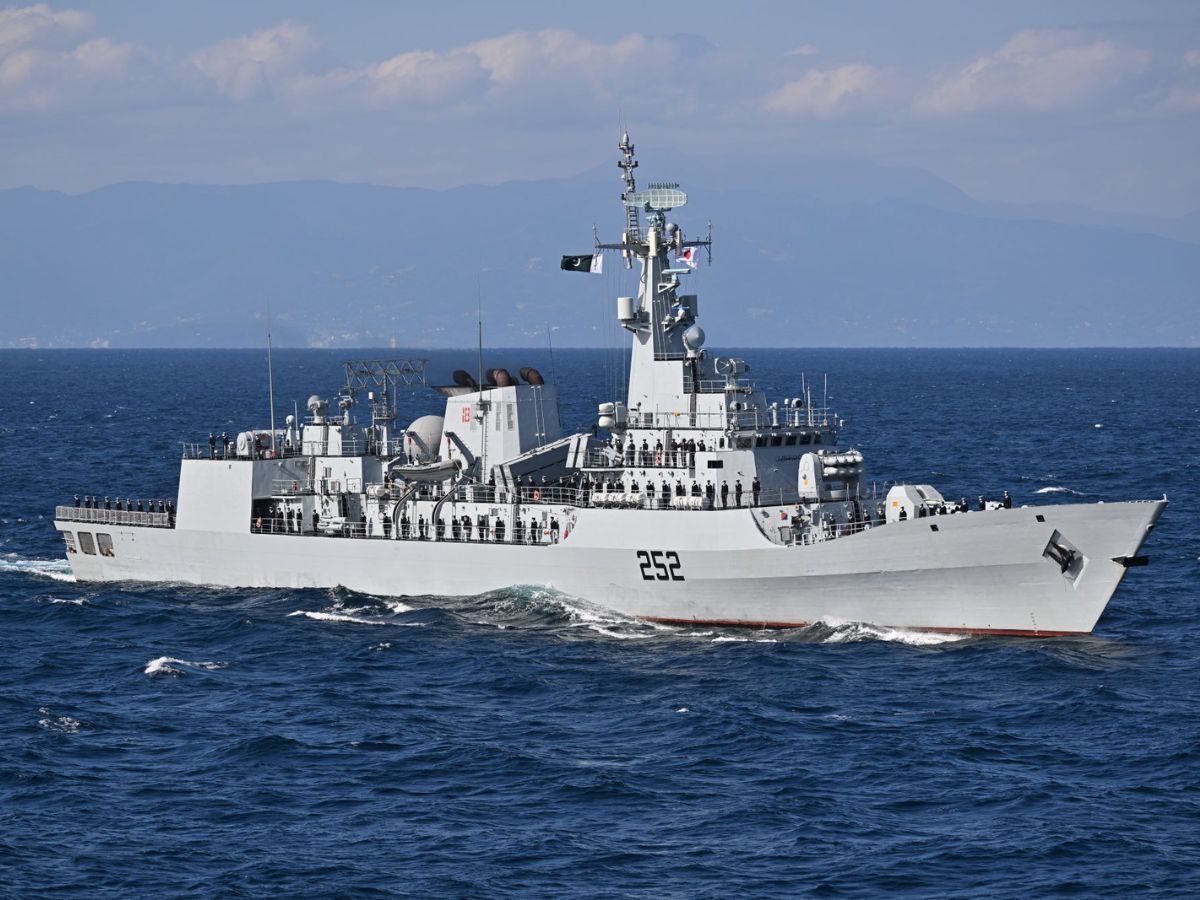
Google reveals how fake naval combat videos, often sourced from video games, spread during India–Pakistan tensions, creating a “virtual navy” that misleads audiences and fuels misinformation online. (Image Credit: Wikipedia)
The kind of clip that circulates during periods of heightened India–Pakistan tension usually looks something like this: a low, urgent hum under a grey warship ploughing through a choppy digital sea. A missile arcs into frame, trailing smoke before slamming into the vessel’s side. There is a flash, a rising fireball, the camera shakes, and the ship begins to list. Then a bold caption appears: “Pak Navy destroys Indian warship — live footage.”
For anyone scrolling on a small phone screen at midnight, it can look convincing. But nothing in these videos is real. The “warship” is a 3D asset, the “sea” is rendered water, and the entire sequence is lifted from readily available naval video games. These are not isolated incidents — they form a recurring pattern of game footage repackaged as supposed evidence of real naval combat.
During recent periods of tension, clips like these spread rapidly across social media. Many were pushed as “breaking” or “live” visuals of Pakistani missile strikes and Indian ship losses. Some posts claimed these were fresh videos from the Arabian Sea or the North Arabian Sea, recorded just minutes earlier. But when fact-checkers took a closer look, the story collapsed. The footage did not come from any battlefield; it came from commercial war simulation games.
Investigators traced these videos back to known titles in the military simulation genre. Identical clips, sometimes in higher resolution, had already appeared on gaming channels and forums. The same explosion, the same plume of smoke, the same sinking animation — only the caption and narration had changed. What the internet was being sold as “evidence” of real naval combat was, in truth, a screen capture from a console or PC.
Despite this, the videos spread at speed. Anonymous accounts, fan pages and self-styled defence commentators reposted them with breathless text — “First visuals of enemy ship destroyed,” “Pak missile strikes confirmed,” “Watch before it’s deleted.” Within hours, thousands had seen and shared them, often without questioning the source.
The timing was deliberate. These videos typically surfaced when regional tensions were already high — after missile tests, during naval exercises, or following reports of suspicious activity at sea. In such moments, audiences were primed for dramatic “proof” of what might be happening beyond the horizon. A gripping video, even a fake one, filled that psychological vacuum.
Modern graphics make the deception easier. Today’s naval games are designed for realism: hull plating, smoke trails, water spray, even the way a ship breaks apart are rendered with precise detail. Once the game’s user interface is cropped out and a bit of blur or noise is added, the result can fool anyone not paying close attention.
These fake “combat videos” are not merely embarrassing for those who fall for them. They serve a strategic purpose: constructing what can only be described as a virtual navy — an imagined version of Pakistan’s maritime strength that exists almost entirely online. In this digital world, Indian ships are routinely sunk, Pakistani missiles never miss and every engagement ends in decisive victory. None of this needs to occur in real waters. It only needs to unfold on screens.
Text posts and AI-generated “statements” claiming victories are one part of this ecosystem. The videos are the visual anchor, the emotional hook. A line of text can be questioned. A burning ship feels harder to dismiss. Together, they create a self-reinforcing loop — synthetic assertions followed by game footage that appears to “confirm” them.
Fact-checkers have pushed back, but always after the clips have run their course. They slow the footage down, freeze frames, compare textures and explosion patterns to known simulation titles. Their analysis proves conclusively that these are not real engagements. Yet by the time corrections reach most users, the first impression remains.
This flood of fabricated content also diverts attention. Journalists and analysts monitoring actual naval activity must pause to debunk obviously fake videos. Security watchers must clarify, yet again, that no ship was sunk, no strike occurred and no battle took place. Meanwhile, genuine developments at sea remain overshadowed by noise generated inside a game engine.
There is a deeper consequence: erosion of trust. When audiences are repeatedly shown dramatic footage that later turns out to be fake, they begin to doubt everything — including real evidence when it does surface. This doubt benefits those who thrive in ambiguity. If nothing is trusted, then anything can be claimed.
So far, accounts responsible for circulating these videos have faced little consequence. The clips are quietly deleted once exposed, only to reappear during the next spike in tension. Social media platforms remove some posts, but much slips through. Pakistan’s official naval and ISPR channels have not consistently warned the public about this pattern, leaving a vacuum in which such fabrications continue to flourish.
In today’s information environment, conflict unfolds not only in physical theatres but also across timelines and feeds. The image of a navy is shaped not just by its ships and weapons but by the narratives built around them — and the visuals deployed to reinforce those narratives. In that sense, game footage has become a cheap, rapid way to manufacture triumphs.
The ships you see burning were never launched. The missiles that seem to hit with cinematic precision were never built. The “victories” being celebrated never occurred. Yet for hours, sometimes days, they feel real enough to trigger outrage, fear or misplaced pride.
That is the true power of these clips — not on the sea, but in the mind. Until viewers learn to pause, question dramatic “combat” footage and seek independent confirmation, Pakistan’s virtual navy will keep winning battles that never happened, in a war that exists only in pixels.
(Ashu Mann is an Associate Fellow at the Centre for Land Warfare Studies. He was awarded the Vice Chief of the Army Staff Commendation card on Army Day 2025. He is pursuing a PhD from Amity University, Noida, in Defence and Strategic Studies. His research focuses include the India-China territorial dispute, great power rivalry, and Chinese foreign policy.)
