From steel to satellites, Japan signs 170+ MoUs worth $13B in India, boosting industry, clean energy, SMEs, and human capital exchanges.
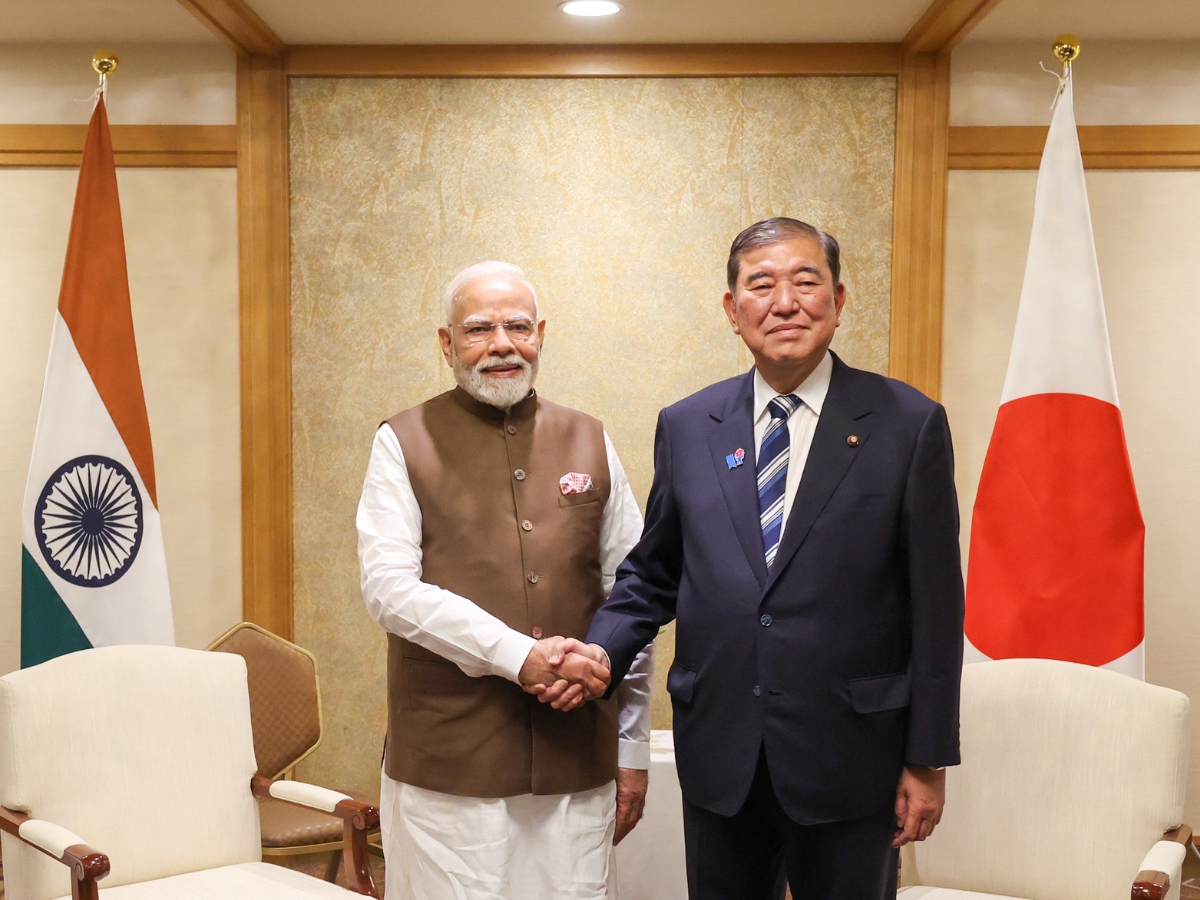
PM Modi in Tokyo as India, Japan ink $13B investment MoUs across steel, autos, clean energy, and talent exchange
New Delhi: India and Japan on Friday moved to a new high in their strategic and economic partnership with the unveiling of over 170 memoranda of understanding in the past two years, representing more than USD 13 billion in fresh investment commitments.
The agreements, consolidated and highlighted during Prime Minister Narendra Modi’s visit to Tokyo for the India–Japan Economic Forum on 29 August, underline Japan’s growing confidence in India’s economic trajectory and its willingness to integrate into the country’s industrial and human capital future.
Major Japanese corporations have committed to large projects across sectors. Nippon Steel through AM/NS India will invest Rs 15 billion in Gujarat and Rs 56 billion on an integrated steel plant in Andhra Pradesh. Suzuki Motor Corporation will put in Rs 350 billion for a new plant in Gujarat and Rs 32 billion for production line expansion. Toyota Kirloskar has announced Rs 33 billion for Karnataka and Rs 200 billion for a new facility in Maharashtra. Sumitomo Realty will invest USD 4.76 billion in real estate, while JFE Steel will spend Rs 445 billion to strengthen electrical steel production. Osaka Gas will set up 400 MW of renewable power capacity with plans for green hydrogen in future projects, and Astroscale will become the first Japanese private company to launch satellites using ISRO’s PSLV platform.
The agreements are also set to transform India’s small and medium enterprises by pulling them into global supply chains. Tokyo Electron and Fujifilm working with Tata Electronics are developing a semiconductor ecosystem where Indian SMEs will become suppliers of high-value components. The Toyota–Suzuki partnership will integrate hundreds of tier-2 and tier-3 Indian firms, and Fujitsu will hire 9,000 engineers for its Global Capability Center, boosting demand for IT-linked SMEs. Officials said such collaborations will allow Indian firms to adopt global standards, infuse new technologies and access wider markets, strengthening India’s export competitiveness.
Japanese engagement is also reaching the grassroots, with a focus on sustainable development and farmer incomes. Sojitz Corporation with Indian Oil will invest USD 395 million to establish 30 biogas plants producing 1.6 million tonnes annually, creating income streams for farmers supplying crop residues and agri-waste. Suzuki Motor Corporation, with the National Dairy Development Board and local cooperatives, will set up four biogas plants in Gujarat’s Banaskantha district with an investment of Rs 2.3 billion, or about JPY 4 billion, under a UNIDO programme backed by Japan’s METI. These plants will convert cow dung into carbon-neutral biogas for CNG vehicles, which account for one-fifth of India’s passenger car market. The project is expected to cut emissions, generate rural jobs, and enhance energy self-sufficiency.
Exports are another pillar of the new MoUs. Nippon Steel’s expansion will increase specialty steel exports to the auto and energy sectors, Toyota and Suzuki will export hybrid and electric vehicles made in India to Africa, the Middle East and Southeast Asia, Fujifilm and Tata’s semiconductor collaboration will integrate India into global chip supply chains, and Osaka Gas’ renewable energy ventures will contribute to international clean energy flows. Officials said this demonstrates the emerging model of “Make in India with Japan, Export to the World.”
Human resources and knowledge exchange form a rapidly expanding dimension of cooperation under the India–Japan Talent Bridge programme and METI’s initiatives. The two countries have set a target of 500,000 exchanges over five years, covering students, interns and professionals in sectors such as semiconductors, AI, robotics, IT and clean energy. Career fairs have been organised at leading Indian universities including IIT Guwahati, IIT Kharagpur, IIT Kanpur, IIT Gandhinagar, BITS Pilani, Delhi University, IISc Bangalore and Anna University. Indian students and professors are being invited to Japan for company visits and academic roundtables, while internships are being offered both physically and online. For mid-career professionals, specialised job fairs with NASSCOM and TechSparks are being rolled out, supported by Talent Market Reports to help Japanese firms understand India’s labour market.
Japanese companies are also expanding their footprint directly in India. Nidec is creating a global software development centre in Bengaluru, Musashi Seimitsu is working on e-Axles for two-wheeler EVs with a focus on India and Africa, Dai-ichi Life Techno Cross is hiring bilingual IT engineers, Money Forward India is growing fintech platforms with Indian talent, and Beyond Next Ventures is funding deep-tech start-ups while offering internships. METI has allocated JPY 15 billion for skills and HR cooperation, including company missions to India, job fairs, subsidies for Japanese firms hosting Indian interns, Japanese language training for Indian recruits, and the posting of Japanese instructors in India to share manufacturing skills.
Japan’s commitment to balanced regional development was reaffirmed with an MoU between the Government of Assam and ASEAN Holdings to invest in industrial infrastructure, logistics and agro-based industries. The agreement dovetails with India’s Act East Policy and Japan’s longstanding focus on the development of the northeast.
The wider strategic outlook was visible at the Japan–India–Africa Forum and the ninth TICAD summit in Tokyo, where India was projected as an anchor for industrial corridors and connectivity initiatives. Priorities identified include mineral security in rare earths, lithium and cobalt, building resilient supply chains in semiconductors and EVs, and expanding export markets for goods manufactured in India with Japanese technology to Africa and the Middle East.
From steel plants in Gujarat to biogas projects in Banaskantha, from Assam’s gateway role to Tokyo’s advanced R&D hubs, from Indian SMEs linked into global supply chains to students and engineers engaging in exchanges across the two countries, the India–Japan MoUs are laying the foundation of a new era of cooperation. With “Make in India, Make for the World” as the guiding vision, the partnership is set to reshape industry, agriculture and human capital not only for the two nations but also for the wider region and beyond.
