
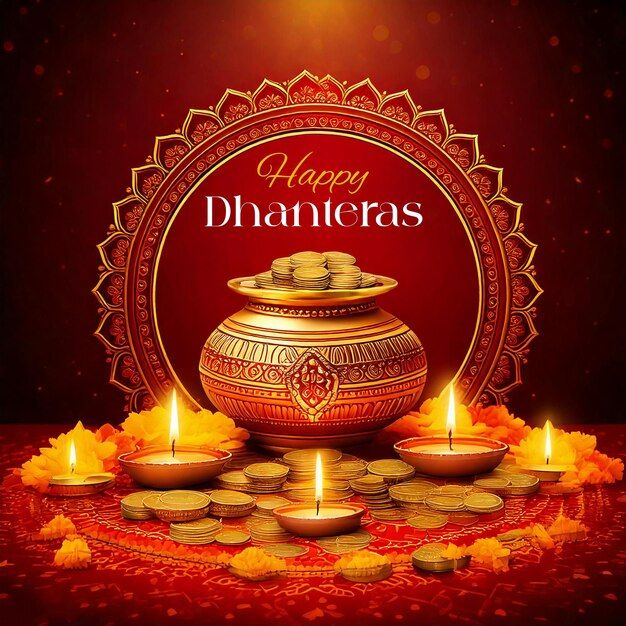
NEW DELHI: This Diwali, let us light two lakh diyas in Delhi, twenty-six lakh in Ayodhya, and millions more across India. Along with the worship of Goddess Lakshumi, let us also offer prayers to Goddess Saraswati and wish for a prosperous, developed India. Since ancient times, Indian culture has viewed such worship as a path to collective social and eco nomic progress.
However, a truly educated and developed India cannot exist without a “Healthy India.” In accordance with tradition, it is worth remembering that before the worship of Lakshmi, there is a ritual to honour Lord Dhanvantari the divine origin of Ayurveda. Yet, modern consumerism has transformed Dhanteras into a day focused on buying gold and wealth rather than invoking health and well being.
Since 2016, the Government of India has been observing Ayurveda Day on Dhanvantari Jay anti (Dhanteras) every year. The purpose is to raise awareness about Ayurveda’s principles, medicinal plants, and holistic lifestyle practices. According to Indian tradition, the knowledge of Ayurveda originated with Lord Dhanvantari, who received it from Lord Brahma.
Ayurveda Day honours his contribution to humanity, reminding us of the path to natural and balanced living. Ayurveda, India’s ancient system of medicine, emphasizes harmony between the body, mind, and spirit. The word “Ayurveda” comes from two Sanskrit terms “Ayus” (life) and “Veda” (knowledge) meaning “the knowledge of life.”
Today, India offers structured undergraduate, postgraduate, and doctoral education in Ayurveda. A robust institutional framework has developed across public and private sectors, with a vast network of physicians and pharmaceutical manufacturers bringing Ayurvedic healthcare to people nationwide. Ayurveda now has legal recognition as a traditional medicine system in 24 countries—a major achievement for India.
Through international platforms such as the SCO Expert Working Group on Traditional Medicine, BIMSTEC Task Force, and BRICS High Level Forum, India is promoting global exchange of Ayurvedic principles and policies.
The World Health Organization (WHO) has included disease codes for Ayurveda, Siddha, and Unani systems in its ICD-11 TM Module 2, allowing accurate documentation and recognition of traditional treatments. WHO has also defined global standards for Ayurvedic practice and training. The establishment of the Global Traditional Medicine Centre (GTMC) in Jamnagar, Gujarat, marks a historic milestone for India.
At the 7th Foundation Day of the All India Institute of Ayurveda (AIIA) in New Delhi, President Droupadi Murmu re marked, “Ayurveda is one of the world’s oldest systems of medicine and an invaluable gift from India. It promotes holistic health through balance between body, mind, and spirit. Our ancestors understood the healing power of trees and herbs, but in our pursuit of modernity, we drifted away from nature. Now aware ness is returning, and the idea of an integrated system of medicine is gaining global popularity.”
Prime Minister Narendra Modi has emphasized that the government is actively promoting traditional Indian systems like AYUSH and Ayurveda. Over the past decade, the reach of AYUSH has expanded to more than 100 countries. He announced that WHO’s first Global Centre for Traditional Medicine is being established in India, adding that the nation has immense potential to become the Health and Well- ness Capital of the world. “The day is not far when along with ‘Make in India’, the world will also say Heal in India,” he declared. To facilitate this, the AYUSH visa scheme has been introduced, al lowing foreign nationals to visit India for Ayurvedic treatments.
India’s natural beauty, combined with its ancient healing systems Yoga, Ayurveda, Unani, Siddha, and Homeopathy continues to attract international tourists. This holistic approach, which seeks balance on physical, mental, and spiritual levels, is propelling India toward global health leadership. Under Prime Minister Modi’s leader ship, AYUSH practices are now being integrated within AIIMS and military hospitals nation wide.
According to AYUSH Secretary Vaidya Rajesh Kotecha. “The global expansion of AYUSH is unprecedented. Exports have risen significantly, and the sector has multiplied several times in scale.”
Padma Bhushan Vaidya Devendra Triguna, President of the All India Ayurveda Congress, has played an exceptional role in advancing Ayurveda. His contributions led to the establishment of key institutions like the Central Council of Indian Medicine (CCIM), the All India Institute of Ayurveda, and the National Academy of Ayurveda. Through his guidance, Ayurveda has reached over 80 countries.
The AYUSH industry has achieved remarkable growth. From USD 18 billion in 2020, its production value rose to USD 24 billion in 2024. Including services, the total value exceeds USD 50 billion. The Indian AYUSH market, worth USD 43.3 billion in 2024, is projected to reach USD 200 billion by 2030 an eightfold increase in a decade.
Exports of AYUSH and herbal products grew by 3.6% in 2023- 24, reaching USD 651.17 million. India now exports Ayurvedic products to over 100 countries. Wellness tourism is also booming valued at USD 19.43 billion in 2024, and expected to touch USD 26.55 billion by 2029. Yoga retreats, meditation centres, and Ayurvedic resorts are major at tractions for foreign visitors.
Kerala’s Dhanwanthari Ayurvedic Group is a leader in manufacturing, therapy, and research, operating over 350 branches and clinics. Similarly, the Vaidyaratnam Group has made outstanding contributions in education, research, and medicine production. Founded by E.T. Narayanan Mooss in 1941, the Vaidyaratnam Ayurvedic institution continues a family legacy of eight generations of Ashtavaidyas (masters of the eight branches of Ayurveda).
The Vaidyaratnam Foundation Hospital, recognized by the AYUSH Ministry as a “Centre of Excellence in Ayurvedic Management of Chronic Joint Disorders,” conducts research on arthritis, psoriasis, gout, ankylosing spondylitis, and lupus.
Therefore, Dhanteras is not merely a day to buy gold or silver; it is a time to honour Lord Dhanvantari, who bestowed upon humanity the priceless gift of Ayurveda. This festival reminds us that true wealth lies in good health, and the path to health lies in nature, balance, and self-discipline. If we follow the principles of Dhanvantari, they will lead us not only to physical well-being but also to peace of mind and spirit.
“On Dhanteras, earn health not gold, that is the true worship of Lord Dhanvantari.”




