
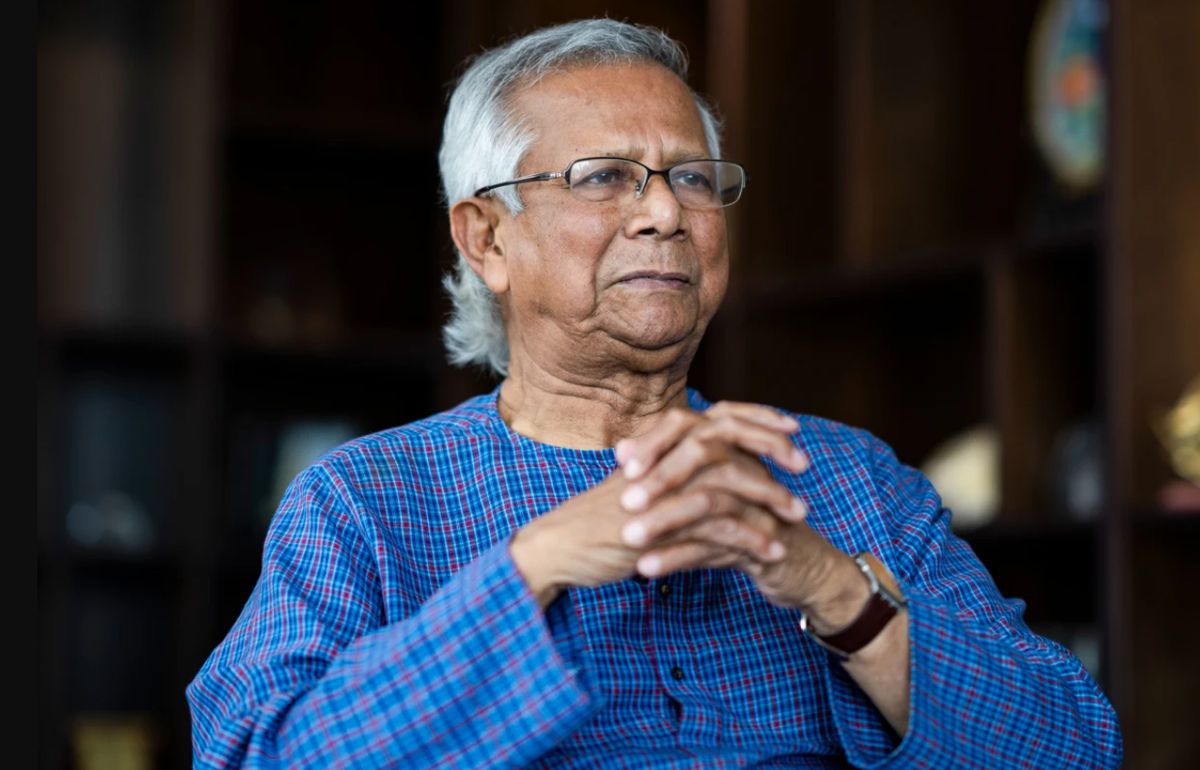
The Muhammad Yunus regime has markedly revived Pakistan’s covert operations in Bangladesh, posing a serious threat to India’s security, particularly along its northeastern frontier. Since 2024, Pakistan’s Inter-Services Intelligence (ISI) has reportedly reestablished a formal presence in Dhaka, with intelligence and military officers operating under diplomatic cover. This renewed foothold coincides with expanded military cooperation and intelligence-sharing between Bangladesh and Pakistan.
Key policy shifts under Yunus — including exemptions for Pakistani shipments from customs inspections and relaxed entry regulations for Pakistani nationals — have created loopholes exploited by the ISI for arms trafficking, narcotics smuggling, and the facilitation of extremist networks. Operatives linked to Lashkar-e-Taiba (LeT), under figures such as Hafiz Saeed, are believed to be using Bangladeshi territory as a staging ground for potential operations against India.
This evolving dynamic signals a sharp geopolitical turn: Bangladesh’s gradual drift from its traditionally India-friendly posture toward alignment with Pakistan’s anti-India strategy, thereby undermining regional stability and security frameworks.
Geopolitical Realignment Under the Yunus Regime
Since assuming power in August 2024, the Muhammad Yunus government has recalibrated Bangladesh’s foreign policy, pivoting away from New Delhi toward a strategic partnership with Islamabad and Beijing. This alignment represents a deliberate effort to dilute India’s influence, especially across its northeastern states. Analysts view the Dhaka-Islamabad-Beijing triangle as an emerging axis designed to constrain India’s regional dominance.
China’s deepening involvement through large-scale infrastructure projects — notably the Padma Bridge Rail Link and the Payra Port — is advancing not only economic but also strategic objectives. These ventures expand China’s military and logistical footprint, indirectly reinforcing the Bangladesh-Pakistan strategic compact. Meanwhile, Pakistan has strengthened its posture in Bangladesh through increased military outreach and Chinese-supplied defence equipment.
The ideological tenor of this partnership is reflected in statements such as that of Major General (Retd) ALM Fazlur Rahman, a Yunus ally, who publicly called for collaboration with China to “liberate” India’s northeastern states in the event of conflict — an alarming articulation of Dhaka’s shifting geopolitical calculus.
Pakistan’s Intelligence and Proxy Operations in Bangladesh
A central feature of this nexus is the revival of ISI’s operational presence in Bangladesh. Under the Sheikh Hasina government, militant networks were actively dismantled and foreign intelligence closely monitored. In contrast, the Yunus regime has eased oversight of Pakistani personnel and logistics.
Key policy decisions include the 2024 gazette notification enabling Pakistani cargo to bypass inspection under the “National Selectivity Criteria,” and a subsequent Ministry of Home Affairs order removing the requirement for security clearance for Pakistani nationals entering Bangladesh. These measures have created an unregulated corridor that facilitates arms and narcotics trafficking, and the infiltration of extremist operatives.
Statements by Pakistani politicians, such as PML-N leader Irshad Ahmed Khan’s admission of efforts to “liberate Bangladesh from Indian influence” through drug and arms smuggling, lend weight to intelligence reports suggesting a narco-terror axis. This network reportedly uses Bangladesh as a transit hub for illicit trade — including narcotics, counterfeit currency, and jihadist propaganda — destabilising both Bangladesh and India’s border regions.
Ideological and Communal Shifts Fuelling Instability
The Yunus administration has presided over a sharp rise in communal violence, particularly targeting Hindus and other minorities, with over 1,000 documented incidents since August 2024. The government’s apparent inaction or tacit tolerance mirrors Pakistan’s sectarian playbook, fuelling radicalisation and deepening religious divides.
Minority communities such as the Ahmadiyya Muslims have also come under increased persecution, reflecting an ideological drift towards Islamabad’s extremist orientation. This sectarian upsurge feeds into an anti-India narrative within Bangladesh, which provides fertile ground for Pakistan-backed insurgencies and destabilisation efforts aimed at India’s Northeast.
Economic Policies Supporting the Nexus
Economically, the Yunus regime has expanded trade and investment ties with Pakistan while further integrating into China’s Belt and Road framework via the China-Pakistan Economic Corridor (CPEC). Dhaka has granted Pakistani firms preferential access to port and logistics facilities at Karachi, easing customs and financial controls.
In contrast, India’s decision in April 2025 to withdraw transshipment privileges previously extended to Bangladesh marks a clear reaction to Dhaka’s strategic tilt toward Islamabad. This economic realignment strengthens Pakistan’s logistical reach into Bangladesh, simultaneously providing cover for illicit flows of weapons, drugs, and money laundering operations. The porous 4,096-kilometre India-Bangladesh border further compounds these threats, enabling infiltration and complicating counter-insurgency operations.
Implications for India and Northeast Security
The resurgent Bangladesh-Pakistan nexus poses serious and multidimensional challenges to Indian security. The Northeast — historically vulnerable due to terrain, demography, and insurgent legacy — faces the renewed threat of infiltration by ISI-backed proxies operating from Bangladeshi soil.
This alliance also reinforces China’s strategic encirclement of India, effectively creating an eastern pressure axis through Bangladesh while Pakistan sustains hostility on the western front. Security analysts warn that this pincer dynamic could strain India’s border management and intelligence coordination. The situation demands sustained vigilance, intensified counter-intelligence cooperation, and proactive diplomatic engagement to prevent escalation and protect regional stability.
Summary of Authentic Data and Official References
Over 1,000 recorded attacks on minorities in Bangladesh since August 2024 (human rights monitoring reports).
September 2024: Official Bangladesh Customs Gazette exempted Pakistani shipments from mandatory inspections.
December 2024: Bangladesh Ministry of Home Affairs removed security clearance requirements for Pakistani nationals.
December 2024: PML-N’s Irshad Ahmed Khan admitted ongoing efforts to destabilise Bangladesh from Indian influence (Zee News).
2024–2025: Defence analyses by Lt Gen AB Shivane and others confirm ISI’s revived presence and operations targeting India’s Northeast.
2024–2025: Government releases on Chinese-funded infrastructure projects (Payra Port, Padma Rail Link) highlighting growing strategic overlap.
April 2025: Indian Ministry of Commerce officially ended transshipment privileges for Bangladesh.
Calling a Spade, a Spade!
The Yunus regime’s tenure marks a turning point in South Asian geopolitics. Since August 2024, Pakistan’s ISI has entrenched its footprint in Dhaka through diplomatic cover, senior-level defence exchanges, and intelligence cooperation, while China’s growing influence in Bangladesh amplifies this axis. Policy decisions exempting Pakistani cargo from inspection and lifting security controls have created an unchecked conduit for smuggling, extremist financing, and proxy networks.
Together, these developments have rekindled Pakistan’s covert operations in Bangladesh, emboldened militancy, and facilitated a broader anti-India alignment. The resulting ideological convergence, communal polarisation, and economic reorientation collectively threaten regional peace. Unless addressed through coordinated intelligence sharing, targeted diplomacy, and renewed India-Bangladesh engagement, this tri-axis of Dhaka, Islamabad, and Beijing risks undermining the fragile stability of South Asia and destabilising India’s northeastern frontier.
(Aritra Banerjee is a columnist specialising in Defence, Strategic Affairs, and Indo-Pacific geopolitics. He is the co-author of The Indian Navy @75: Reminiscing the Voyage. Having spent his formative years in the United States before returning to India, he brings a global outlook and first-hand insight to his reporting from foreign assignments and internal security environments such as Kashmir. He holds a Master’s in International Relations, Security & Strategy from O.P. Jindal Global University, a Bachelor’s in Mass Media from the University of Mumbai, and Professional Education in Strategic Communications from King’s College London (King’s Institute for Applied Security Studies).




