
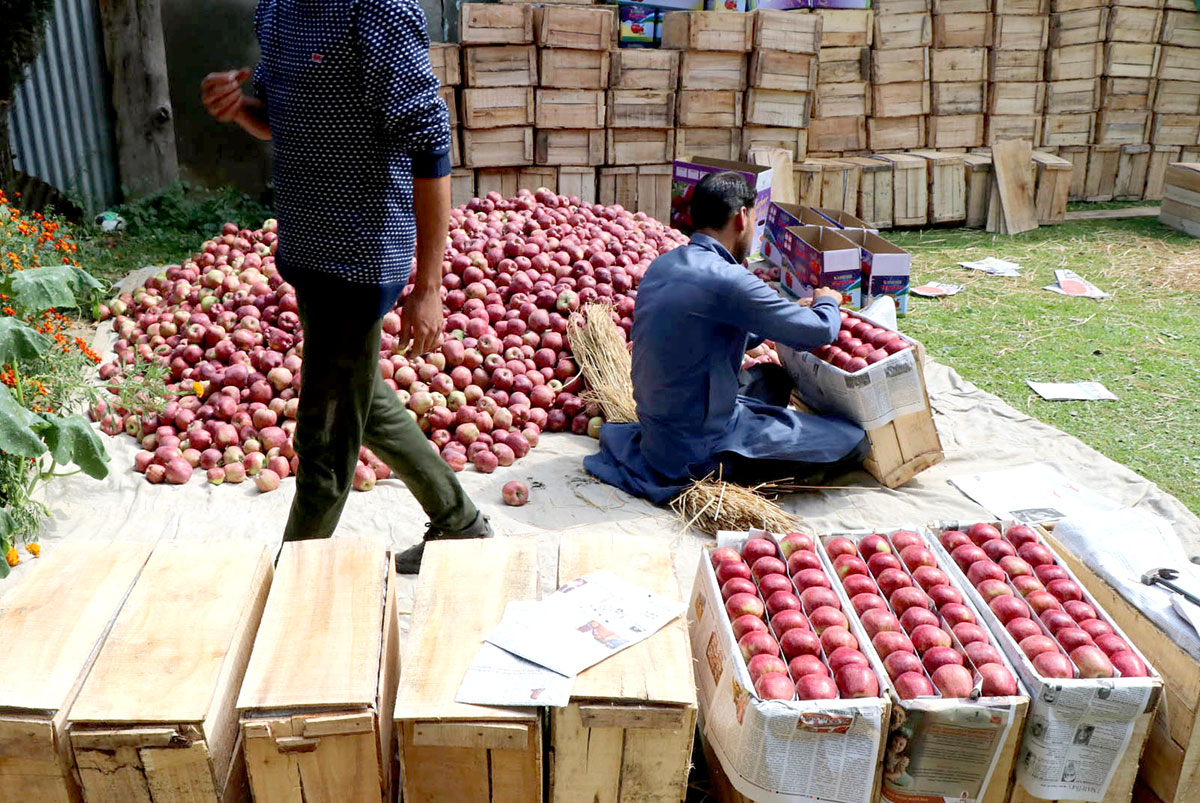
JAMMU: Apple growers across Jammu and Kashmir have voiced concern over the Union government’s decision to permit imports of fruit from the United States without imposing import duty, warning that the move could disrupt local orchard-based livelihoods.
Farmers’ associations argue that duty-free imports could allow cheaper apples to enter domestic markets during peak selling seasons, exerting downward pressure on prices. Apple cultivation is a cornerstone of the region’s rural economy, sustaining thousands of families and supporting ancillary sectors such as packaging, transport, grading and cold storage.
Political reactions have followed swiftly. Leaders across parties in Jammu and Kashmir have urged the Centre to reconsider the decision or introduce safeguards to shield domestic growers from price volatility. Some have called for minimum support mechanisms and calibrated market protection measures.
Reacting to the development, Chief Minister Omar Abdullah said the concerns of apple growers must be addressed on priority, describing horticulture as the backbone of the region’s rural economy. He called for policy interventions to ensure that local producers are not placed at a competitive disadvantage.
Former Chief Minister Mehbooba Mufti also expressed reservations, stating that agriculture and horticulture policies must prioritise farmer welfare. She urged the central government to engage directly with stakeholders from apple-growing districts and reassess the decision in view of its potential economic consequences.
The issue has also drawn attention from neighbouring hill states. Sukhvinder Singh Sukhu, Chief Minister of Himachal Pradesh, visited Kashmir and addressed a joint press conference with regional representatives. He said orchardists in both hill regions face similar structural challenges and require coordinated policy backing.
“The concerns of orchardists must be taken seriously. Farmers from hill states depend heavily on apple production, and policy decisions should ensure fair competition,” Sukhu said.
Trade analysts note that the import decision may be intended to improve consumer choice and advance trade engagement, but its domestic impact could be substantial in the absence of calibrated safeguards. Apple growers’ unions have announced plans to submit a memorandum to the central government seeking interventions such as transport subsidies, price stabilisation mechanisms and market access protections.
With harvesting cycles approaching, the issue is expected to remain a prominent economic and political concern across northern hill states in the coming weeks.




