Trump says US oil firms will rebuild Venezuela's oil sector after Maduro's capture. Analysts see limited short-term impact on global oil markets despite huge reserves.
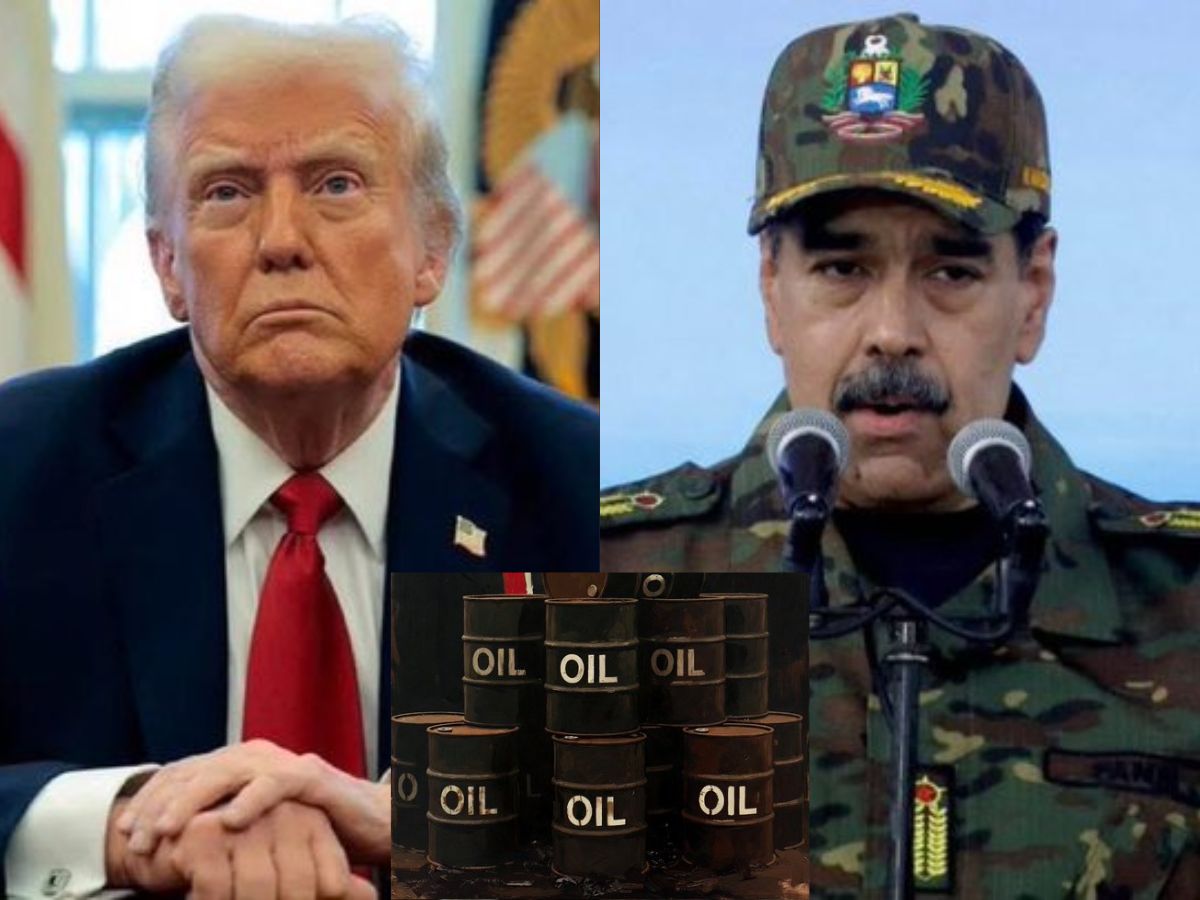
Trump says US oil firms will rebuild Venezuela's oil sector after Maduro's capture [Photo: X]
The US military's capture of Venezuelan President Nicolas Maduro has sparked intense debate about oil and energy markets worldwide. While the operation was officially linked to criminal charges, President Donald Trump openly said that Venezuela's vast oil resources played a major role in US strategy.
With Venezuela home to some of the world's largest oil reserves, analysts and traders are now asking, Will this alter global oil production, pricing or supply chains?
Venezuela holds roughly 300 billion barrels of proven crude oil reserves, more than Saudi Arabia or the US, largely in the heavy crude fields of the Orinoco Belt. Despite this massive storehouse, output has fallen sharply over the decades because of mismanagement, underinvestment and sanctions.
Current production is only a tiny fraction of global supply, roughly 1 million barrels per day, less than 1 % of worldwide output. Heavy crude also requires specialised refining, which Venezuela lacks, and many US sanctions have kept foreign firms away.
For now, the impact on global oil markets is expected to remain limited. Despite holding the world’s largest oil reserves, Venezuela currently supplies less than 1 per cent of global crude due to sanctions, poor infrastructure and the technical difficulty of extracting heavy oil. Analysts say these constraints mean Maduro’s ouster will not trigger immediate price shocks.
Oil markets have shown only modest movement, as supply from major producers like the US, Saudi Arabia and Russia remains stable. However, in the long term, the picture could change if US oil companies restore production and exports resume. Any meaningful rise in Venezuelan output would take time and depend on political stability, investment and sanctions policy.
Hours after the operation, Trump said the United States plans to let major US oil companies invest billions of dollars to fix Venezuela’s broken oil infrastructure and restart full production.
He said, “We’re going to have our very large United States oil companies… go in, spend billions of dollars, fix the badly broken infrastructure… and start making money for the country.”
However, companies like ExxonMobil and ConocoPhillips have been cautious, and only Chevron currently operates in Venezuela under strict conditions. Trump also indicated that the US embargo on Venezuelan oil remains in place, even as he promotes future production plans.
Analysts generally agree that the Maduro overthrow will not shock global oil markets immediately. Even though Venezuela’s reserves are huge, its actual market contribution is currently small.
A supply surplus is expected in early 2026, helped by increased output from other producers and soft demand, which could limit price spikes or major supply disruptions. One energy market analyst said any price rise is likely to be modest, perhaps only a dollar or two per barrel shortly after news breaks.
If US firms invest and political stability improves, Venezuela could eventually boost output, adding more heavy crude to the market. But even optimistic estimates suggest this would take years and tens of billions of dollars in infrastructure repair.
Heavy crude still needs blending with lighter oil to be refined in many markets, meaning production increases may benefit certain regions more, especially US Gulf Coast refineries that are equipped to handle heavier grades.
In the very long term, if Venezuela returns to higher production levels, more supply could push prices down or moderate volatility. But that depends on political stability, investment agreements and sanctions policies.
For now, traders and policymakers are watching closely. The capture of Maduro has added a geopolitical risk premium to prices, but oversupply and limited current production mean any price impact is likely muted.
Energy markets are unlikely to be dramatically changed overnight by this geopolitical event. Venezuela’s low current output and the need for massive investment mean any meaningful boost to global supply is years away.
Still, the prospect of the United States overseeing or facilitating a return of Venezuelan crude into the global system keeps analysts, traders and energy producers alert. As the situation unfolds, its long-term influence on pricing, refinery feedstocks and trade flows will continue to evolve.
