The Rohingya crisis has evolved into a regional security issue, linking camps in Bangladesh to border tensions, trafficking, and migration across India.
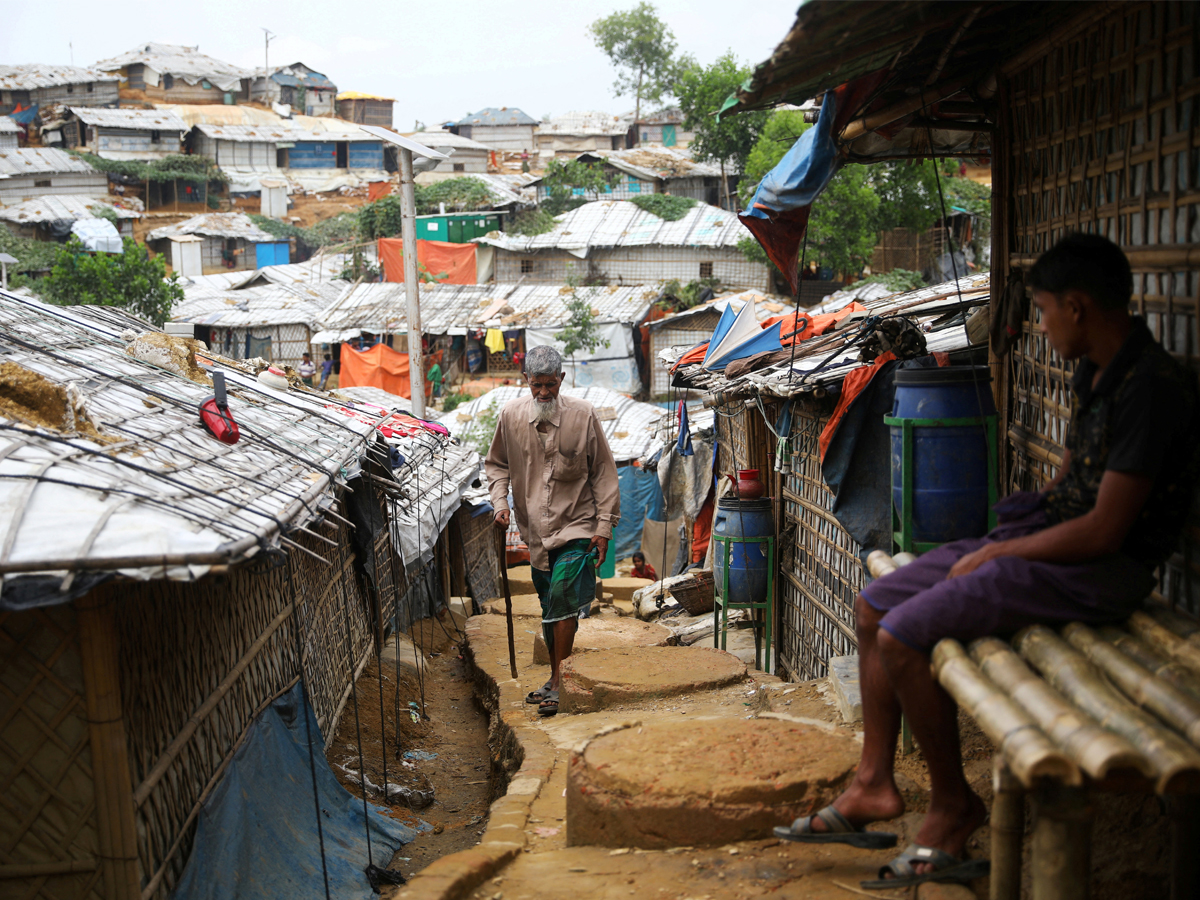
Bangladesh hosts more than a million Rohingya who fled violence in Myanmar. (Photo: Reuters)
The Rohingya crisis is no longer just a story about refugee camps. It is a border and security issue for the whole region. What happens in Cox’s Bazar and on the island of Bhasan Char affects towns and villages across the India–Bangladesh frontier. Short funds, crowded shelters and rising crime make the situation fragile. When the camps are under stress, the pressure spills over into India’s Northeast. That is why calm in Bangladesh’s southeast matters far beyond the camps.
Bangladesh hosts more than a million Rohingya who fled violence in Myanmar. Most live in the vast camps of Cox’s Bazar. Tens of thousands have been moved to Bhasan Char to reduce congestion. The most recent UN planning documents say aid agencies need $934.5 million in 2025 to reach 1.48 million people, including refugees and nearby host communities. This is part of the official 2025–2026 Joint Response Plan, launched by the Government of Bangladesh with the UN and 113 partner organisations. These figures show the scale--the refugee population is large, and the needs are basic such as food, water, health, shelter, education and protection.
Money has been tight. The World Food Programme warned in March 2025 that rations could be halved to about six dollars per person per month without fresh funds. Amnesty International said earlier cuts had already hurt families and that child malnutrition was rising. When food drops, tensions rise in and around the camps. Aid workers and police have reported more theft, smuggling and recruitment by criminal networks. Funding shortfalls are not abstract. They set the temperature for everything else.
Bhasan Char is meant to ease crowding and reduce risks like fires and landslides that plague the hillside camps. UNHCR’s joint dashboard with the Bangladesh government shows the island now hosts many thousands, with a plan that could grow to 100,000 over time. Services have expanded, but the site still depends on steady funding, safe transport links and strong oversight to prevent trafficking. Without that, people will try risky routes back to the mainland or onward through smugglers.
The security picture inside Myanmar also shapes the camps. Fighting in Rakhine has intensified and analysis from regional think tanks and crisis monitors warns that new clashes especially involving the Arakan Army and Rohingya armed groups could push more civilians toward Bangladesh. Experts say a Rohingya insurgency would likely fail militarily but still cause major harm to communities and derail any plan for safe returns. For Bangladesh, that would mean another wave at the border and more pressure on a tired aid system.
India feels the effects quickly, especially in Tripura, Assam and Mizoram. Police and border forces report regular detections of undocumented crossings and trafficking. In July 2024, Tripura authorities arrested a group of Rohingya at an interstate bus terminal. In August 2025, Assam police detained nine Rohingya near the Bangladesh border after years of moving between states. These are small numbers compared with the camps, but they point to a steady flow shaped by poverty, fear, and smugglers’ promises.
To manage this, India’s Border Security Force runs special drives. In August 2025, the BSF launched 'Operation Alert' along sections of the Indo–Bangladesh border in Meghalaya, with round-the-clock patrolling, surprise checks, and riverine patrols to plug gaps. Similar alerts run in Tripura. The focus is on stopping illegal crossings and curbing smuggling and trafficking, which rise when camp conditions worsen.
Human trafficking networks try to turn desperation into profit. In July 2025, a suspected trafficker was arrested in Tripura in a case linked to moving Rohingya and Bangladeshi nationals to Indian cities. These networks use forged documents, informal brokers, and long overland routes. Every disrupted case shows how the border challenge is tied to livelihoods in the camps and the promise, often false, of work elsewhere.
The community's repatriation to Myanmar remains the only long-term solution; however, the conditions there are not yet safe and past attempts failed. Still, there were small diplomatic steps in 2025. During the BIMSTEC summit in April, Bangladesh said Myanmar had confirmed that 180,000 refugees on earlier lists were “eligible for return,” with more cases under review. Refugee leaders remain wary. They want guarantees of rights, citizenship, and security before going back. The signal is that talks are alive but there exists little to no trust.
Dhaka is pushing the issue at the UN and in regional forums. In late September 2025, Bangladesh convened meetings around the UN General Assembly and called for a clear, global roadmap for repatriation, funding and accountability. UNHCR and the EU also underlined that any return must be voluntary, safe, dignified and sustainable. No one wants forced returns into danger. But without movement, Bangladesh carries the burden and camp tensions keep rising.
India’s stance mixes border vigilance with support for eventual return. Public positions over the years have backed a “safe, voluntary, and sustainable” repatriation while tightening domestic enforcement against undocumented migrants, including Rohingya. Reuters has reported interior measures ranging from detention to deportation in some cases, while rights groups warn about pushbacks. For New Delhi, the priority is preventing instability along a very long border while supporting a political path that allows refugees to go home with rights.
All this shows why unrest in Bangladesh’s southeast is not only a local issue. When aid drops or crime rises in the camps, smugglers get busier, and more people look for exits. When fighting flares in Rakhine, new families run for safety. When politics in Dhaka turns rough, security forces on both sides of the border go on high alert. Each strand feeds the others. The result is a loop in which humanitarian strain fuels security strain and security strain makes humanitarian work harder.
(Aritra Banerjee is a journalist focused on Defence, Strategic Affairs, and Indo-Pacific geopolitics. He is also the co-author of The Indian Navy @75: Reminiscing the Voyage. Having spent his formative years in the United States before returning to India, he brings a global perspective combined with on-the-ground insight to his reporting. He holds a Master’s in International Relations, Security & Strategy from O.P. Jindal Global University, a Bachelor’s in Mass Media from the University of Mumbai, and Professional Education in Strategic Communications, and Grand Strategy from King’s College London (King’s Institute for Applied Security Studies). Over the course of his career, Aritra has covered major security and aviation events across Europe and travelled extensively through Kashmir’s conflict zones. With experience spanning television, print, and digital media, he has written as a columnist for leading national and international publications and journals. Twitter: @Aritrabanned)
