
NEW YORK, January 6 — In his first U.S. court appearance, toppled Venezuelan President Nicolas Maduro pleaded not guilty to narco-terrorism charges Monday while defiantly declaring his capture a kidnapping. The hearing set the stage for a legal battle that will center on the legality of the American military operation that brought him from Caracas to New York.
What did Nicolas Maduro say in court?
Maduro, 63, directly challenged the court’s jurisdiction from the outset. Speaking through an interpreter, he stated, “I am innocent. I am not guilty. I am a decent man. I am still president of my country,” before the judge intervened.
He framed his presence as the result of an illegal act. “I’m here kidnapped since January 3, Saturday,” Maduro told U.S. District Judge Alvin Hellerstein. “I was captured at my home in Caracas, Venezuela.” His wife, Cilia Flores, also pleaded not guilty, identifying herself as the “First Lady of Venezuela” and declaring her complete innocence.
Why does Maduro’s ‘kidnapping’ claim matter?
This argument is expected to be the cornerstone of his defense. His lawyer has already characterized the U.S. Special Forces raid as a “military abduction” that violated international law.
By contesting the legality of his seizure, Maduro’s team could attempt to have the case dismissed or evidence thrown out, arguing the U.S. court lacks jurisdiction because the arrest was unlawful. The judge informed Maduro and Flores of their right to notify the Venezuelan consulate, a standard procedure under international treaties.
Will Nicolas Maduro be released?
A near-term release is highly unlikely. Judge Hellerstein ordered Maduro detained at least until the next hearing on March 17, 2026. His defense team has stated it is not seeking bail at this time.
While his lawyers may later argue for release based on sovereign immunity—claiming protection as a head of state—this faces a major hurdle: the U.S. government has long considered his presidency illegitimate. Despite diplomatic demands from allies like Russia and China for his release, the Trump administration insists he will stand trial.
What happens next in the legal process?
The hearing lasted roughly 30 minutes. Judge Hellerstein scheduled the next court date for March 17. Until then, Maduro and Flores will remain in U.S. custody.
They face four criminal counts: narco-terrorism conspiracy, conspiracy to import cocaine into the United States, and weapons charges related to machine guns and destructive devices. The charges stem from a 2020 indictment, updated Saturday, alleging Maduro oversaw a drug trafficking partnership with Mexican cartels and Colombian guerrillas.
How did Maduro appear in court?
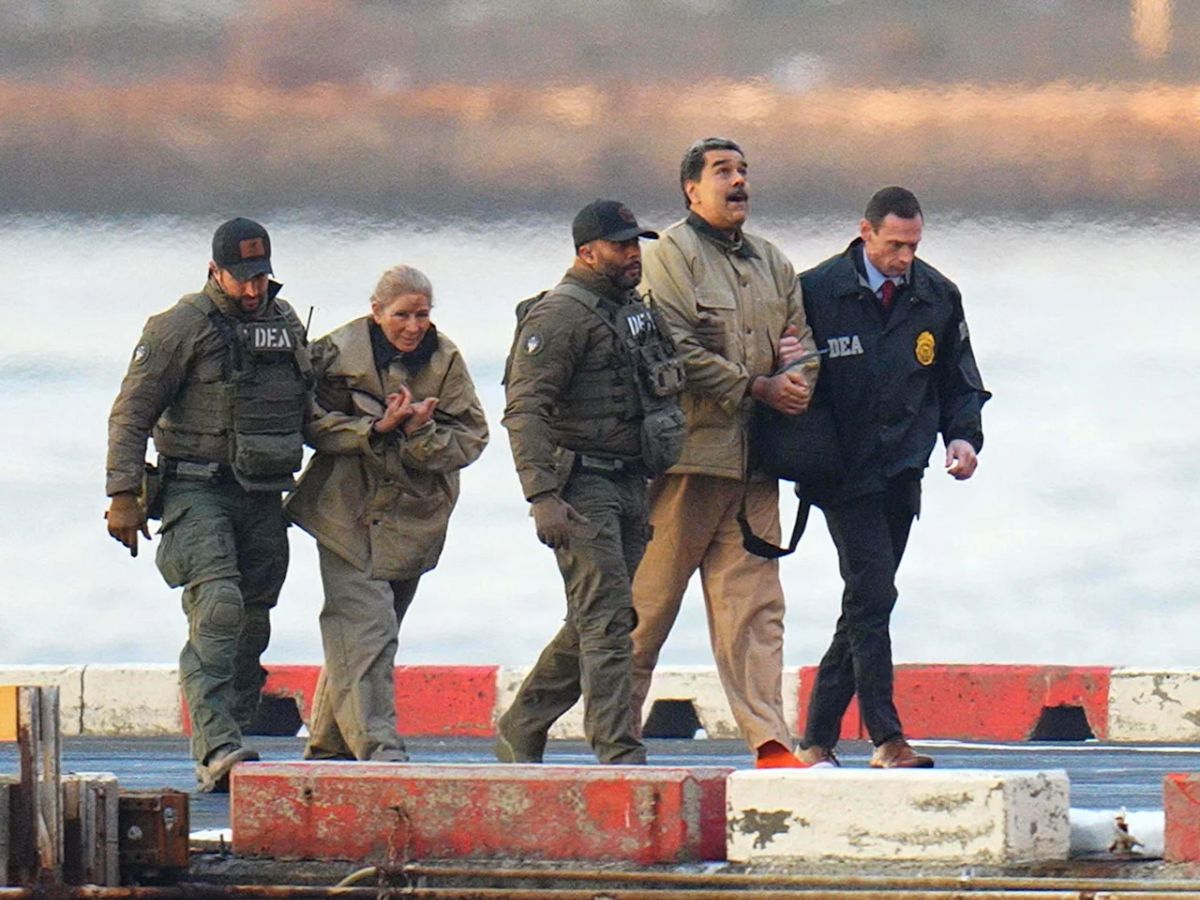
Maduro was brought to the Manhattan courthouse under heavy security. Earlier Monday, he was escorted from a Brooklyn detention facility with his hands zip-tied, placed on a helicopter by armed guards in tactical gear.
In court, he wore orange and beige prison clothing and listened to the proceedings through a headset for translation. The visual contrasted sharply with his former status as a head of state, underscoring the unprecedented nature of the prosecution.
Take of Both the Parties
The U.S. has considered Maduro illegitimate since his disputed 2018 re-election. Prosecutors allege he transformed Venezuela’s state apparatus into a criminal enterprise to traffic cocaine.
Maduro has long denied the charges, calling them a cover for Washington’s desire to control Venezuela’s vast oil reserves. His capture and prosecution follow a purge of senior U.S. military officials by the Trump administration, which has taken a more aggressive stance on foreign intervention.
FAQ: Maduro’s first US court hearing
Q: What are the specific charges against Nicolas Maduro?
A: He is charged with narco-terrorism conspiracy, conspiracy to import cocaine, and weapons charges related to machine guns and destructive devices.
Q: What did Maduro mean by saying he was “kidnapped”?
A: He was asserting that the U.S. military raid that captured him in Caracas was an illegal abduction under international law, not a legitimate arrest.
Q: When is the next court date?
A: The next hearing is scheduled for March 17.
Q: Where is Maduro being held?
A: He is in U.S. federal custody, having been held at a detention facility in Brooklyn before his court appearance.




