
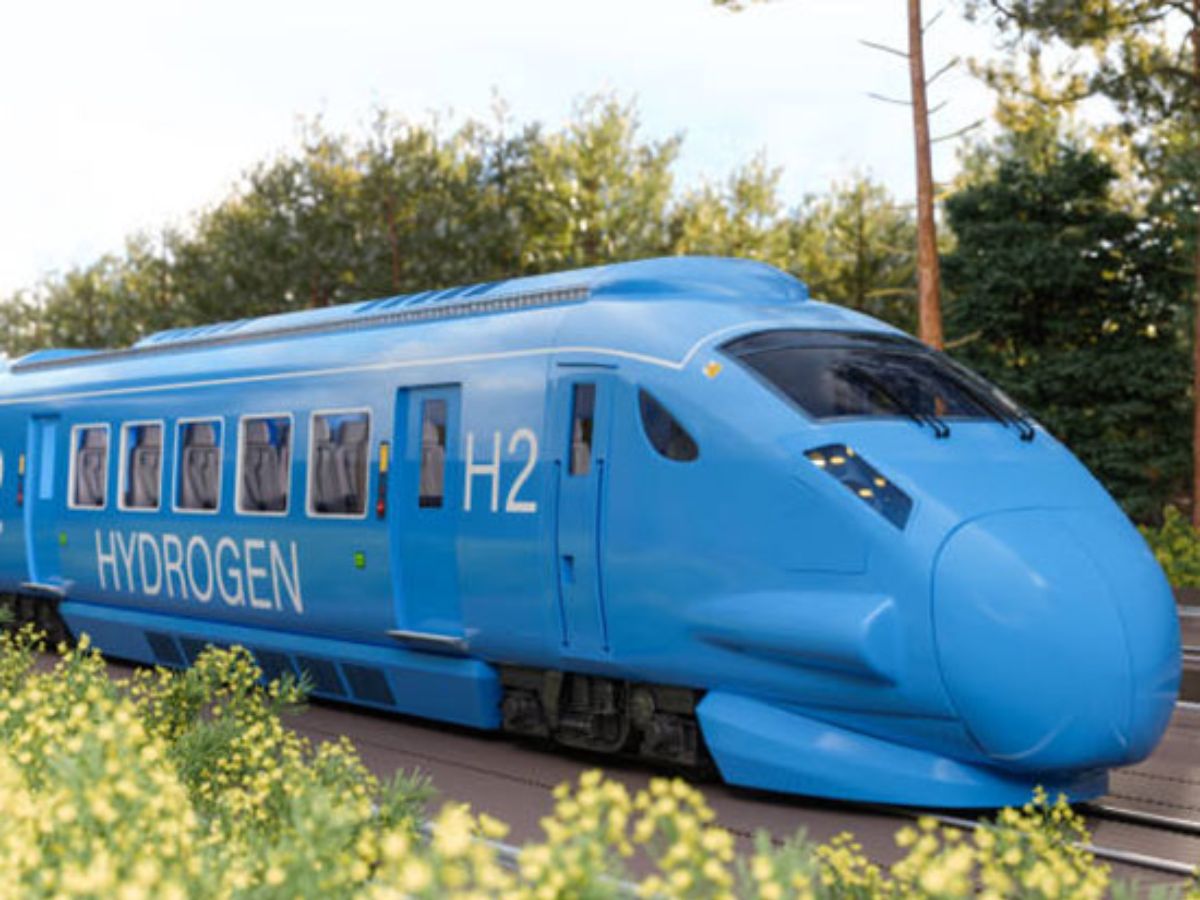
New Delhi: India has overtaken China in the field of hydrogen train technology, marking a major breakthrough in green transport. Prime Minister Narendra Modi is likely to flag off the country’s first hydrogen-powered train soon. The development puts India ahead of China and Pakistan, with Indian Railways claiming that the 1,200-horsepower hydrogen engine train is unique in the world. Railway Minister Ashwini Vaishnaw confirmed in a post on X that the train will arrive shortly.
How India beat China in Hydrogen Technology
The engine of India’s hydrogen train not only delivers 1,200 horsepower but is also capable of carrying 2,600 passengers at once. By comparison, China unveiled its first hydrogen train, CINOVA H2, at the 2024 Innotrans trade fair in Berlin. The Chinese train, a 4-coach unit with a top speed of 160 kmph, can cover 1,200 km on a single charge but has a passenger capacity of only 1,000—less than half of India’s hydrogen train.
Global Comparison
Hydrogen-powered trains were first introduced in Germany in 2022, followed by France, Sweden, and China. India is now the fifth country to develop hydrogen trains. However, unlike its global counterparts, whose engines operate in the 500–600 horsepower range, India’s hydrogen train sets a record with 1,200 horsepower, giving it a clear technological advantage.
First route in Haryana
The first service of the zero-emission train will begin between Jind and Sonipat in Haryana, where hydrogen refueling infrastructure has already been set up in Jind. The only step pending is the oscillation trial, during which the train will run with weights simulating passenger load. For this, metal powder in 50-kg plastic barrels will be used to replicate passenger weight.
The train has been manufactured at ICF Chennai and has already completed successful trial runs.
Hydrogen for Heritage Programme
The train is part of the “Hydrogen for Heritage” programme, aimed at decarbonising tourist and environmentally sensitive rail routes. Heritage routes like Shimla-Kalka, Darjeeling, and Ooty are among the first to be targeted. India plans to build 35 hydrogen trains, with each train costing Rs 80 crore. An additional Rs 70 crore will be spent on hydrogen refueling and maintenance per route.
Experts say the success of this initiative will mark a milestone in India’s journey toward achieving its global net-zero carbon emission target by 2070.




