
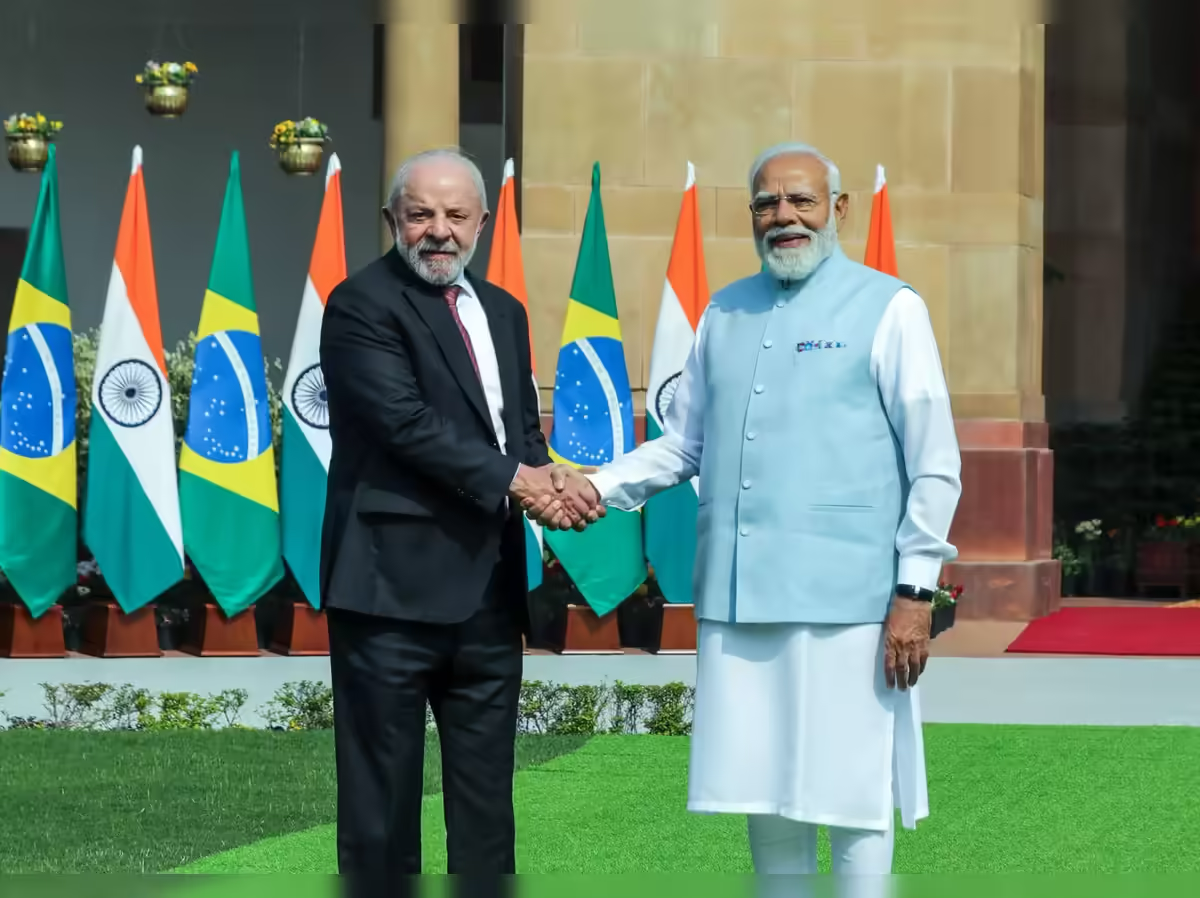
NEW DELHI: India and Brazil on Saturday set a bilateral trade target of more than USD 20 billion over the next five years, following wide-ranging talks between Prime Minister Narendra Modi and Brazilian President Luiz Inácio Lula da Silva. The discussions focused on critical minerals, security, and expanding economic cooperation, signalling a significant deepening of ties between the two largest democracies of the Global South.
PM Modi said the India-Brazil relationship has long benefited from President Lula’s visionary outlook and inspiring leadership. He highlighted that Brazil is India’s largest trading partner in Latin America, adding, “We are committed to taking India-Brazil trade beyond USD 20 billion in the next five years.” The prime minister further emphasized that joint action by India and Brazil strengthens the voice of the Global South, and both countries agreed that terrorism and its supporters remain enemies of all humanity.
The talks, held in New Delhi, addressed strategic sectors including critical minerals, which are vital for technology, defence, and clean energy industries. India has been actively seeking to diversify its sources of rare earth elements and other essential minerals, and Brazil, with its abundant natural resources, is poised to play a key role in meeting India’s supply requirements. Both leaders signed memorandums of understanding (MoUs) to promote cooperation in mining, minerals, and related infrastructure, which are expected to accelerate investment and trade flows in these sectors.
Beyond minerals, India and Brazil are exploring technology and innovation partnerships, particularly in digital infrastructure, artificial intelligence, and semiconductor development. Modi highlighted that collaboration in these areas could benefit both nation’s emerging tech ecosystems and enhance their global competitiveness. Energy cooperation also featured prominently, with discussions on renewable energy, ethanol blending, and sustainable aviation fuels reflecting shared commitments to clean energy transitions and the Global Biofuel Alliance.
Agriculture remains another key area of collaboration. Brazil is a major exporter of commodities such as soybean, sugar, and coffee, while India’s growing demand for agricultural imports provides opportunities for strengthening trade. Experts note that expanding agricultural trade could help stabilize global commodity markets and boost both countries’ rural economies.
The meeting also underscored a shared vision for global governance. Modi and Lula agreed on the need for a more inclusive international order, including reform of the United Nations Security Council, and stressed the importance of multilateralism in addressing global challenges. Both leaders reiterated their commitment to combatting terrorism, climate change, and emerging security threats, signalling alignment on both economic and geopolitical fronts.




