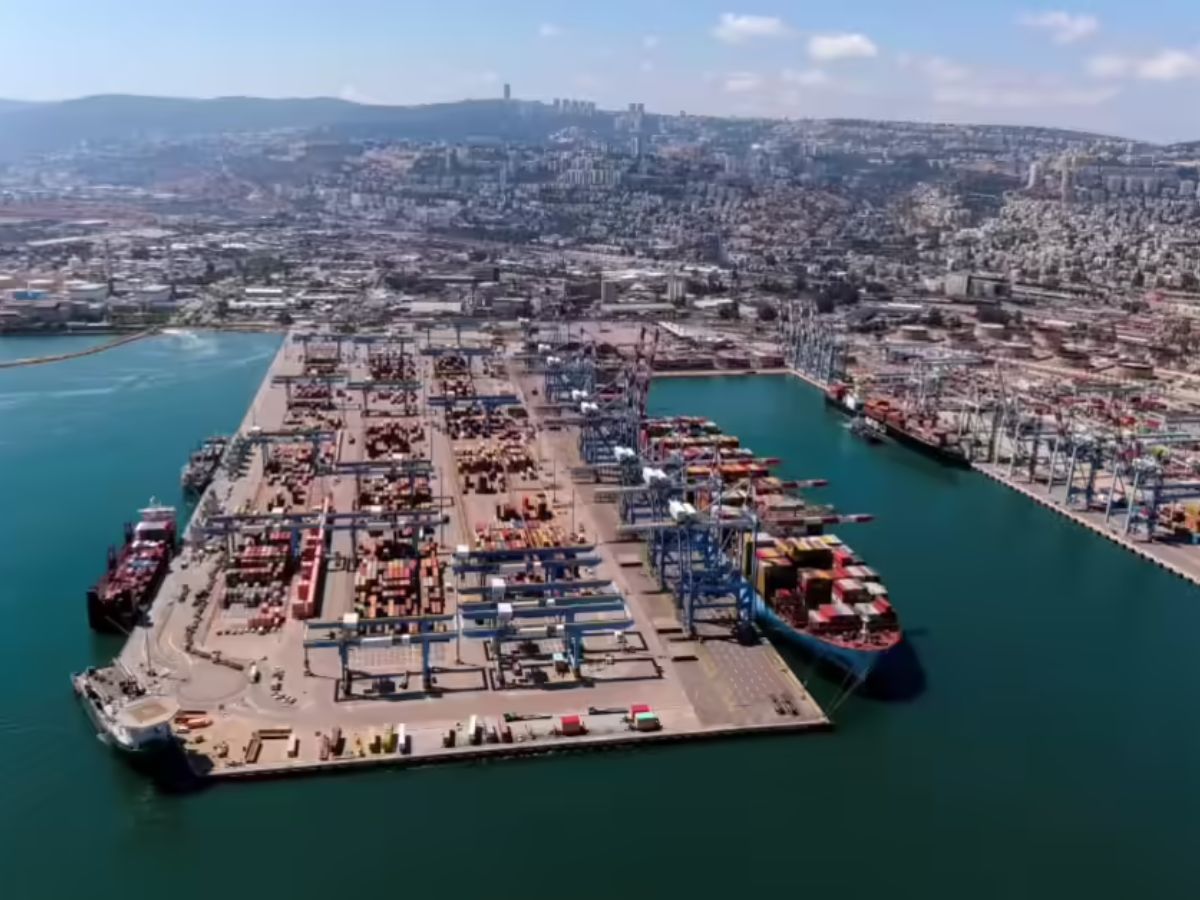
India completes Chabahar investment, executes strategic withdrawal to limit sanctions exposure (Image: File)
New Delhi: India has fully discharged its USD 120 million investment commitment toward the development of Chabahar Port in Iran well before the stipulated timeline, effectively eliminating all outstanding financial liabilities linked to the project as of mid-January 2026.
The funding, delivered through a combination of direct capital transfers and the supply of heavy port equipment including mobile harbour cranes now operational at the Shahid Beheshti terminal, has been fully injected into the project, according to confirmations from the Iranian Ports and Maritime Organization.
The completion of the investment does not represent the sinking or abandonment of capital, money, or strategic assets. The infrastructure financed by India is already in place, the equipment is operational, and the port’s geographic and logistical value remains intact. What New Delhi is withdrawing is direct managerial presence and sanction-exposed control, a move calibrated to protect and preserve the investment and associated strategic interests as geopolitical pressures around Iran intensify.
Chabahar occupies a central place in India’s regional connectivity strategy, providing direct maritime access to Afghanistan and Central Asia while bypassing Pakistan. The port is a key node in India’s International North-South Transport Corridor, enabling faster trade links with Central Asia, Russia, and Europe. Under a long-term bilateral contract signed in May 2024, India Ports Global Limited (IPGL) was granted the right to operate the Shahid Beheshti terminal for a 10-year period, reinforcing India’s role in the port’s commercial and logistical development.
Corporate filings point to a parallel and deliberate recalibration of governance at IPGL, the entity mandated to operate the port on India’s behalf. IPGL continues to exist as an active and compliant company, with an authorized and paid-up capital of Rs 10 crore, but its leadership structure has been pared back significantly. In late September 2025, multiple government-appointed directors stepped down, including Managing Director Sunil Mukundan and Director Unmesh Sharad Wagh, as part of an effort to insulate Indian officials from the risk of personal exposure to secondary sanctions.
Subsequent appointments were designed to maintain statutory continuity while minimizing visibility. Ghanshyam Sharma, appointed Chief Financial Officer in June 2025, assumed a directorial role in December 2025. The company held its most recent Annual General Meeting in December 2025, with its latest balance sheet dated 31 March 2025.
These internal adjustments coincided with a narrowing legal window created by a six-month wind-down waiver issued by the United States Treasury, allowing India to scale back its exposure to Iran-linked operations without triggering immediate sanctions. That waiver is set to expire in April 2026. The pressure has been further amplified by Washington’s announcement of a 25 percent trade tariff on countries continuing commercial engagement with Iran, raising the economic cost of visible involvement for New Delhi and sharpening the need for risk containment.
As part of this de-risking strategy, operational responsibility at Chabahar is being handled by Iranian manpower to ensure continuity of port activity while sharply reducing attribution risk for Indian state entities. The move allows the facility to remain functional without undermining India’s far larger trade relationship with the United States, estimated at approximately USD 86 billion.
Taken together, the developments indicate not a retreat from Chabahar, but a strategic withdrawal from exposure.
India has completed its financial obligations, capped its downside risk, and temporarily stepped back from operational control to navigate an increasingly restrictive sanctions environment that the Trump administration is pushing. The underlying strategic value of the port, as a maritime gateway that bypasses Pakistan and connects India to Afghanistan and Central Asia, remains unchanged.
Once geopolitical and sanctions conditions normalize, India’s posture at Chabahar is structured for rapid reactivation rather than reinvention.
With capital already deployed, infrastructure operational, and contractual rights preserved, New Delhi would not be required to commit fresh investment to resume its role at the port. Operational control could be restored at marginal cost through management contracts and technical oversight using existing institutional frameworks.
In effect, the current drawdown represents a reversible pause in visibility, not a loss of position, leaving India positioned to reassert its presence swiftly once external constraints recede.
