India enters a new Free Trade Agreement era as eight major FTAs are concluded over the past decade, marking a decisive shift in trade policy under Prime Minister Narendra Modi and Commerce Minister Piyush Goyal.
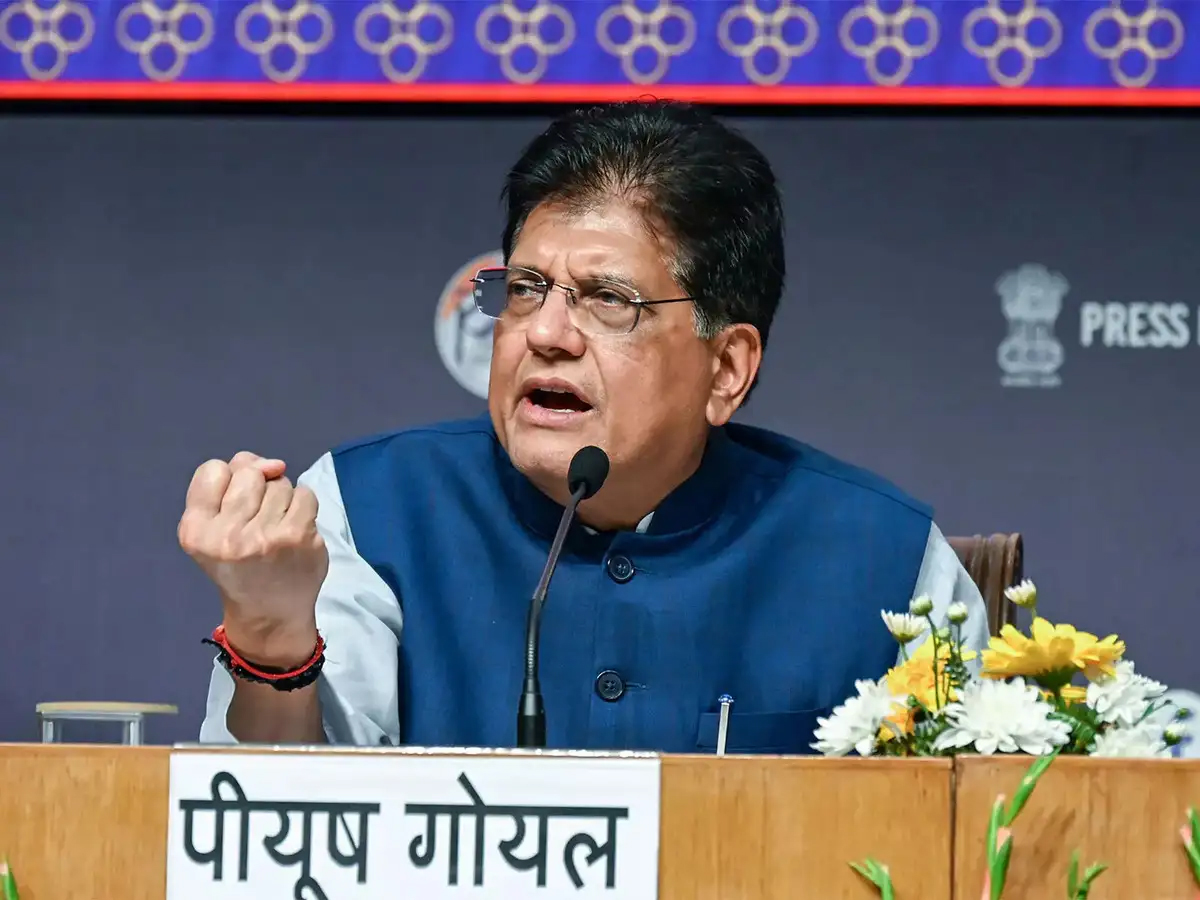
All eight agreements were concluded during the tenure of Piyush Goyal as minister of commerce and industry. (File Photo)
New Delhi: India’s trade policy has entered what officials describe as an Free Trade Agreement era, marked by a sustained increase in the number of FTAs concluded after a prolonged phase of caution and stalled negotiations. Over the past decade, the Piyush Goyal led Commerce ministry has signed eight FTAs or FTA-equivalent comprehensive trade agreements, a concentration unmatched in any earlier comparable period.
For much of the 2010s, India remained reluctant to expand its FTA network, citing concerns over import competition, limited gains from earlier agreements, and domestic adjustment pressures.
That position began to change after 2019, when bilateral and plurilateral trade agreements were placed at the centre of trade policy. Negotiations that had remained unresolved for years were taken forward with a focus on closure rather than continuation.
Between 2021 and 2025, India signed trade agreements with Mauritius, the United Arab Emirates, Australia, the EFTA bloc (Iceland, Liechtenstein, Norway and Switzerland), the United Kingdom, Oman, New Zealand, and the European Union.
The EU FTA is a central element of this phase. Talks with the European Union had been pending for more than 15 years, with negotiations suspended and revived multiple times. The agreement has now been signed, establishing legal finality, even though its implementation is scheduled for a later date.
All eight agreements were concluded during the tenure of Piyush Goyal as minister of commerce and industry.
Several of these negotiations, including those with the EU and the UK, predated his appointment but reached signature during this period.
Officials familiar with the process indicate that this reflected a governance approach in which Goyal was given operational latitude by Prime Minister Narendra Modi to negotiate and settle complex trade-offs directly with partner governments. This reduced repeated political clearances between capitals and allowed negotiations on goods, services, and regulatory issues to proceed in parallel.
Taken together, the agreements signed over the last decade reflect a clear shift in India’s trade policy practice. Free trade agreements have moved from being occasional outcomes to becoming a regular instrument of external economic engagement, with the recent period standing out for the number of long-running negotiations brought to formal conclusion.
