Indian Army’s 2025 focused on deterrence, precision strikes, tech absorption and new units, marked by Operation Sindoor and major capability upgrades.
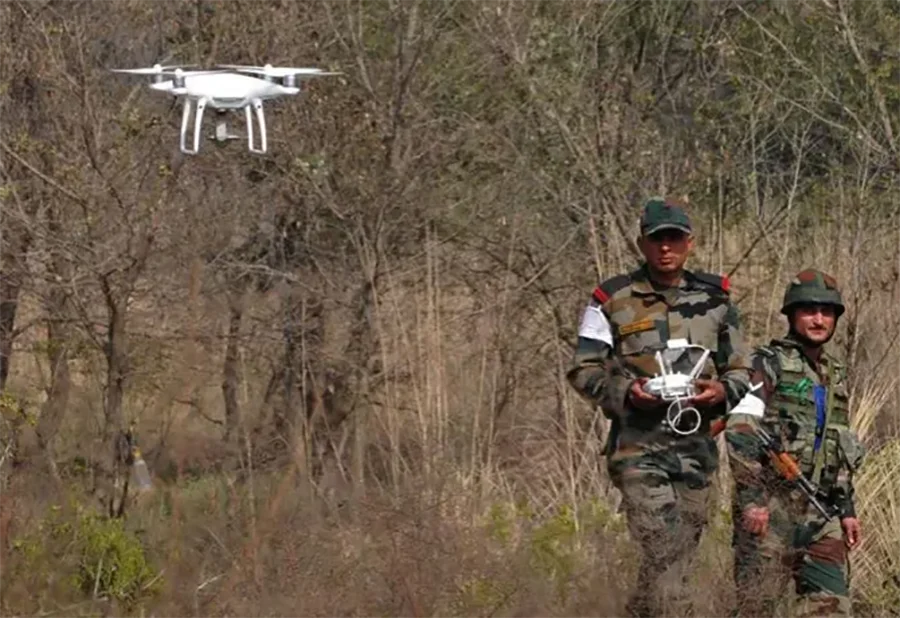
Indian Army showcases new-age warfare capabilities in 2025, highlighting precision strikes, drone warfare and structural reforms (Photo: File)
New Delhi: The Indian Army in 2025 undertook a series of operational, organisational and technological measures that marked a shift towards deterrence-driven operations, long-range precision strike capability and new battlefield structures, according to its year-end assessment of the major milestones achieved during the year.
The year’s most significant operational development was Operation Sindoor, launched in May 2025 following the Pahalgam attack by Pakistan Army-backed terrorists. Operational planning was carried out by the Military Operations Branch of the Indian Army, with execution monitored from the Directorate General of Military Operations. Nine terrorist camps across the border were destroyed, seven by the Indian Army and two by the Indian Air Force.
During the same period, Pakistan attempted to target military and civilian assets using drones on the nights of 7, 8, 9 and 10 May, all of which were neutralised by Indian Army air defence units.
Along the Line of Control, more than a dozen terror launch pads were destroyed using ground-based weapons.
Subsequently, on 10 May, Pakistan’s Director General of Military Operations approached his Indian counterpart, following which an understanding was reached to stop firing and military action.
Long-range firepower and precision strike capability formed a major focus area during the year.
On 1 December , a BrahMos unit of Southern Command, with elements of the Andaman and Nicobar Command, conducted a combat missile launch validating high-speed flight stability and terminal accuracy under simulated battle conditions.
Two additional Pinaka rocket regiments were operationalised in June, and on 29 December the Pinaka Long Range Guided Rocket was successfully tested, marking progress in precision deep-fire capability.
In aviation, the Army Aviation Corps completed the induction of six AH-64E Apache attack helicopters during the year, with three inducted in July and the remaining three delivered in December, strengthening the Army’s attack helicopter capability.
The Indian Army also fielded new battlefield organisations in 2025, including Bhairav Battalions and Ashni Platoons.
A capability demonstration held in Rajasthan on 24 October showcased the integrated employment of these units along with newly inducted technological assets.
Reporting during October described plans to operationalise 25 Bhairav light commando battalions and to raise Ashni drone platoons across infantry units.
New Shaktibaan regiments and Divyastra batteries equipped with unmanned aerial vehicles, including loiter munitions, were introduced to address future operational challenges.
On procurement and capability building, the Army reported achieving 91 percent indigenisation of its ammunition. A large number of unmanned aerial systems were inducted during the year, including remotely piloted aircraft, tethered drones, swarm drones, logistics drones for high-altitude areas and kamikaze drones. Defence Acquisition Council approvals in August and December reflected a focus on unmanned systems, counter-UAS capabilities and precision fires.
The year also saw continued emphasis on technology integration, with 2024 and 2025 observed as Years of Tech Absorption.
Edge data centres were established to enable faster data-to-decision cycles, and multiple in-house software applications were developed to support equipment management and soldier-facing services.
Strategic and doctrinal issues were reviewed at the Army Commanders’ Conference held in Jaisalmer in October 2025, where senior leadership deliberated on grey zone warfare, jointness and self-reliance.
The Army also conducted a series of bilateral military exercises with partner countries including France, the United States, Australia, the United Kingdom, Sri Lanka and the UAE.
The year concluded with a focus on innovation through the Inno-Yoddha 2025–26 programme, which received 89 innovation submissions, with 32 selected for further development and fielding.
