
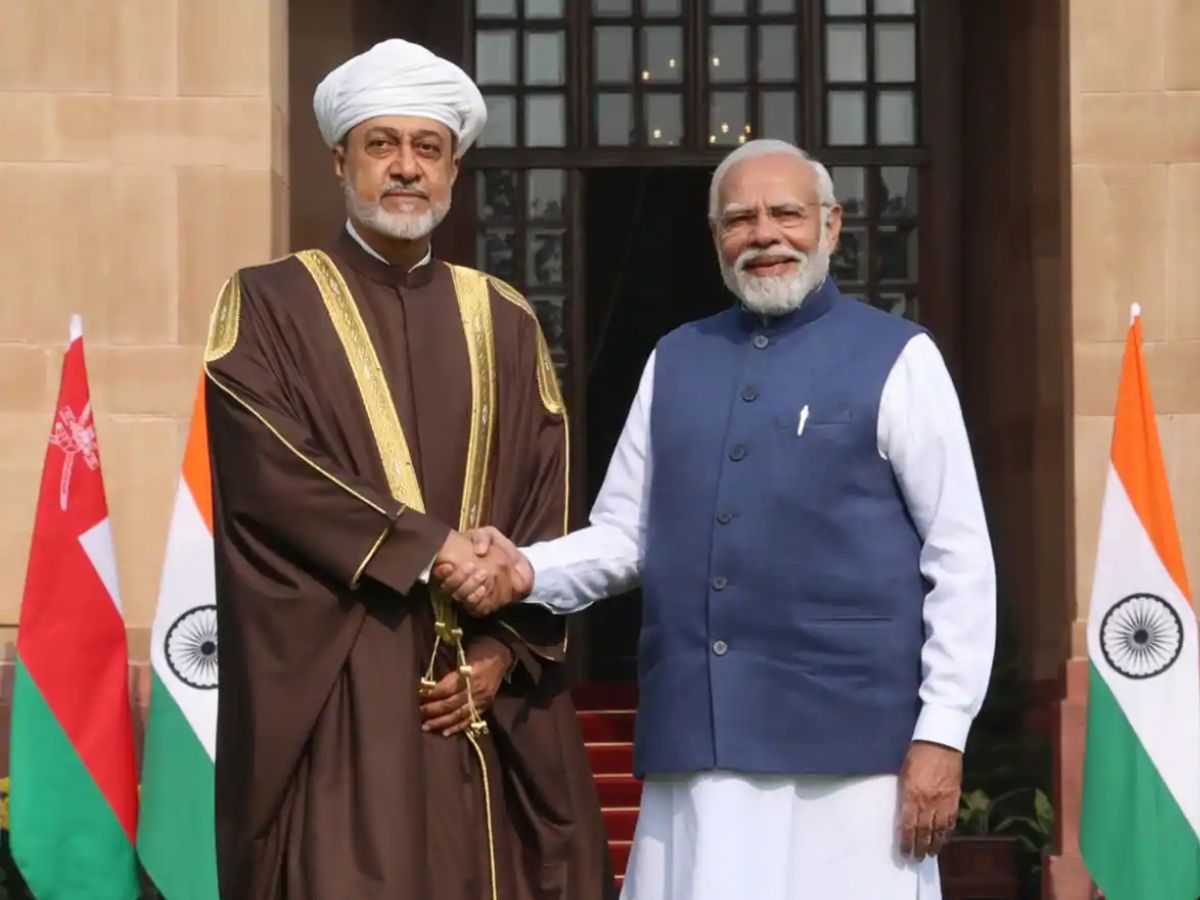
India is set to sign a Comprehensive Economic Partnership Agreement with Oman, a move that marks a significant expansion of New Delhi’s economic engagement with the Gulf region and reflects its broader push to diversify trade partnerships amid global economic realignment.
The development comes as Prime Minister Narendra Modi is travelling to Oman on an official visit, with discussions with the Omani leadership scheduled to begin later in the day. This will be the last leg of PM’s three nations visit.
The visit, at the invitation of Sultan Haitham bin Tariq, coincides with the 70th anniversary of diplomatic relations between the two countries and is intended to provide political momentum to the conclusion of the CEPA, which has been under negotiation for over a year.
The proposed agreement will be Oman’s second free trade pact with an individual country and its first such deal in nearly two decades, underlining the strategic weight both sides attach to the partnership. Officials familiar with the negotiations said the CEPA is expected to improve market access for goods and services, promote bilateral investments, and strengthen cooperation across sectors such as energy, logistics, manufacturing, food processing, and services.
For India, the agreement with Oman is also aimed at supporting supply chain resilience and reducing overdependence on a limited set of markets at a time when global trade patterns are being reshaped by geopolitical and economic uncertainties. The CEPA is expected to anchor the economic pillar of the bilateral relationship, even as Modi’s discussions in Oman are also set to cover defence cooperation, regional security, technology collaboration, and people-to-people ties.
The India–Oman CEPA fits into a wider trade strategy pursued by New Delhi over the past few years, under which India has concluded multiple free trade and economic partnership agreements that are now beginning to show tangible results for farmers, traders, and exporters.
In 2025, India concluded a Comprehensive Economic and Trade Agreement with the United Kingdom, under which tariffs on more than 90 percent of traded goods are being reduced, with expectations of a significant expansion in bilateral trade. In 2024, India signed a trade and economic partnership agreement with the European Free Trade Association, comprising Switzerland, Norway, Iceland, and Liechtenstein, backed by strong investment commitments into India.
Earlier, in 2022, India concluded the Economic Cooperation and Trade Agreement with Australia, cutting or eliminating tariffs on most traded goods and opening new opportunities for Indian exports. The same year, India signed a CEPA with the United Arab Emirates, reducing tariffs on over 90 percent of Indian exports and boosting trade in sectors such as gems and jewellery, textiles, leather, and engineering goods.
India’s 2021 trade pact with Mauritius, its first Africa-focused agreement, improved market access for Indian businesses while positioning Mauritius as a gateway for Indian trade and investment into Africa. Officials said the proposed CEPA with Oman is expected to further consolidate India’s economic footprint in the Gulf and strengthen the architecture of its long-term trade and investment engagement.




