SPARSH, meant to digitise defence pensions, leaves many veterans stranded in digital gaps—efficiency promised, exclusion delivered, as service meets a login wall.
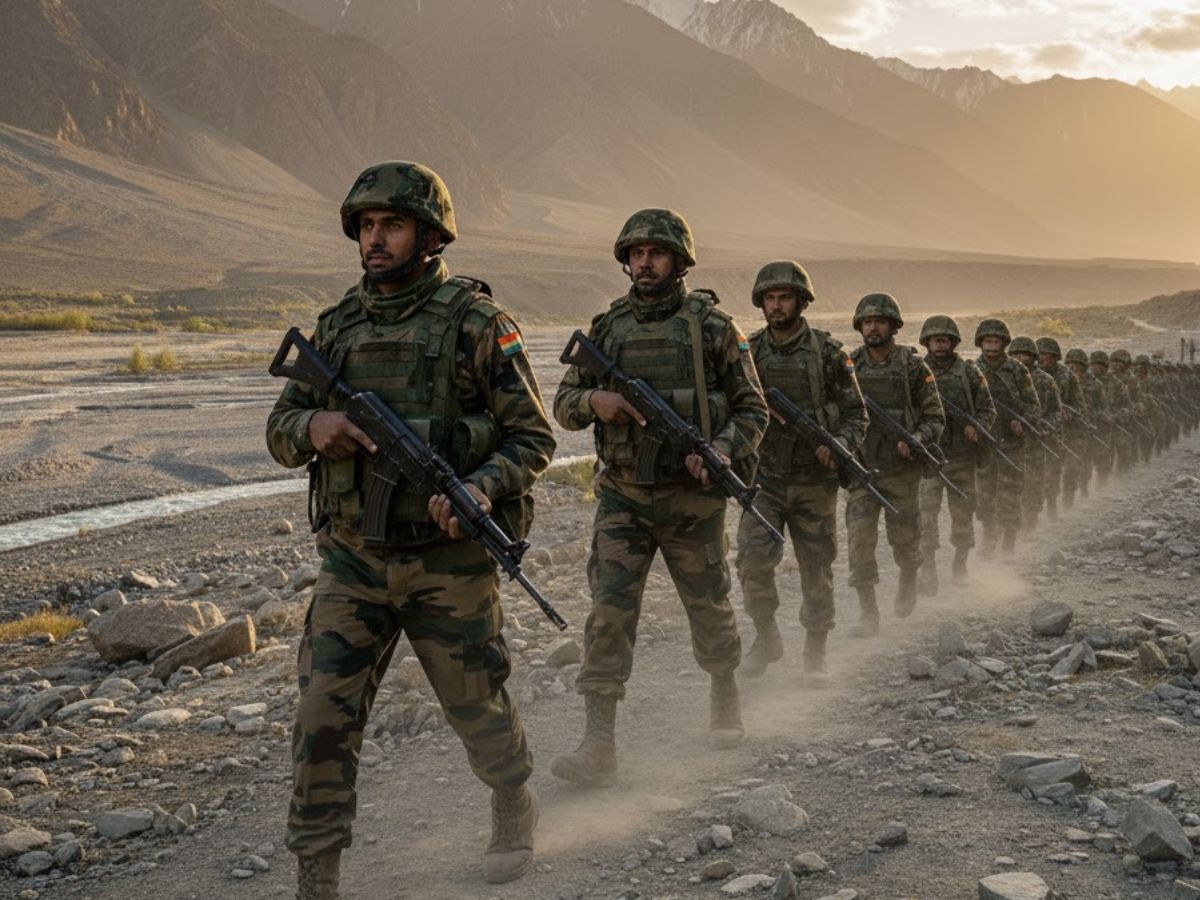
India's Veterans Face a Mounting Digital Divide in Pension Delivery! (Image: Gemini AI)
It began as a promise; the promise of ease, efficiency, and transparency. The System for Pension Administration (Raksha) [SPARSH], was launched to bring the nation’s veterans into a seamless digital fold, wherein pensions could be credited with precision, and the endless queues of bureaucracy would hopefully fade into the background. Yet, what was meant to be a bridge has become quite a rift. For tens of thousands of soldiers who once stood guard at the Republic’s borders, the new frontier is not a line on a map but a login page that will not load.
SPARSH centralised what had long been a decentralised, bank-mediated system. Every pensioner’s data, once verified by local branches familiar with faces and histories, was now set to be funnelled into a single national dashboard. The idea was noble, uniformity and accountability through automation. But in a country as vast and uneven as India, technology tends to mirror inequality. The scheme presumed that every veteran, widow, or dependent had a smartphone, stable internet, and the digital fluency to navigate a government portal. The presumption was cruel in its optimism.
Across India’s rural expanse, connectivity still flickers like an unreliable lamp. Villages on the fringes of Arunachal, Rajasthan, or interior Maharashtra lose signals for hours; in parts of the Northeast, days pass without mobile coverage. For a seventy-year-old havildar living alone in a village outside Rewari, whose eyesight dims and whose hands tremble over the keypad, SPARSH is not empowerment, it is exclusion dressed as efficiency. His pension, earned in the mud and fire of battle, sits untouched in a digital vault he cannot access.
Government data itself bears out the cracks. By mid-2025, roughly thirty-five lakh defence pensioners had been migrated onto the SPARSH platform. Yet, nearly 1.2 lakh accounts were suspended for non-submission of life certificates, bureaucratic shorthand for digital inaccessibility. Many of these veterans are widowers, or live far from their children, and rely on erratic cyber-cafés or neighbours’ phones. A missed OTP or a failed fingerprint match is enough to erase a livelihood. It is the new bureaucracy of silence, where the machine’s refusal becomes the final word. The Auditors have not been kind either. A Comptroller and Auditor General review, found that the rollout was premature, with the system deployed before adequate testing or manpower was in place. The help-desk, meant to serve as the lifeline, has become a museum of unanswered tickets. The grievance cell exists, but functions like a confessional without a priest, through which veterans pour their stories but hear nothing in return bar the sound of silence.
What truly collapses here is not the technology, but the state’s imagination of its people. SPARSH was built as if the veteran were an urban user: literate, connected, and comfortable in the navigation of the digital landscape. It ignored the vast demographic truth that most ex-servicemen retire to small towns and villages, where life still runs on paper and face-to-face trust. It ignored that old age brings frailty, not familiarity with forms. It ignored that service cannot be repaid with hyperlinks.
Bank-based disbursals offered something that an algorithm can never, humanity. The local branch manager who knew each pensioner by name, or the officer who verified a widow’s signature in person. That scaffolding of human assurance has been replaced by a captcha. Pensioners who do not know that they have to prove that they aren’t robots by clicking on 3 squares of a dissected motorcycle stare blankly at dashboards that demand re-authentication; widows travel kilometres to ask a cyber-café boy to upload their proof of life. For them, the system’s motto of ease of living rings like mockery.
The Defence Accounts Department insists that ninety-five percent of accounts are successfully onboarded. Success, in this calculus, is a checkbox, not a condition of dignity. The figure conceals what it cannot count, i.e. the silent veterans who no longer complain, the spouses who borrow money until the next verification, the dependents who travel to district centres to prove that their parents are not dead. It conceals the moral dissonance of a government that celebrates digital inclusion while having designed a system that punishes the disconnected.
India’s telecom revolution, for all its triumphs, still leaves pockets of absence, zones where even the promise of a missed call is luxury. SPARSH has turned those blank spaces into bureaucratic sinkholes. While the government’s servers hum in Delhi; the signal fades in the town of Dantewada, in Chhattisgarh. Between the two lies a generational betrayal a state that forgets that governance is not merely about connection, but contact.
The larger indictment here is philosophical. The centre’s obsession with automation has reduced the citizen to data, the pensioner to a number, and service to a process. It has replaced the handshake with a helpline, the clerk’s memory with a machine’s indifference. In the age of digital sovereignty, the soldier’s body has been replaced by his biometrics. And when those fail, the soldier is written off as a glitch.
For all its rhetoric of reform, SPARSH is not a leap forward; it is a quiet retreat from responsibility. A government that cannot look its veterans in the eye has found refuge behind its screens. In the end, what the soldier seeks is not favour, but remembrance. His pension is not an allowance; it is a promise of the Republic’s pledge to honour service with care. That promise should not depend on the strength of a signal or the literacy of a widow. For when gratitude is measured in bandwidth, the nation has already lost its connection.
(Gaurav Sharma is a Mumbai-based journalist associated with Fauji India and a practising legal consultant focusing on veterans' welfare. His work focuses on ex-servicemen issues, military law, and personnel policy, bringing a legal lens to issues affecting India’s armed forces and veteran community.)
