With India simultaneously chairing both Indian Ocean Rim Association and Indian Ocean Naval Symposium from 2025 to 2027, New Delhi is uniquely positioned to harmonize maritime capacity-building across regions.
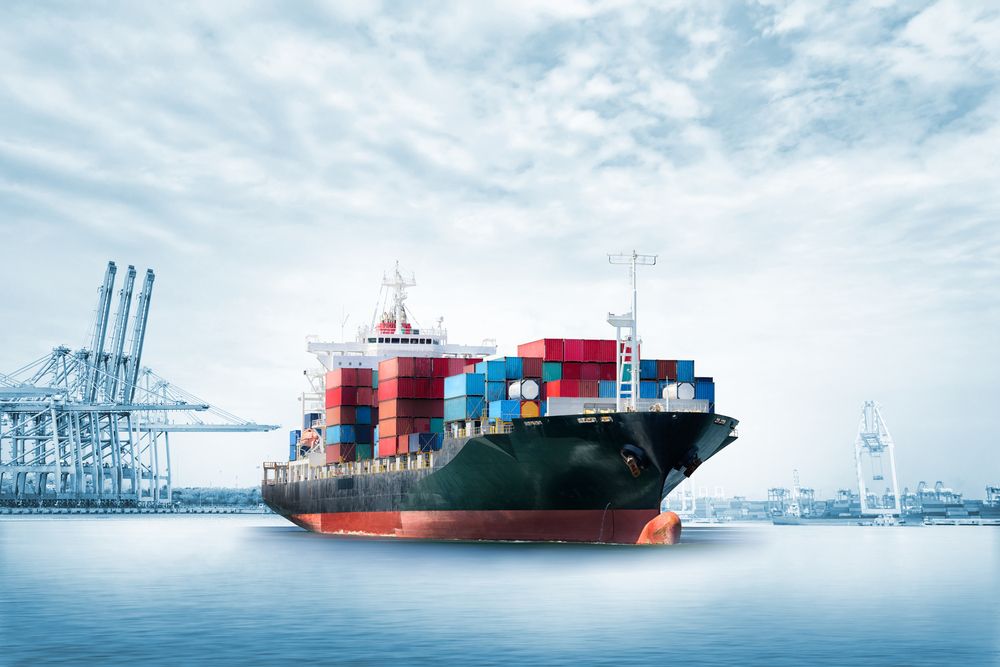
IPRD 2025 convenes leaders and experts to strengthen maritime security, build capacity, and foster cooperation across the Indo-Pacific region (Photo: Pinterest)
NEW DELHI:
As global attention remains preoccupied with the turbulence of Europe and West Asia, the Indo-Pacific has quietly emerged as the true fulcrum of 21st century geopolitics. Stretching from Africa's eastern coastline to the shores of the Americas, this vast maritime expanse has become both the nerve centre of global trade and the arena of evolving strategic competition. The Indo-Pacific Regional Dialogue 2025 (IPRD 2025), India's flagship maritime conference convened by the Indian Navy and the National Maritime Foundation, brings the spotlight back where it belongs on peace, partnership, and prosperity in this critical region.This year's Dialogue, themed "Regional Capacity-Building and Capability-Enhancement for Promoting Holistic Maritime Security and Growth," underscores the need for the Indo-Pacific to move from ideas to implementation. As the region faces overlapping crises from piracy and illegal fishing to fragile supply chains and climate-induced vulnerabilities IPRD 2025 underscores how cooperation and capability must progress hand in hand.
A REGION AT THE HEART OF THE WORLD
Home to half of humanity and encompassing nearly 65% of the world's oceans, the Indo-Pacific serves as the artery of global commerce. Every major shipping route, energy corridor, and trade network intersects through these waters. Yet its dynamism is shadowed by insecurity: competing claims in the South China Sea, piracy in the Western Indian Ocean, and environmental degradation across fragile island ecosystems.
For India, whose strategic and economic lifelines traverse the Indian Ocean, the Indo-Pacific's stability is inseparable from national well-being. Accordingly, India's maritime worldview shaped by the MAHASAGAR (Mutual and Holistic Advancement for Security and Growth Across Regions) concept champions collaboration across the Global South. It is founded upon the principles of respect (Samman), dialogue (Samaad), cooperation (Sabyog), and the pursuit of peace and prosperity (Shanti and Samriddhi).
INDIA'S EXPANDING ROLE AS A MARITIME CAPACITY BUILDER
India's role as a capacity builder in the Indo-Pacific has steadily evolved from symbolic initiatives to tangible contributions. Its new India-UN Global Capacity Building Initiative, launched in 2025, expresses this transformation. Extending beyond the economy and governance, it strengthens partner countries’ capabilities in digital infrastructure, food security, health systems, and climate resilience.
In the maritime sphere, India's achievements are particularly visible. The Indian Navy provides training to hundreds of personnel from friendly foreign countries each year and transfers equipment ranging from patrol vessels to surveillance technology. The Indian Naval Hydrographic Department among the world's oldest supports safe navigation for regional partners, assisting in charting waters crucial to trade, transport, and connectivity.
India's leadership extends to multilateral ventures. Initiatives like the Quad-supported Maritime Initiative for Training in the Indo-Pacific (MAITRI) and the annual Maritime Information Sharing Workshop organized at the Information Fusion Centre-Indian Ocean Region (IFC-IOR) have fostered professional networks among navies, coast guards, and maritime agencies. These mechanisms have strengthened transparency, enabled joint action against piracy and smuggling, and enhanced early-warning systems for natural disasters.
BUILDING BRIDGES ACROSS OCEANS
Beyond security, India's maritime diplomacy emphasizes bridges of collaboration from Africa's eastern seaboard to the Pacific Islands. The IPRD 2025 highlights new synergies between Africa's Integrated Maritime Strategy (AIMS 2050) and Pacific frameworks like the Pacific Islands Forum. The Dialogue also engages actively with regional institutions such as the Indian Ocean Naval Symposium (IONS), the Indian Ocean Rim Association (IORA), and the Indian Ocean Commission (IOC), which India joined as an observer in 2020.
With India simultaneously chairing both IORA and IONS from 2025 to 2027, New Delhi is uniquely positioned to harmonize maritime capacity building across regions. This rare convergence offers a historic opportunity to translate policy dialogue into frontline operating synergy, ensuring coherence across humanitarian operations, information sharing, capability development, and environmental protection.
INDIA AND THE VISION OF A SHARED FUTURE
The IPRD's growth from a naval "Sea Power Conference" in 2018 to a premier international maritime forum today mirrors India's expanding strategic footprint. Over successive editions, it has evolved into a space that does not merely analyse the Indo-Pacific but shapes its narrative. The Dialogue's central purpose practical cooperation through dialogue makes it a natural complement to India's conceptual frameworks like SAGAR (Security and Growth for All in the Region) and MAHASAGAR.
IPRD 2025 also seeks greater intellectual participation from industry, academia, and civil society. It reflects an understanding that "holistic maritime security extends beyond navies to include policymakers, environmental experts, economists, and innovators who together define the Indo-Pacific's future".
FROM DIALOGUE TO ACTION
The Indo-Pacific today stands at the crosscurrents of promise and peril. Peaceful trade depends on secure sea lanes, prosperity depends on inclusive cooperation, and sustainability depends on shared stewardship of the marine environment. As geopolitical competition intensifies, what the region needs most is credible capacity and sustained capability to safeguard these shared goods.
India's vision built on dialogue that leads to consensus and consensus that drives action positions it as both a bridge and a balancing force. Through the IPRD 2025, India reinforces its role as a convener of regional thought and a catalyst for maritime transformation.
As the curtains rise on this year's Dialogue, one message stands clear: India is not merely part of the Indo-Pacific... it is shaping it. From Samvaad to Shanti from dialogue to peace India's leadership calls upon the region to embrace cooperation over confrontation and partnership over polarity. The future of the Indo-Pacific will not be written by competition at sea but by collaboration across it.
Anuttama Banerji is a research associate with the National Maritime Foundation.
