At IPRD 2025, Indonesian Navy’s First Admiral Salim warned that climate change is fueling terrorism, piracy and instability across the Indo-Pacific.
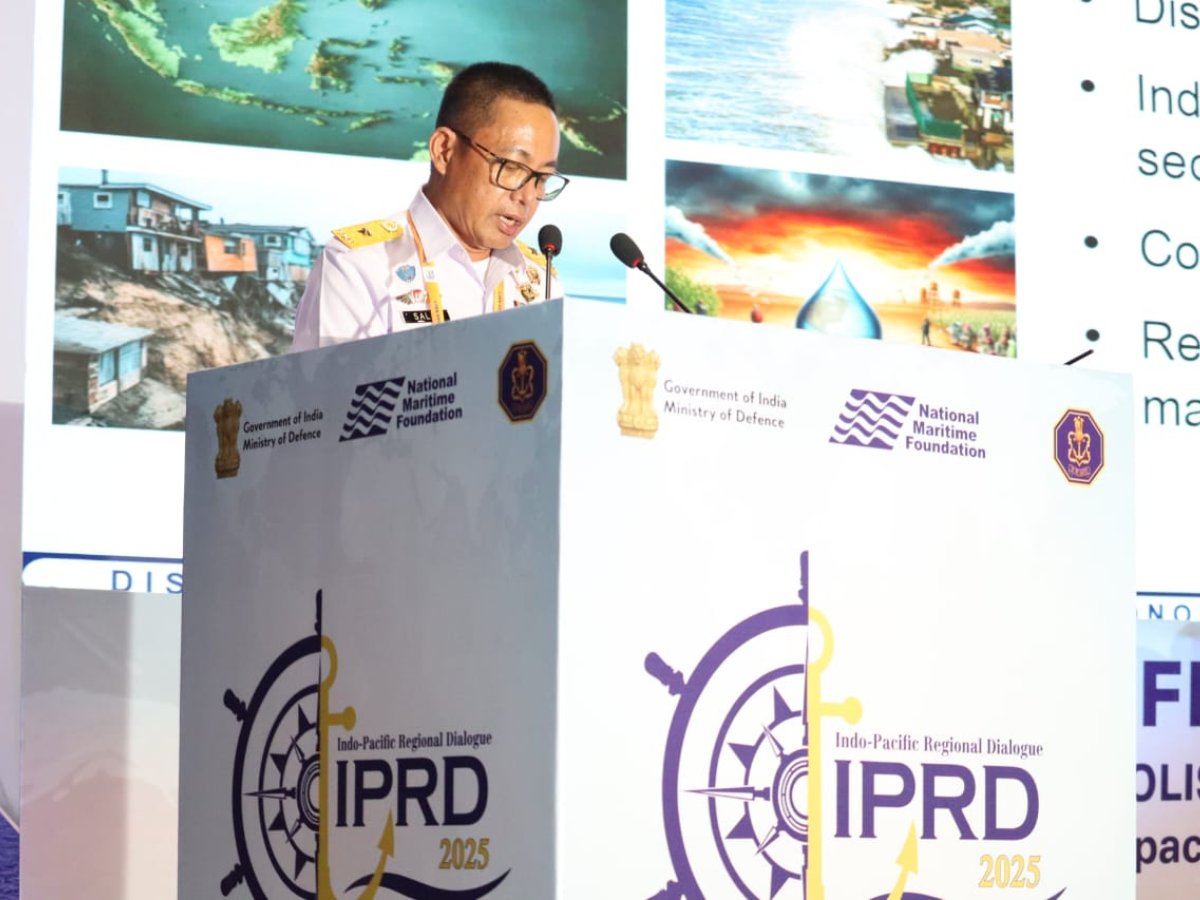
First Admiral Salim at IPRD 2025 highlighted how climate change is reshaping Indo-Pacific security, fueling terrorism and maritime instability (Photo: File)
At the Indo-Pacific Regional Dialogue (IPRD) 2025 in New Delhi, First Admiral Salim, a seasoned Indonesian Navy officer and United Nations peacekeeping veteran, cast the spotlight on the link between climate change and rise in incidents of terrorism as well as organised crime.
First Admiral Salim described climate change as a live operational factor — altering coastlines, driving migration, and eroding governance in fragile states. Each of these pressures, the officer said, creates fertile ground for extremist recruitment, maritime crime, and state instability.
Framing environmental disruption as a “threat multiplier” within the maritime domain, he highlighted how it is beginning to reshape the security landscape of the Indo-Pacific in ways that conventional military doctrines are ill-equipped to handle.
The slides presented during the session mapped out a clear cause-and-effect chain. Rising sea levels are endangering ports and naval bases, while disrupted shipping routes provide openings for piracy and smuggling. Coastal displacement is pushing vulnerable populations inland, intensifying social friction. Resource scarcity — from fisheries to seabed minerals — is encouraging competition that can spill into conflict.
Indonesia, with more than 17,000 islands, was cited as a microcosm of the region’s looming challenge. Its geography magnifies the intersection between environmental stress and security threats: when infrastructure falters, law enforcement weakens, and extremist groups find space to operate in the resulting void.
The officer argued that the “climate-security nexus” is blurring old distinctions between state and non-state threats. Weakened coastal authorities often lose control of maritime zones, creating ungoverned spaces where militant or criminal groups can thrive. In areas of prolonged drought or depleted fisheries, these groups exploit grievances over lost livelihoods to recruit members and justify violence.
Climate-induced displacement, the presentation noted, can also drive humanitarian crises that overwhelm governments and militaries alike. As people are forced to move, the potential for radicalisation in refugee clusters grows — a risk that national security establishments must begin to treat as part of climate preparedness.
The Indonesian Navy’s proposed response focused on regional coordination. Joint patrols in climate-vulnerable zones, shared meteorological data systems, and combined training exercises were identified as key measures to build resilience. Naval forces, the officer said, must be capable of dealing with overlapping threats — disaster relief, law enforcement, and counterterrorism — all at once.
Real-time information-sharing networks and sustainable frameworks that extend beyond one-off crisis responses were also emphasised. In the officer’s words, the goal is to build “operational-level collaborative mechanisms” so that future maritime crises do not become breeding grounds for extremism.
