Iran-US Tension: India docks Iranian warship IRIS Lavan at Kochi naval base after US sinks frigate off Sri Lanka. 183 crew sheltered amid US-Iran war escalation.
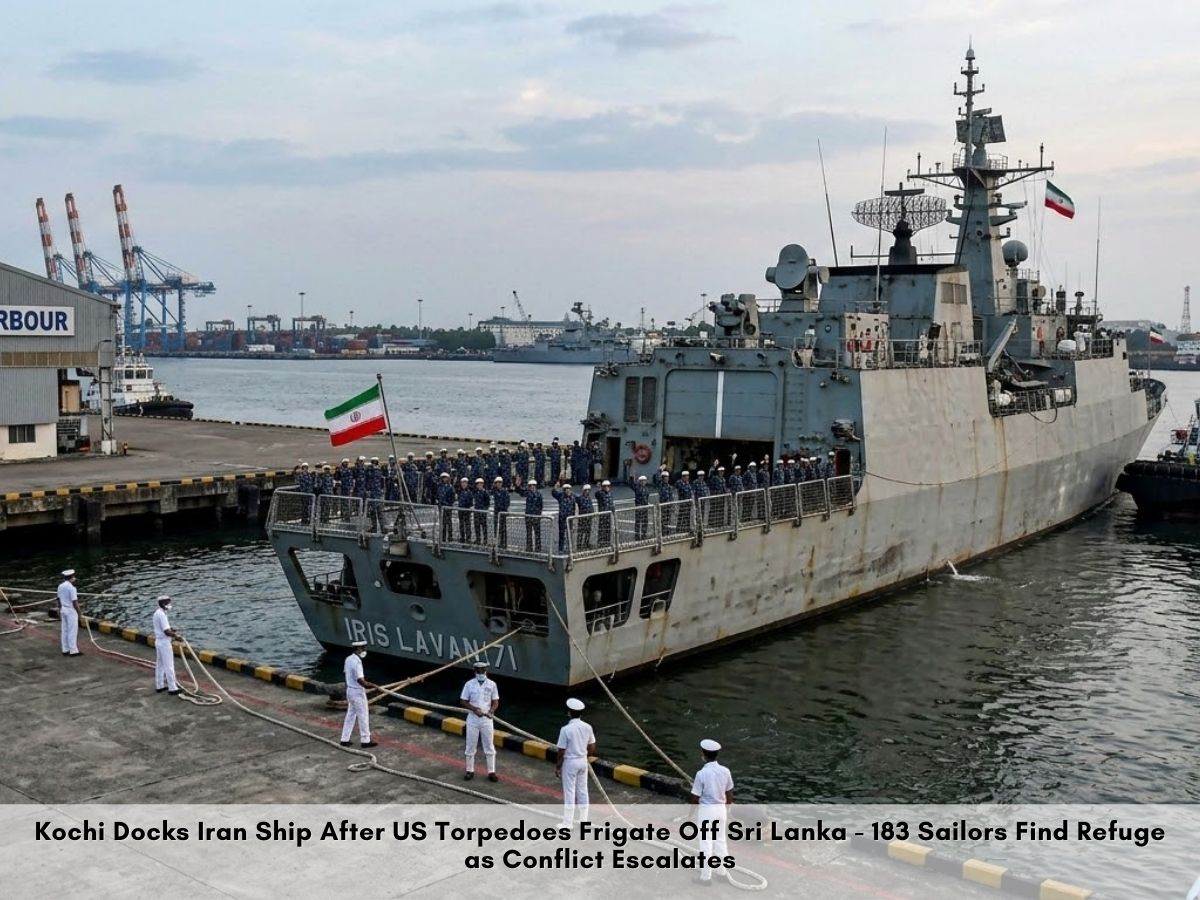
India's Pragmatic Move Allows IRIS Lavan Entry Despite US Strikes - Sri Lanka Shelters Sister Vessel IRIS Booshehr (Image: X)
A massive Iranian warship slipped quietly into Kochi harbor Wednesday, finding unexpected refuge at India's southern naval base just hours after American torpedoes sent a sister vessel to the ocean floor off Sri Lanka. The IRIS Lavan, carrying 183 sailors, docked under the shadow of escalating US-Iran hostilities that have already claimed 87 lives at sea. Indian officials moved swiftly to house the crew at secure naval facilities, threading a delicate needle between old friendships and new alliances.
Iran first approached India on February 28, citing urgent technical problems aboard the amphibious assault ship that had recently joined India's International Fleet Review. New Delhi approved docking rights March 1, and IRIS Lavan tied up at Kochi on March 4—the very day US forces sank the frigate IRIS Dena 19 nautical miles from Sri Lanka's coast. Government sources described the timing as coincidental but acknowledged the regional tensions made the decision anything but routine. For the sailors aboard, Kochi offered a critical breathing space amid open-ocean threats.
Across the Palk Strait, Sri Lankan President Anura Kumara Dissanayake opened Trincomalee harbor Thursday to the IRIS Booshehr, another Fleet Review participant hobbled by engine trouble and carrying 208 crew. "We have a humanitarian responsibility," Dissanayake told reporters, framing the move through international maritime conventions rather than geopolitics. Both nations cited technical necessity over military alignment, though the warships' arrival painted a picture of naval forces seeking sanctuary from America's expanding campaign.
India walks a high wire, maintaining civilizational bonds with Persia while deepening strategic ties with Washington. Critics at home question New Delhi's silence after the Dena sinking in its strategic backyard, yet officials point to pragmatic national interests. The US recently granted a one-month waiver allowing India to keep buying discounted Russian oil—a lifeline as Iran threatens to choke the Strait of Hormuz, through which half of India's crude flows. Past secretaries Clinton and Kerry issued similar waivers when India cut direct Iranian purchases.
The Dena's sinking sent ripples across regional capitals, raising fears that US-Iran combat could engulf vital sea lanes. Kochi and Trincomalee suddenly became more than ports—they're symbols of neutrality in waters that carry the world's energy lifelines. Commercial shipping already reroutes warily, insurance rates spike, and island nations watch nervously as great power proxies turn their backyard into a potential battlefield. For now, India's naval hospitality buys time for diplomacy even as missiles fly elsewhere.
A: Iran requested urgent entry February 28 due to technical issues; approval came March 1, docking March 4.
A: US submarine torpedoed and sank it March 4, 19 nautical miles off Sri Lanka, killing 87 sailors.
A: 183 crew members from IRIS Lavan housed at Kochi naval base.
A: Sheltering 208 crew at Trincomalee under humanitarian terms, citing engine problems.
Disclaimer: This information is based on inputs from news agency reports. TSG does not independently confirm the information provided by the relevant sources.
