The US–Japan trade deal tilts in Washington’s favor with higher tariffs, big farm imports, and $550B Japanese investment controlled by America.
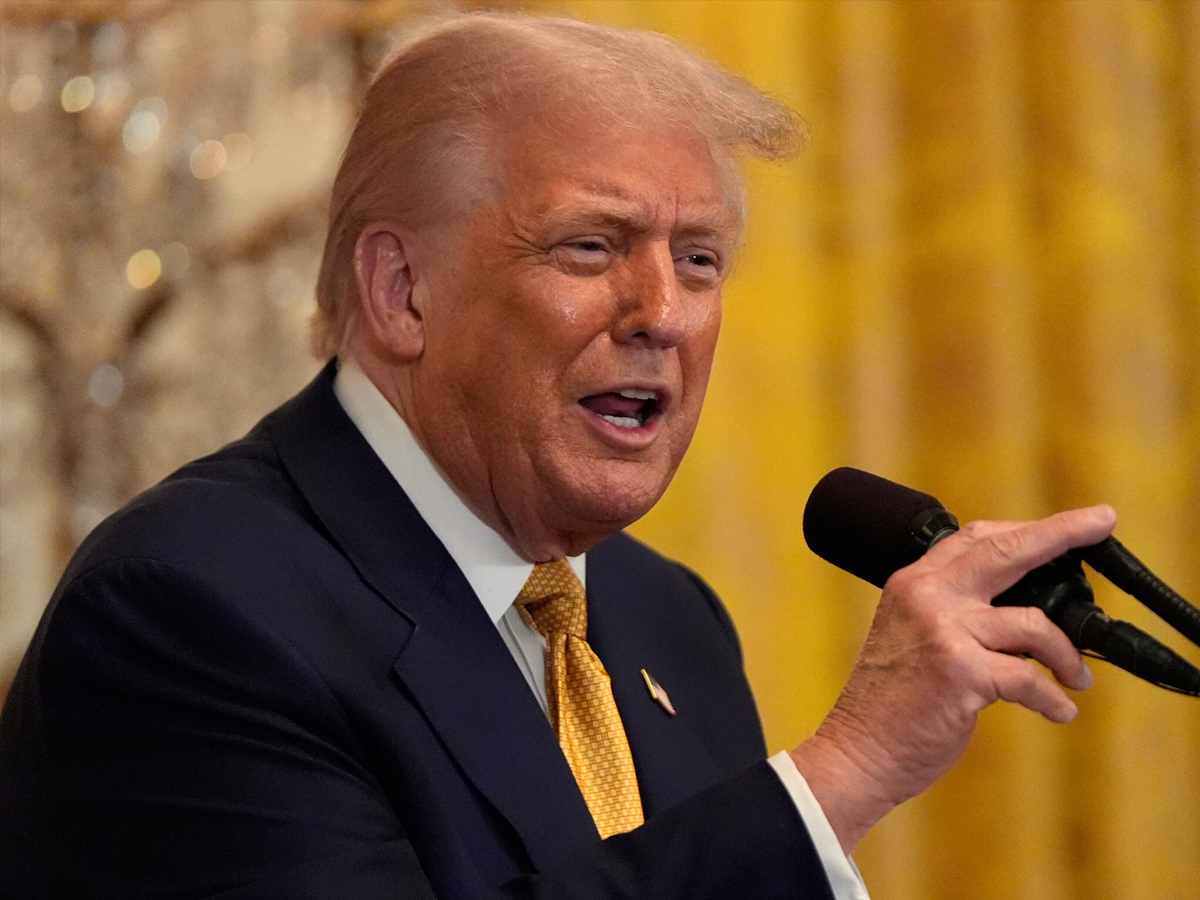
Signed by President Donald Trump, the order sets out a new system of tariffs, market access rules, and investment commitments that U.S. officials argue will rebalance the economic relationship between the two countries.
New Delhi: New Delhi’s refusal to bow to Washington’s pressure for a trade deal is beginning to look like foresight. While Prime Minister Modi held firm against a sweeping bargain, Japan has gone ahead — and the fine print shows just how much Tokyo has given away to the United States.
On Thursday, the White House issued a sweeping executive order implementing what it calls the United States–Japan Agreement, a trade framework unveiled in late July and formally put into force on 4 September.
Signed by President Donald Trump, the order sets out a new system of tariffs, market access rules, and investment commitments that U.S. officials argue will rebalance the economic relationship between the two countries.
Yet the fine print shows a deal that heavily tilts in Washington’s favor.
The centerpiece of the order is a baseline 15 percent tariff that will now apply to nearly all Japanese imports entering the United States.
Any product currently facing a tariff below that level will be raised to 15 percent, while goods already taxed at higher rates will remain unchanged.
A handful of sectors are carved out: aerospace products, generic pharmaceuticals, and certain natural resources that the United States cannot produce in sufficient quantity at home. Those carve-outs are described as exceptions tied to U.S. security or health needs, not broad market openings for Japan.
On the Japanese side, the obligations are more extensive.
Tokyo has agreed to increase its annual purchases of American agricultural goods—including rice, corn, soybeans, fertilizers, and bioethanol—by about eight billion dollars.
The minimum access quota for U.S. rice imports into Japan will rise by seventy-five percent.
Japan has also pledged to recognize American safety certifications for passenger vehicles, meaning U.S.-made cars can be sold in Japan without undergoing additional domestic testing, something that India was also being asked to accept which it did not.
In addition, the agreement commits Japan to buy U.S. commercial aircraft and defense equipment.
The most striking provision is financial. Japan is required to invest 550 billion dollars directly into the United States, with the American government itself choosing the sectors and projects where that money will go.
White House officials say this unprecedented investment will create hundreds of thousands of jobs and strengthen the domestic industrial base. Critics note that nothing comparable is being offered to Japan in return.
The executive order also lays out enforcement rules.
The Department of Commerce, working with U.S. Customs and Border Protection and the International Trade Commission, will modify the Harmonized Tariff Schedule of the United States to reflect the new framework. The order applies retroactively to imports from 7 August and includes a mechanism for refunds on duties already paid. It also reserves the president’s right to adjust or expand tariffs at any time if Japan is found not to be fulfilling its commitments.
President Trump invoked the International Emergency Economic Powers Act and section 232 of the Trade Expansion Act to justify the measures, framing the deal as necessary to address a national emergency declared earlier this year.
He argued that persistent trade deficits threaten U.S. security by weakening the country’s manufacturing and defense industrial base. The order explicitly supersedes previous proclamations on aluminum, steel, automobiles, and copper imports when they conflict with the new framework.
While the White House describes the United States–Japan Agreement as reciprocal and historic, its structure places the heavier lift on Tokyo.
Washington retains control over tariff enforcement, determines whether Japan has met its obligations, and dictates where Japanese investment will flow inside the U.S. The order’s language leaves little doubt that the U.S. sees the deal as an instrument for reducing its trade deficit and bolstering its own industries first, with Japan expected to shoulder the greater share of concessions.
