Most awaited four Labour Codes take effect from November 21 securing social security and social justice after Centre overhauled 29 Central labour laws
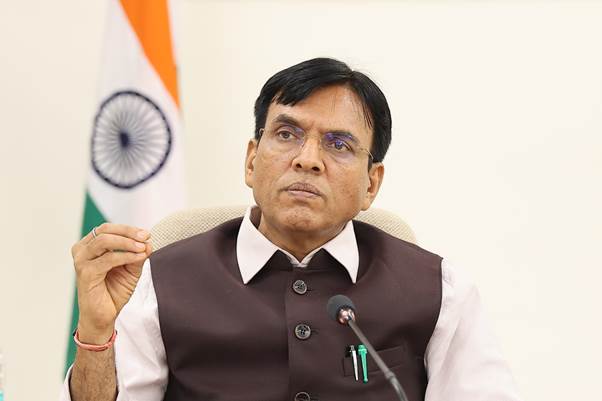
Union Labour Minister Mansukh Mandaviya unveils India’s four Labour Codes, marking a major step in labour reform and worker empowerment (Photo: PIB)
NEW DELHI: In a landmark decision, the Government of India has announced that the four Labour Codes—the Code on Wages, 2019; the Industrial Relations Code, 2020; the Code on Social Security, 2020; and the Occupational Safety, Health and Working Conditions Code, 2020—will come into effect from 21 November 2025, rationalising 29 existing labour laws. By modernising labour regulations, enhancing workers' welfare and aligning the labour ecosystem with the evolving world of work, this move lays the foundation for a future-ready workforce and stronger, more resilient industries driving labour reforms for an Aatmanirbhar Bharat.
Many of India's labour laws were framed in the pre-Independence and early post-Independence era (1930s–1950s), at a time when the economy and world of work were fundamentally different. While most major economies have updated and consolidated their labour regulations in recent decades, India continued to operate under fragmented, complex and often outdated provisions spread across 29 Central labour laws. These restrictive frameworks struggled to keep pace with changing economic realities and evolving forms of employment, creating uncertainty and increasing compliance burdens for both workers and industry.
The implementation of the four Labour Codes addresses this long-pending need to move beyond colonial-era structures and align with modern global trends. Together, these Codes empower both workers and enterprises, building a workforce that is protected, productive and aligned with the evolving world of work paving the way for a more resilient, competitive and self-reliant nation.
Union Labour Minister Mansukh Mandaviya said, "They will ensure timely minimum wages for all workers, appointment letters, equal pay and respect for women. They will also provide social security for 40 crore workers, gratuity for fixed-term employers after one year of employment, and free annual health check-ups for workers above 40 years of age". He added that the Codes will also guarantee double wages for overtime, 100% health security for workers in hazardous sectors and social justice for workers as per international standards. "These reforms are not just ordinary changes but a major step taken by Prime Minister Narendra Modi for the welfare of the workforce. These labour reforms are an important step towards a self-reliant India and will give new momentum to the goal of a developed India by 2047".
Prime Minister Narendra Modi welcomed the reforms, saying, "Shramev Jayate! Today, our Government has given effect to the four Labour Codes. It is one of the most comprehensive and progressive labour-oriented reforms since Independence. It greatly empowers workers. It also significantly simplifies compliance and promotes Ease of Doing Business". Many international organisations, including the ILO, have welcomed these Codes.
Under the Labour Codes, there are provisions for imprisonment or fines, which will be implemented once the rules are notified.
These four Labour Codes were already passed by Parliament between 2019 and 2020. Most states and Union Territories have implemented their corresponding labour laws and reforms except West Bengal. For many years, West Bengal has struggled to become an industrial hub due to political conflicts. If the Bengal government imposes the existing labour Acts and new labour reforms now, it may become a major issue in the upcoming Assembly election in the state.
