Chirag Paswan’s party presses exaggerated seat claims, straining BJP’s electoral patience.
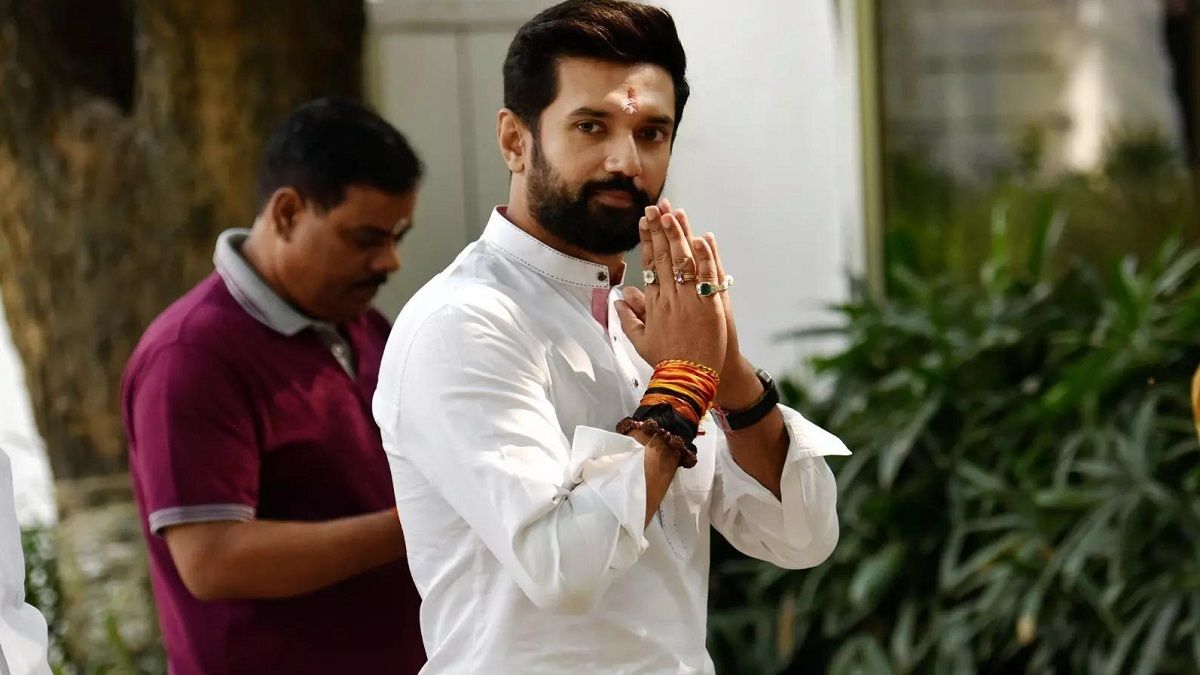
Chirag Paswan’s Lok Janshakti Party pushes for 40 assembly seats in Bihar despite historically low election wins (Photo: Pinterest)
New Delhi: In Bihar, Chirag Paswan’s Lok Janshakti Party is once again demanding far more seats than its record suggests—forty to seventy in the 243-member assembly—leaving Home Minister Amit Shah to manage an ally whose bargaining habits outstrip its strike rate.
While most political observers see it as a foregone conclusion that the LJP will even fall short of its mini mum demand of forty seats, BJP leaders in Bihar argue that this kind of “pressure building flexing” should no longer be indulged, as it makes the party and the alliance look weak.
The LJP’s demand for forty assembly seats in Bihar, out of a house of 243, is the latest chapter in its long habit of punching above its weight. On paper that number would give the party about 16.5 percent of the state assembly. In practice its record makes such a share implausible.
Since it first contested in 2005, the party has fielded candidates in 632 assembly constituencies and won 45 of them—a conversion rate of barely 7 percent. Over those years it has polled roughly 12 million votes, which sounds formidable in absolute terms, but those votes have been spread thin across five elections. An analysis of the party’s electoral geography shows that its candidates are mostly stuck at third places.
In February 2005, the party’s debut election, it se cured 3,091,173 votes, 12.62 percent of the state tally, and won 29 seats, which was incidentally its best ever performance. Eight months later, in October, it contested 203 seats and slipped to 10 wins with 11.10 percent of the vote.
In 2010 it fielded 75 candidates, polled 1,957,232 votes for a 6.74 percent share, and won just 3 seats. In 2015, fighting about 40 constituencies within the NDA framework, it managed 2 victories with a 4.80 percent share.
The 2020 election was the most audacious and the most disastrous: It was the first election that the party contested under Chirag Paswan, as the party’s founder and his father, Ram Vilas Paswan, had passed away just days before the polls. And it was also the first election where it fought the election on its own. It contested on 134 seats, drew about 2.38 million votes—5.66 percent of the statewide vote—and returned a solitary MLA. The blunt lesson is that while the party can claim to command millions of ‘Paswan dalit’ votes in total, they rarely come in the concentrated blocs required to turn those votes into seats under first-past-the-post rules.
That mismatch between claim and capacity explains why the demand for forty seats looks less like a realistic blueprint and more like a bargaining device, something that has become an identity badge for the LJP.
Following the demise of his father, like him, Chirag Paswan too has framed LJP’s demands in terms of Dalit representation and on the claimed basis of the party’s ability to move tens of thousands of votes in close constituencies. That rhetoric places the BJP in a familiar bind: offer more seats than LJP’s record merits, or risk, as the LJP would like it to believe, alienating the Dalit voters.
For LJP, the threat of con testing broadly has often been a way of forcing con cessions rather than an actual strategy for winning proportional representation.
As per Bihar’s caste survey (2022), the Paswan/Dusadh community is around 5 percent of the state’s population—around 6.94 million people. Out of this total, not all are of voting age, and not all turn out on polling day, observers pointed. If we take a standard split where roughly 60–65% of the community is of voting age and then apply turnout levels of about 40–50%, the effective number of Paswan voters who actually cast ballots usually lands in the range of 1.7–2.3 million in any given election.
However, BJP state leaders point to the 2020 election to remind of what happens when the party tries to go it alone.
A senior BJP party functionary said that LJP’s leverage lies in the nuisance it can create, not in the strength it can command, and that, he said, is missed by central leaders who come under its pressure and give concessions and offers that it does not merit.
The current call for forty seats follows that script. It is unlikely to deliver forty, or even a fraction, but it forces allies to negotiate. For Chirag Paswan, that leverage may be enough, like it has been in the past.
