
NEW DELHI: Earlier this week, newly elected councillors and municipal representatives of the Bharatiya Janata Party from Kerala spent three days in the national capital as part of what party leaders described as a structured “governance immersion” programme, stepping away from routine political engagements.
The delegation, headed by Thiruvananthapuram Mayor V. V. Rajesh, held meetings with senior Union ministers, constitutional authorities and organisational leaders. The visit concluded with an interaction with Prime Minister Narendra Modi, which participants termed the centrepiece of the programme.
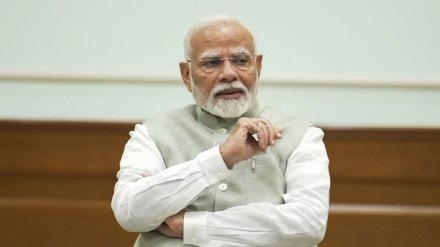
According to attendees, the Prime Minister adopted an administrative, rather than political, tone in his remarks. He characterised local representatives as the “frontline delivery system of democracy,” emphasising that governments are judged by the efficiency of essential civic services such as water supply, sanitation, grievance redressal and digital access.
He called on councillors to promote transparency, citizen-centric governance and greater use of technology in municipal administration, while also highlighting the role of local bodies in implementing national initiatives related to cleanliness, digital services and infrastructure.
The core message, participants said, was that political credibility must be built on governance performance.
Within party circles, the exercise is being viewed as part of a larger organisational roadmap, informally dubbed the “Kerala 2026 strategy,” aimed at consolidating the BJP’s base ahead of the coming Assembly election.
During the programme, councillors attended sessions at Parliament and engaged with departments handling urban affairs. Discussions centred on municipal finance, waste management, grievance redressal systems and technology-enabled civic administration, along with briefings on major Central schemes.
Notably, Kerala’s politics has long been dominated by a bipolar contest between the Communist Party of India (Marxist)-led Left Democratic Front and the Indian National Congress-led United Democratic Front. While the Bharatiya Janata Party has secured a measurable vote share in past elections, it has struggled to convert that support into legislative gains. However, recent successes in municipal bodies have given the party a limited administrative presence, which the Delhi initiative seeks to strengthen by shifting focus from mobilisation to governance.
Urban local bodies in Kerala hold significant influence over daily civic life, managing property taxes, building permits, sanitation and infrastructure. Analysts note that voters in the state often evaluate local governance separately from broader ideological alignments. By investing in councillor training, the BJP appears to be pursuing a bottom-up expansion strategy—strengthening grassroots administration as a precursor to state-level growth.
Kerala BJP president Rajeev Chandrasekhar has maintained that voters are increasingly receptive to a development-driven alternative focused on entrepreneurship, infrastructure and digital governance. Party leaders say the Delhi outreach aligns with this vision by aiming to generate municipal governance models that can be showcased to the electorate.
They add that the strategy mirrors an approach previously employed in parts of the Northeast, where consolidation at the local level laid the groundwork for subsequent electoral advances. With the 2026 Assembly election on the horizon, the BJP’s immediate objective is to build administrative credibility over the next two years, positioning municipal performance as the foundation for broader political acceptance in the state.




