
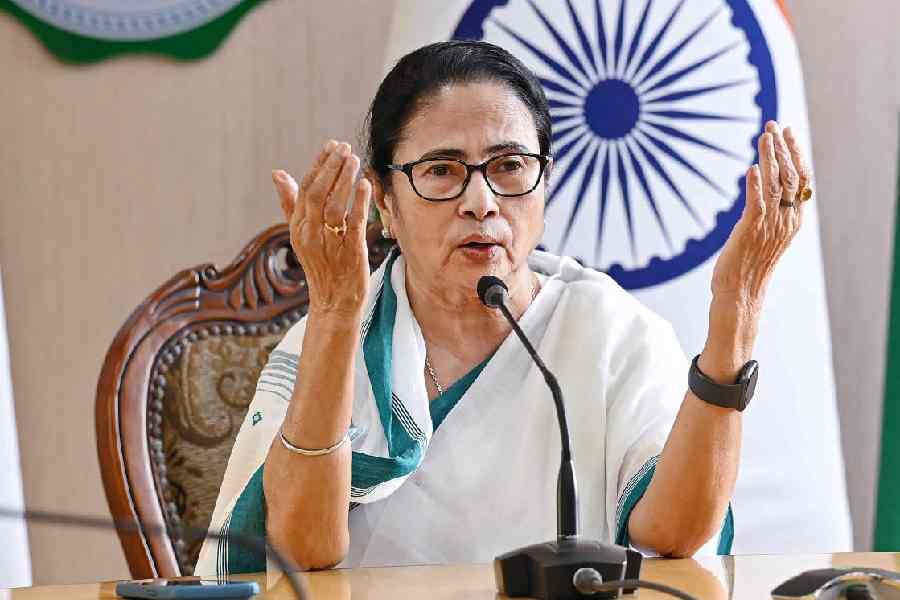
NEW DELHI: The ruling Trinamool Congress (TMC), under the leadership of West Bengal Chief Minister Mamata Banerjee, has officially launched its political outreach for the 2026 Assembly elections, starting in districts where the party has historically faced organisational challenges. The campaign commenced last week from Bangaon in North 24 Parganas—a region dominated by the Matua community and regarded as a strong base of the Bharatiya Janata Party (BJP).
Mamata Banerjee’s public meeting in Bangaon highlighted the TMC’s renewed attention on areas most affected by the ongoing State Identification Register (SIR) process. Addressing a massive crowd, she urged residents—many of whom are anxious about the possible consequences of SIR—“not to panic.” Reassuring them, she said, “We will not allow any eviction. No one can force you out when the Trinamool Congress stands by your side.” According to TMC insiders, the widespread concern over SIR may help the party recover electoral ground in Bangaon, where the BJP has held a firm grip since the 2019 Lok Sabha elections.
After her outreach in Bangaon, the TMC chief conducted back-to-back rallies in the Muslim-dominated districts of Malda and Murshidabad in the first week of December, with a major show of strength scheduled for December 9 in Cooch Behar. All three districts are home to significant minority, migrant and displaced populations, many of whom are reportedly apprehensive about the heightened scrutiny of citizenship and identity documents under the SIR exercise.
These rallies aim to rebuild confidence among vulnerable communities and reinvigorate the TMC’s grassroots network, which senior party leaders acknowledge had grown somewhat complacent following consecutive wins against the BJP. According to TMC sources, the decision to kick off the campaign from the border districts was intentional. The party perceives the SIR process as a potential threat to its organisational foundation and electoral support, especially in regions where people fear displacement or disenfranchisement.
The rallies in Malda and Murshidabad this week are expected to shape the party’s narrative ahead of the Cooch Behar mobilisation, during which Mamata Banerjee is likely to make a strong political statement. The overarching strategy of the TMC is framed as a push-back against the BJP’s “infiltrator-cleansing” rhetoric. TMC leaders argue that the opposition’s emphasis on rigorous verification of identity documents is part of a deliberate effort to intimidate border communities for electoral gains.
On the other hand, the BJP has accused the ruling party of shielding illegal migrants and obstructing legitimate attempts to correct the electoral rolls. Political experts told The Sunday Guardian that the TMC’s emphasis on Malda, Murshidabad and Cooch Behar is strategically sound. Malda and Murshidabad have large Muslim populations, while Cooch Behar has a significant Rajbanshi or Koch Rajbanshi population—sections of which shifted towards the BJP after 2019.
Earlier this year, parts of Malda and Murshidabad also witnessed communal tension during violent protests over the Waqf Amendment Act, prompting the TMC to intensify its grassroots efforts in these districts ahead of the 2026 Assembly elections. They added that with the polls scheduled for May–June 2026, the TMC’s district-focused mobilisation demonstrates its determination to regain lost ground, strengthen organisational presence, and shape the public discourse around SIR before the BJP can leverage citizens’ anxieties to its advantage.
Alongside the rallies, the ruling party has released a detailed report card showcasing its governance achievements and reconnecting with the electorate. The document outlines the TMC’s development framework emphasising social welfare, women’s empowerment, economic expansion and transparent governance.




