BJP eyeing to induct younger faces in efforts to push youth and prepare future leadership
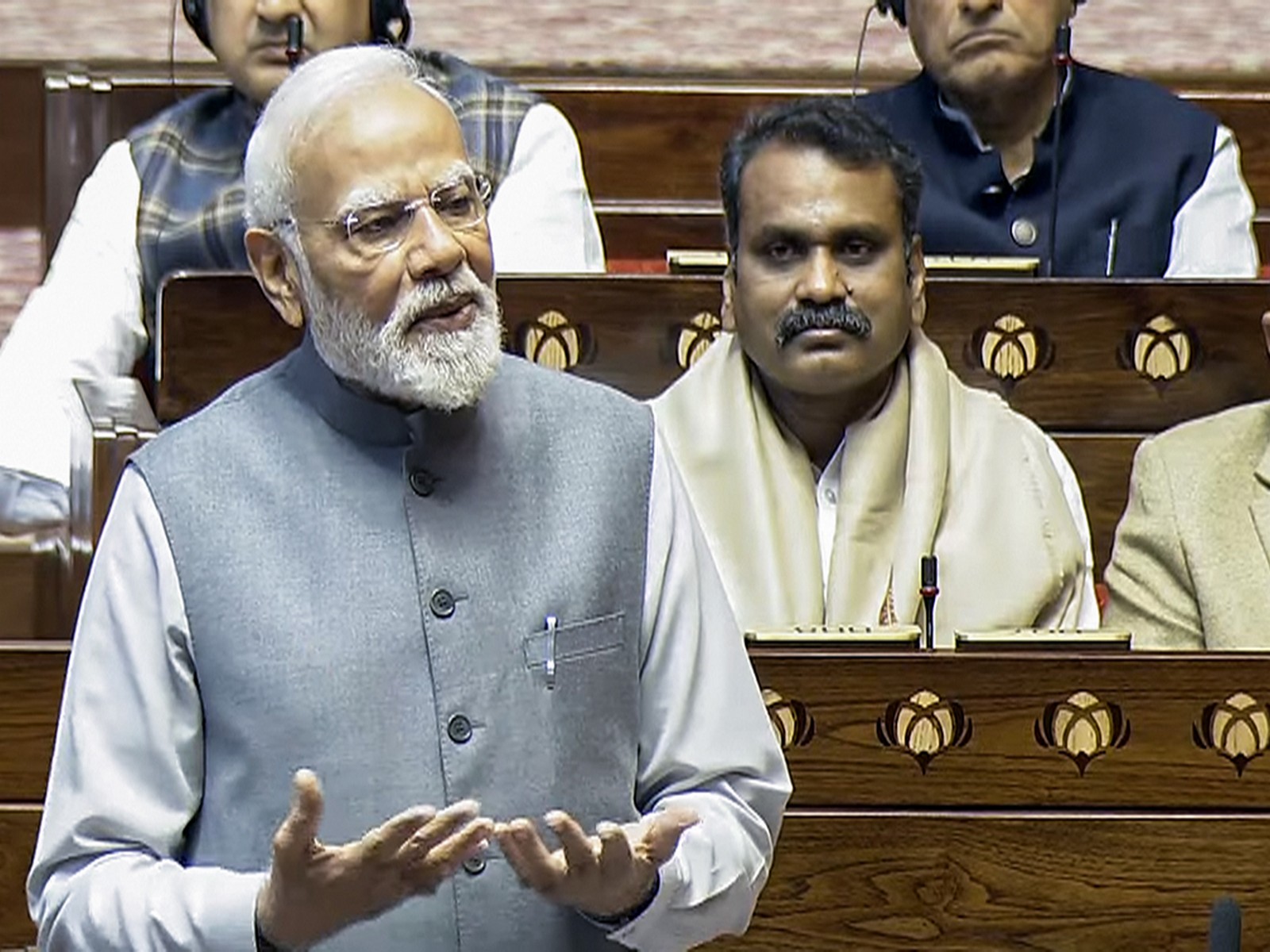
Modi government eyes fresh, younger faces for Union cabinet after West Bengal elections to strengthen leadership and regional representation (Photo: ANI)
NEW DELHI: The Bharatiya Janata Party (BJP), which recently caught many political observers off guard by appointing 45-year-old Nitin Naveen as its national working president, appears to be gearing up for yet another major political initiative.
According to sources, the much-awaited cabinet expansion of the Modi government is now likely to be carried out after the West Bengal Assembly elections, which are scheduled to take place between mid-May and June 2026.
Sources within the government told The Sunday Guardian that Modi government 3.0 could spring surprises, with the possible induction of relatively low-profile yet younger leaders into the Union cabinet once the Bengal elections conclude.
The entry of younger faces is expected to further bring down the average age of the Modi 3.0 council of ministers, in keeping with Prime Minister Narendra Modi's emphasis on nurturing long-term leadership.
Sources also said that the government is consciously waiting for the outcome of the West Bengal polls, and if the BJP registers a strong performance, the state could see the induction of a few new Union ministers as part of the reshuffle.
At present, West Bengal is represented by two Ministers of State at the Centre. Party sources suggest that this representation could increase, with the possibility of two full-fledged Union ministers being inducted if the BJP puts up an impressive performance in the 2026 Assembly elections.
The criteria for selecting new ministers are expected to closely follow the rationale behind the appointment of Nitin Naveen as national working president. The party is increasingly prioritising younger leaders who can take on responsibilities over extended periods, reward consistent organisational performance, align with the government's future governance needs, and ensure proper representation for states heading into elections.
Social and regional balance is also expected to be a key consideration in the decision-making process.
Currently, there are 10 vacant ministerial posts in the Union government. Prime Minister Narendra Modi was sworn in for a third term on June 9, 2024, with a council comprising 72 ministers.
During his second term, the Prime Minister had led a government with 78 ministers, which indicates that even by earlier standards, there is scope to induct at least six additional ministers.
Under parliamentary norms, a maximum of 15 per cent of the total strength of the Lok Sabha (543 members) can be appointed as ministers. Based on this formula, as many as 81 ministers can be accommodated, leaving room for at least nine more ministers in the current government.
In addition, with Pankaj Chaudhary set to take over as the BJP's Uttar Pradesh state president, his resignation from the post of Minister of State for Finance will create another vacancy. This effectively increases the available space to around 10 new ministerial positions in the Modi 3.0 cabinet.
While the second term of the Modi government saw major changes in the council of ministers compared to the first term, the third term has so far witnessed limited reshuffling. Following the formation of a coalition government, most senior ministers were retained, largely due to coalition compulsions that necessitated continuity.
In contrast, a major reshuffle took place during the second term in 2021, when prominent leaders such as Ravi Shankar Prasad and Prakash Javadekar were dropped from the cabinet.
Party sources say Prime Minister Modi is sharpening the BJP's focus on leadership development as part of his vision for a developed India.
