
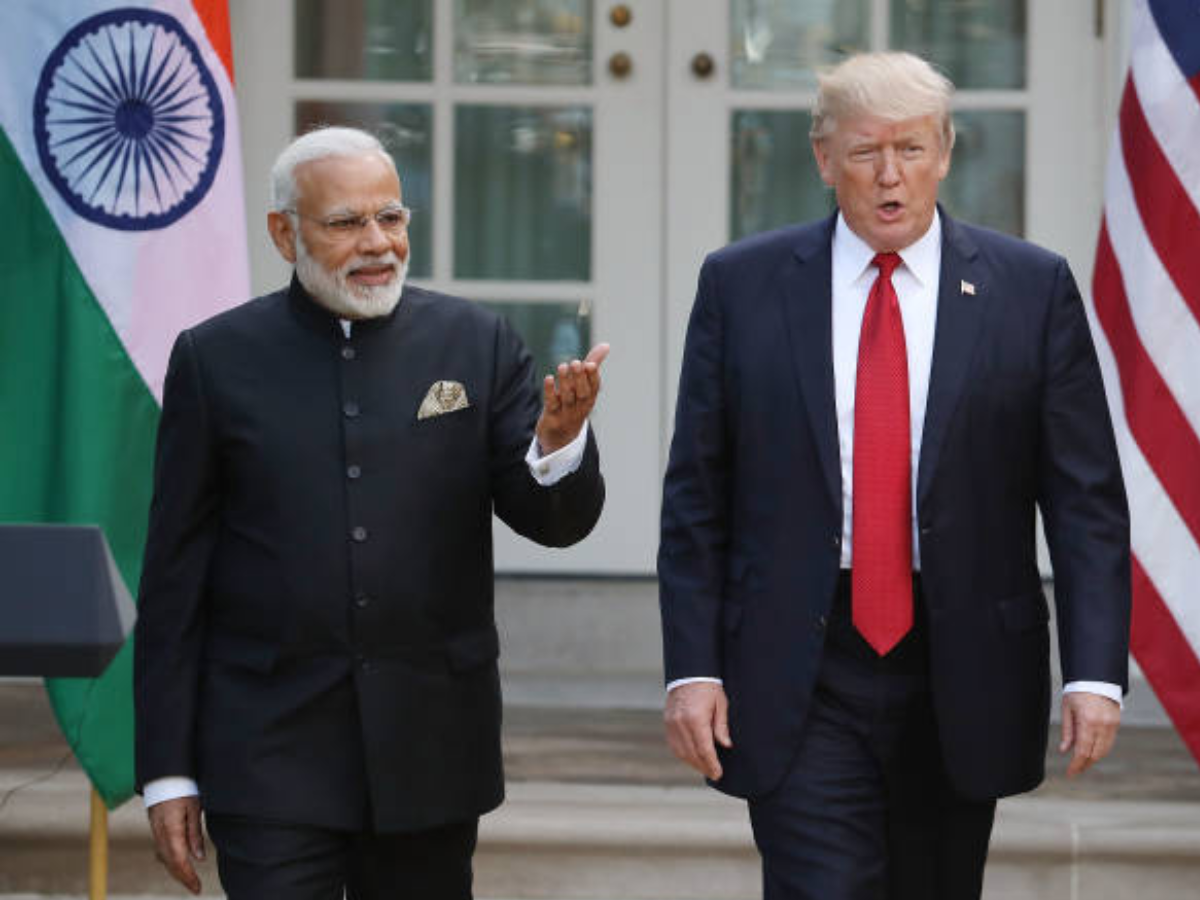
New Delhi: U.S. President Donald Trump has repeatedly tried to contact Indian Prime Minister Narendra Modi over ongoing trade issues, but Modi has not responded, according to a report published Tuesday in Frankfurter Allgemeine Zeitung (FAZ).
The FAZ, founded in 1949 and regarded as one of Germany’s most influential newspapers, is known for its center-right, liberal-conservative editorial line. Often described as a “newspaper of record,” it is widely read by policymakers, business leaders, and diplomats in Germany and abroad. Its reporting aimed more at decision-makers than at a mass audience.
In its report, the paper writes that Trump, who has already forced concessions from other countries through tariff pressure, is finding India to be a tougher opponent. While he previously described Modi as a “great leader” and posed with him for photographs, Washington’s tone has since shifted due to India’s refusal to accept Washington’s demands.
Trump has threatened India with higher duties if New Delhi does not provide greater market access for American agricultural products, the report claims.
The report notes that India is resisting these demands, even as Trump escalates pressure. According to FAZ, the Indian government is determined not to repeat earlier patterns where the U.S. president’s negotiating style left India at a disadvantage. The paper underscores that India, shaped by its ‘colonial past’, is particularly sensitive to being treated in what it perceives as an “imperial” fashion, and is unwilling to be seen as subordinate to Washington.
India’s Ministry of External Affairs had not confirmed the U.S. President’s calls at the time of going to press.
In the last two weeks, the PM, on multiple platforms, has stated that despite being aware that he might have to pay a personal price for his stand, he will not be pressured to give concessions that might hurt the farmers, people engaged in the dairy industry and small and medium sectors.
On Sunday, the Sunday Guardian had carried a detailed account of how India’s policy establishment had gone into “battle mode” to manage mounting pressure from Washington. That article highlighted coordination between the Prime Minister’s Office, External Affairs, Defence, and Commerce ministries in shaping a deliberate pushback. It also pointed out that India was quietly strengthening its ties with partners such as Russia and China, creating alternative channels to offset U.S. leverage.
FAZ echoed this shift, noting that the breakdown of trust with the U.S. was pushing India to explore closer cooperation with other powers, including China a move that signals a recalibration in New Delhi’s external relations.
At stake, FAZ warned, is a significant share of India’s exports to the U.S., including clothing, precious stones, and automotive parts.
Experts said that taken together, the two reports underline a clear pattern: India is not only refusing to yield to U.S. tariff pressure but is actively repositioning itself in the global order, signaling that it will not be hurried or coerced into concessions.




