BJP leadership signals generational shift, insulates Nabin from internal pressures.
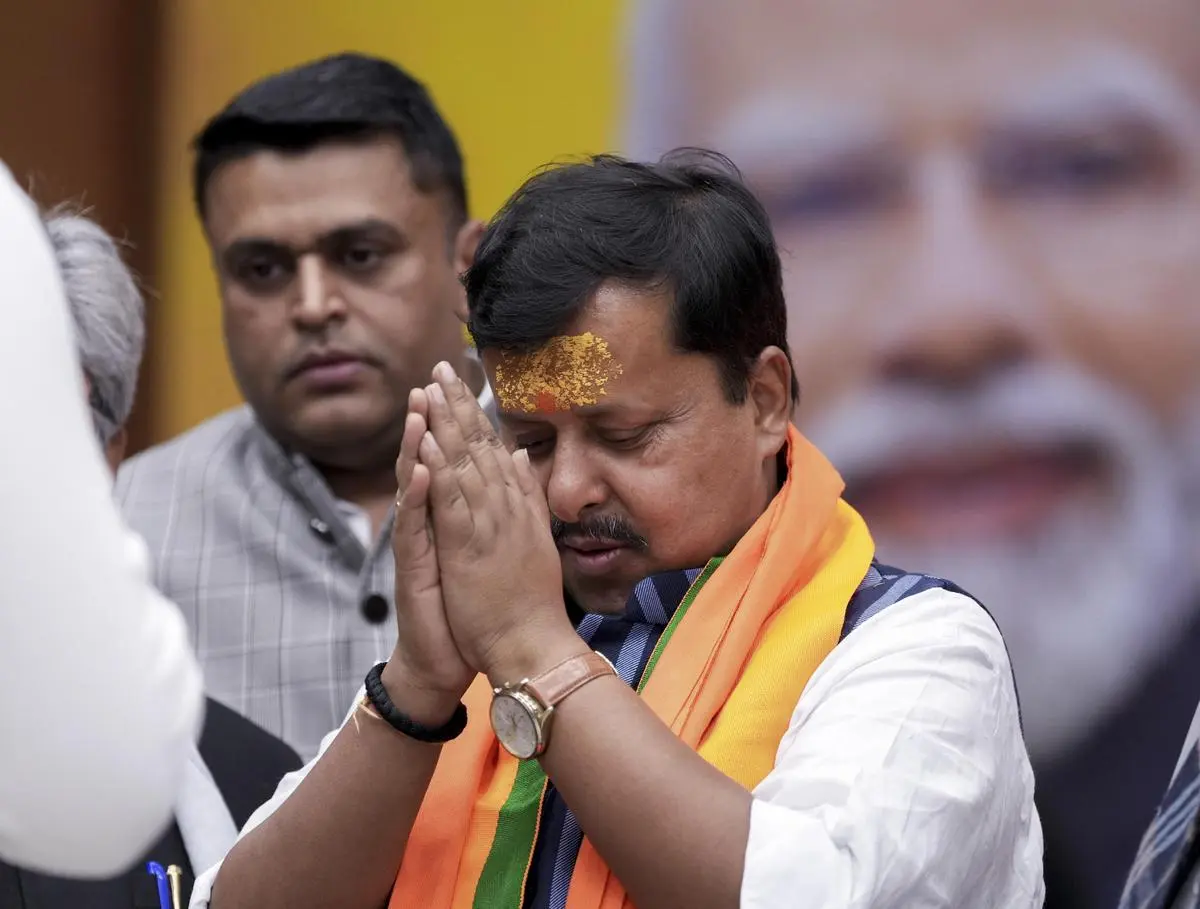
Nitin Nabin being felicitated with a flower garland during the felicitation ceremony, in Patna on Saturday (Photo: ANI)
NEW DELHI: The Bharatiya Janata Party's newly appointed president Nitin Nabin, has been granted complete organisational and political autonomy by Prime Minister Narendra Modi and Union Home Minister Amit Shah, a move that clearly signals the top leadership's intent to frustrate him from pressure exerted by senior leaders and entrenched power centres within the party.
In the week following his appointment, Nabin was explicitly assured by both Modi and Shah that he should not come under any pressure from senior leaders or "big names" while taking organisational decisions. Shah, according to people familiar with the conversations, told Nabin to approach him directly if he faced any resistance or interference. The message was conveyed firmly and without ambiguity: irrespective of circumstances, Nabin is expected to take political and organisational decisions independently and not succumb to pressure management.
Signals of this shift were, in fact, sent even before the appointment was formally announced. Over the last one week, Shah reportedly told a few senior leaders that even before the announcement, they would need to consult Nabin on organisational matters related to Bihar. This instruction, delivered ahead of the official declaration, reportedly came as a surprise to several leaders and was seen as an early attempt to establish Nabin's authority rather than allow it to evolve gradually.
The emphasis on autonomy assumes particular significance given Nabin's age and relative novelty at the national level. This is only his second organisational role at the Centre, following his earlier responsibility as in charge of Chhattisgarh. Given his relatively young age and comparatively limited experience at the Centre, there has been widespread speculation within the party that he would be vulnerable to influence from senior leaders outside the Modi-Shah axis.
It is also understood that some senior leaders, including Union ministers, are still coming to terms with working with, and in some cases reporting to, a relatively young leader like Nabin. Groups sympathetic to these leaders are also believed to be unhappy with what they see as a "surprise" choice. Until just days before the announcement, even the top leadership, including Union ministers and general secretaries, viewed Nabin as one among several state-level leaders. With his elevation, that perception is now expected to change decisively.
It is in this context that the unequivocal backing from Modi and Shah assumes critical importance. By reinforcing Nabin's autonomy from the outset and clearly defining the chain of command, the top leadership appears intent on removing any ambiguity over authority and ensuring that age or seniority elsewhere in the party does not dilute the standing of the new BJP president.
