
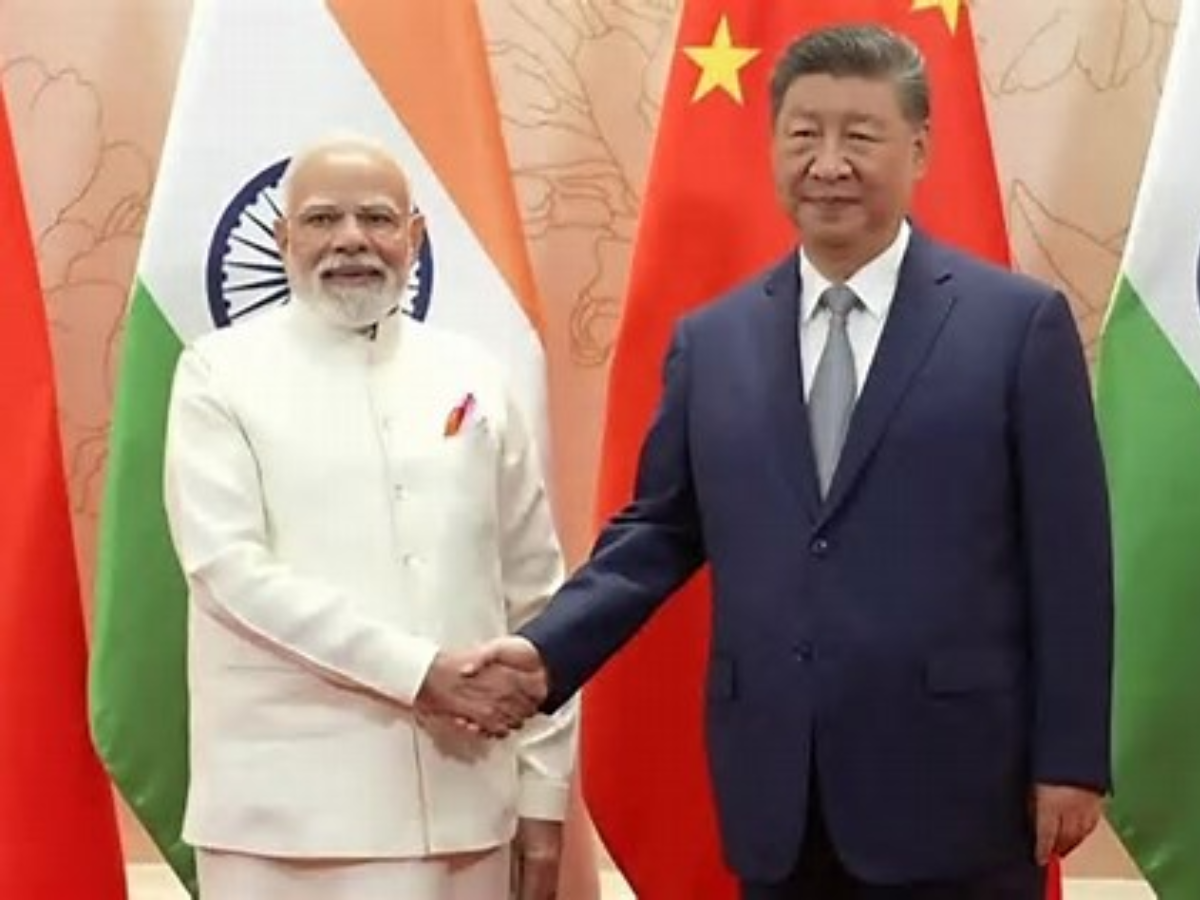
New Delhi: Prime Minister Narendra Modi on Monday used the 25th Shanghai Cooperation Organisation (SCO) Summit in Tianjin to deliver plain words on terrorism, telling member states that selective approaches will no longer do.
At the same time, he set out India’s three guiding pillars for the grouping—security, connectivity and opportunity—and pressed for reforms both within SCO and at the global level.
“Terrorism is not just a threat to the security of any one country, it is a shared challenge for all humanity. No country, no society, no citizen can consider themselves safe from it,” Modi said in the presence of world leaders including Chinese premier Xi Xinping and Russian President Vladimir Putin.
Official sources told this newspaper that the bonhomie between the three leaders was very warm and the mutual respect that they have for each other was on display in Tianjin.
Referring to decades of terror violence in India, he added: “Recently, we saw the most heinous face of terrorism in Pahalgam. In this hour of grief, I thank those friends who stood by us. This attack was not just an assault on India’s conscience—it was an open challenge to every nation and every person who believes in humanity.”
He stressed that SCO members must show clarity and unity: “We must say clearly, in one voice, that no double standards on terrorism will be acceptable. We must oppose it in every colour, every form. This is our duty to humanity.” Modi highlighted India’s role in leading a joint SCO operation against al-Qaeda-linked groups this year and its push for deeper coordination against radicalisation and terror financing.
Turning to connectivity, he said stronger links can create trust as well as commerce. Citing the Chabahar Port and International North-South Transport Corridor, Modi underlined that “connectivity that bypasses sovereignty loses trust and meaning.” All projects, he said, must respect sovereignty and territorial integrity as the SCO charter requires.
On opportunity, he recalled India’s 2023 presidency that brought start-ups, digital inclusion, traditional medicine, youth empowerment and shared Buddhist heritage onto the SCO agenda. He proposed establishing a Civilizational Dialogue Forum to showcase the art, literature and traditions of member states.
Modi tied this outward vision to India’s own domestic course of “Reform, Perform and Transform,” noting that the country had turned crises such as Covid and global economic shocks into new opportunities. He invited SCO members to engage with India’s reform-driven growth.
Welcoming the SCO’s decision to set up new centres to counter organised crime, drug trafficking and cyber security, Modi said the grouping must also be a voice for global institutional reforms. With the UN’s 80th anniversary approaching, he called for joint efforts: “The aspirations of the Global South cannot be constrained within outdated frameworks. We cannot show the multicoloured dreams of the new generation on a black-and-white screen. The screen must change.”
Framing SCO as a guide for multilateralism and an inclusive world order, Modi concluded by congratulating Kyrgyzstan’s President Sadyr Japarov as the grouping’s next chair.




