
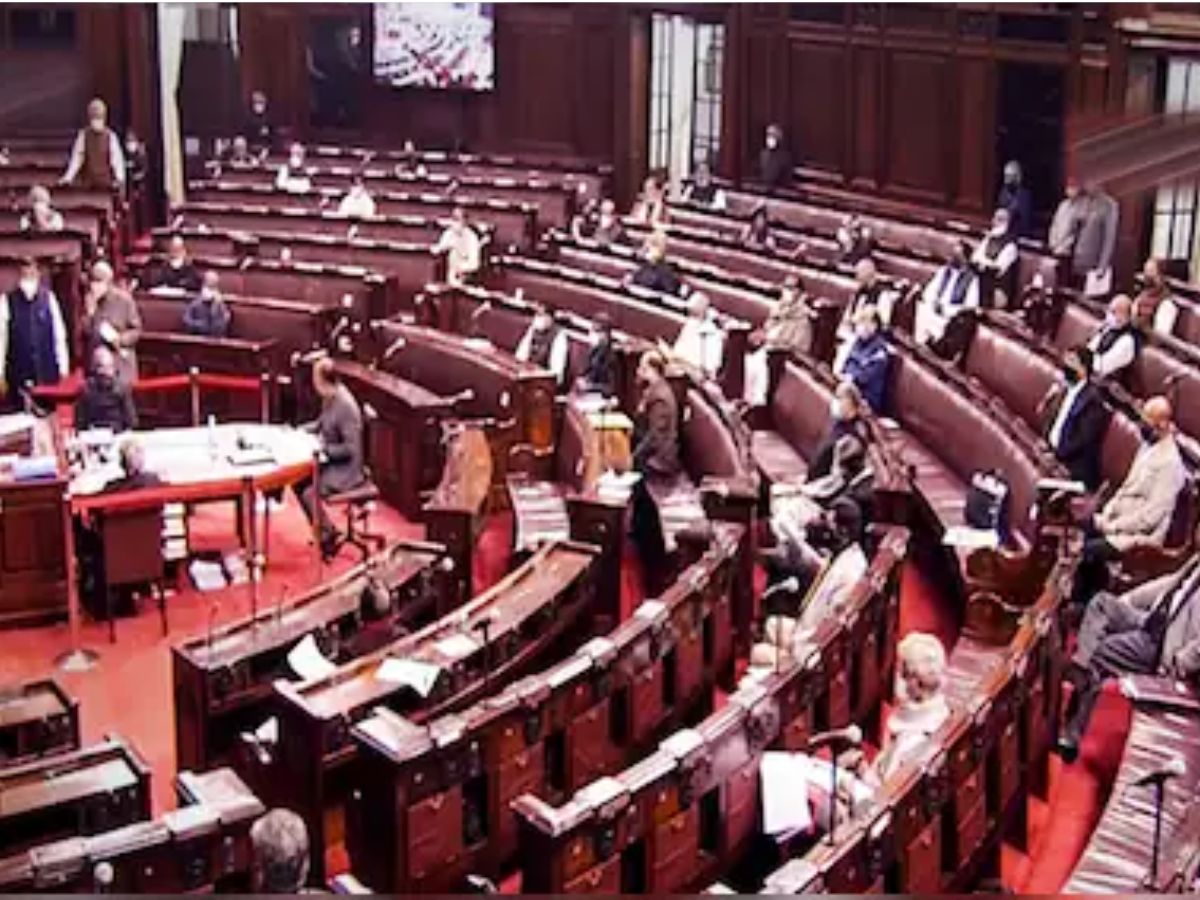
New Delhi: The Rajya Sabha is headed for significant changes in the coming months, with more than one-third of its members set to retire within the next year. Between March and June 2026 alone, 57 members will complete their terms, and by November, the total climbs to 69, reshaping the composition of the Upper House at a politically sensitive moment.
The results of the upcoming Bihar and West Bengal polls will heavily influence whether prominent names are renewed or retired, particularly from the opposition. With a weaker vote bank compared to the NDA, a poor showing in these states could make it difficult for the INDIA bloc to renominate some of its members.
The first exit will be that of Ranjan Gogoi, nominated member and former Chief Justice of India, whose six-year term ends on 16 March 2026.
This is followed by a large batch in April 2026, when 37 members retire across multiple states. Among them are Ramdas Athawale (Republican Party of India – Athawale, Maharashtra), Sharad Pawar (NCP – Sharadchandra Pawar, Maharashtra), Priyanka Chaturvedi (Shiv Sena – UBT, Maharashtra), Fauzia Khan (NCP – Sharadchandra Pawar, Maharashtra), Abhishek Manu Singhvi (Congress, Telangana), Harivansh (JD-U, Bihar), Prem Chand Gupta (RJD, Bihar), Upendra Kushwaha (Rashtriya Lok Morcha, Bihar), Ram Nath Thakur (JD-U, Bihar), and A.D. Singh (RJD, Bihar).
Tamil Nadu will see the retirement of DMK leaders Tiruchi Siva, Kanimozhi NVN Somu, N.R. Elango, Anthiyur P. Selvarasu, and M. Thambidurai (AIADMK). West Bengal’s contingent includes Subrata Bakshi, Ritabrata Banerjee, Bikash Saket Gokhale, Mausam Noor (all TMC), and Ranjan Bhattacharyya (CPIM).
Odisha will lose Niranjan Bishi, Muzibulla Khan (BJD), Sujeet Kumar, and Mamata Mohanta (both BJP).
Other prominent names in this batch are Bhagwat Karad, Dhairyashil Mohan Patil (BJP, Maharashtra), Rajani Patil (Congress, Maharashtra), Kiran Choudhry, Ram Chander Jangra (both BJP, Haryana), Indu Bala Goswami (BJP, Himachal Pradesh), Bhubaneswar Kalita, Rameswar Teli (both BJP, Assam), K.R. Suresh Reddy (BRS, Telangana), Phulo Devi Netam, K.T.S. Tulsi (both Congress, Chhattisgarh), and G.K. Vasan (Tamil Maanila Congress – Moopanar, Tamil Nadu).
By June 2026, another 22 members will finish their terms, further tilting the arithmetic of the House. Among them are political veterans such as H.D. Deve Gowda (JD-S, Karnataka), Mallikarjun Kharge (Congress, Karnataka), and Digvijaya Singh (Congress, Madhya Pradesh). Andhra Pradesh will see a major churn with the exit of Ayodhya Rami Reddy, Parimal Nathwani, and Subhas Chandra Bose Pilli (all YSRCP), along with Sana Sathish Babu (TDP). Gujarat’s outgoing members include Narhari Amin (BJP), Ramilaben Bara (BJP), Shaktisinh Gohil (Congress), and Mokariya Rambhai (BJP). Rajasthan will lose Neeraj Dangi (Congress), Rajendra Gehlot (BJP), and Ravneet Singh (BJP). Karnataka’s batch includes Iranna Kadadi (BJP) and Narayana Koragappa (BJP), while Wanweiroy Kharlukhi (NPP, Meghalaya), Nabam Rebia (BJP, Arunachal Pradesh), George Kurian (BJP, Madhya Pradesh), Sumer Singh Solanki (BJP, Madhya Pradesh), Deepak Prakash (BJP, Jharkhand), and Maharaja Sanajaoba Leishemba (BJP, Manipur) complete the list.
In July 2026, Vanlalvena of the Mizo National Front will retire from Mizoram.
The final cluster comes in November 2026, when 11 members from Uttar Pradesh will step down. This includes senior figures such as Hardeep Singh Puri (BJP), Ram Gopal Yadav (Samajwadi Party), Arun Singh (BJP), Neeraj Shekhar (BJP), B.L. Verma (BJP), and Dinesh Sharma (BJP), along with Brij Lal, Seema Dwivedi, Geeta alias Chandraprabha, and Naresh Bansal (all BJP). Ramji of the Bahujan Samaj Party is also part of this batch.
The party-wise breakup underlines the scale of the churn. The BJP alone accounts for around 31 of the 69 vacancies, spread across its strongholds in Uttar Pradesh, Madhya Pradesh, Gujarat, Karnataka, Rajasthan, Odisha, Assam, Haryana, and Himachal Pradesh. The Congress will lose at least eight members, including some of its tallest leaders in the Upper House. The DMK’s four seats from Tamil Nadu, the AITC’s four from West Bengal, and the YSRCP’s four from Andhra Pradesh also stand out. Smaller but significant exits include Sharad Pawar and Fauzia Khan from the NCP (Sharadchandra Pawar faction), two JD-U, two RJD members from Bihar, and H.D. Deve Gowda of the JD-S.
State-wise, Uttar Pradesh will see the single biggest turnover, with 11 members leaving in November 2026. Maharashtra, Tamil Nadu, Bihar, West Bengal, Odisha, Gujarat, Karnataka, and Andhra Pradesh will also witness sizable vacancies, ensuring a ripple effect across national and regional politics.
The BJP, despite accounting for the largest number of outgoing members, is well placed to retain most of its seats and even gain new ones, thanks to its dominance in state assemblies across north, west, and northeast India.
The Congress, by contrast, risks net losses: in Gujarat, Rajasthan, Madhya Pradesh, and Chhattisgarh, it lacks the MLA numbers to ensure all its retiring members are returned, while in Karnataka, it may save one seat at best. The DMK and Trinamool Congress are comfortably positioned to hold on to their respective seats given their overwhelming control in Tamil Nadu and West Bengal assemblies. Smaller parties look far more vulnerable.
The NCP (Sharad faction) and Shiv Sena (UBT) members from Maharashtra, the AIADMK’s M. Thambidurai from Tamil Nadu, and Ramji of the Bahujan Samaj Party from Uttar Pradesh are almost certain to lose their seats.
The BSP, with just one MLA in the UP Assembly, has no chance of returning to the Rajya Sabha on its own, and unless there is an extraordinary cross-party arrangement, Mayawati’s party will soon have no presence in the Upper House. The JD-S is at risk of losing H.D. Deve Gowda’s seat in Karnataka, and the BRS faces the likelihood of losing its single seat in Telangana after its Assembly defeat.
Taken together, these retirements mean that by the end of November 2026, nearly one-third of the 245-member Rajya Sabha will be reconstituted. The elections to fill these seats will be watched closely, as they will not only determine the Centre’s legislative arithmetic but also shape the bargaining power of regional parties in the run-up to the next general election cycle. The churn also threatens to wipe out some parties entirely from the Upper House while cementing the BJP’s dominance.




