
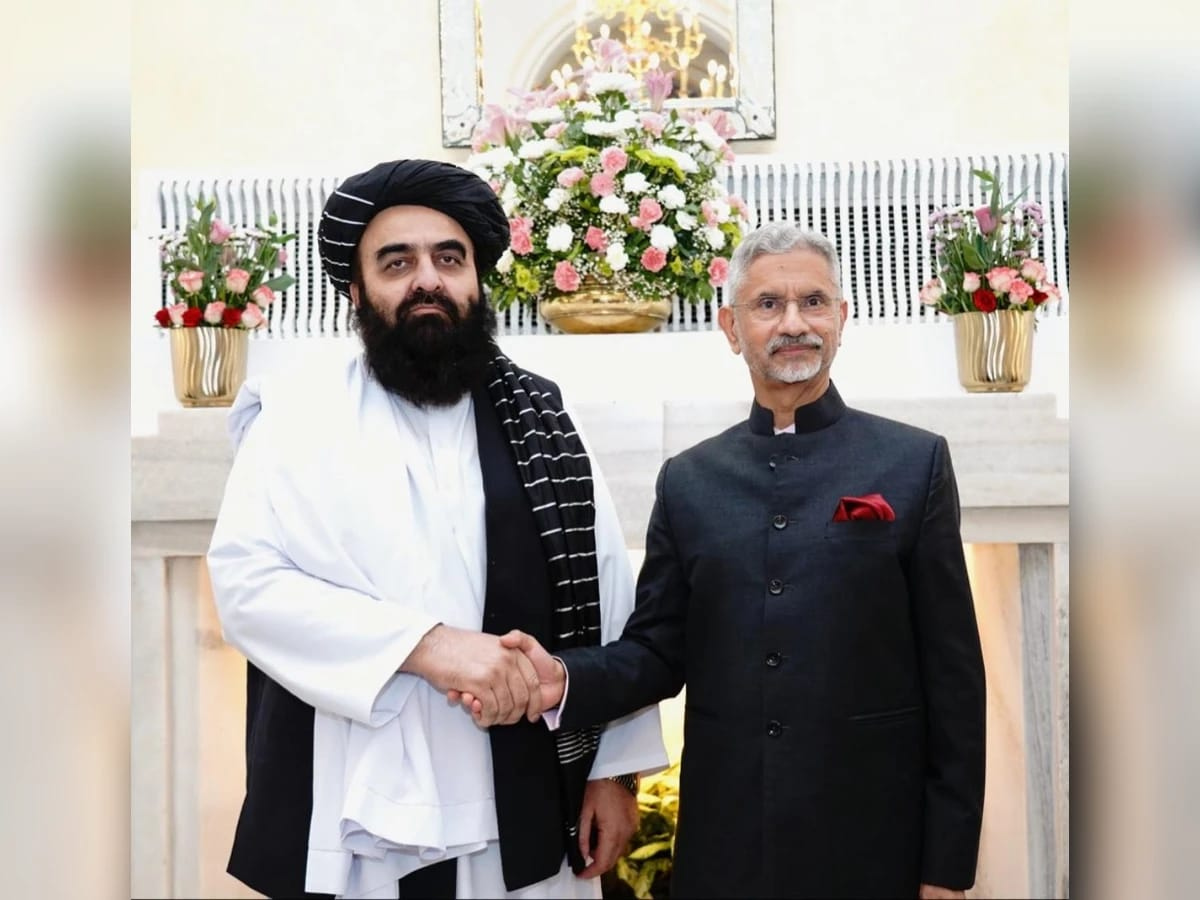
NEW DELHI: In the first visit by a senior Afghan government official to India since the Taliban’s return to power, Acting Foreign Minister Amir Khan Muttaqi met External Affairs Minister S. Jaishankar in New Delhi, signalling a calibrated shift in India’s outreach to Kabul. Until now, only relatively junior Afghan functionaries, including a minister handling border affairs, had travelled to India.
India unveiled a wide-ranging package of development assistance: six new health projects, the gift of 20 ambulances (five handed over symbolically), and the supply of MRI and CT scan machines to major Afghan hospitals. It also committed vaccines and cancer medicines, rehabilitation materials for drug-de-addiction centres through the UNODC, and reconstruction of homes in quake-hit Kunar and Nangarhar, along with housing for forcibly repatriated refugees.
Talks covered cooperation in irrigation, water management, and mining, expanding trade and air connectivity, and increasing scholarships for Afghan students.
India reaffirmed its resolve to complete ongoing projects and announced the upgradation of its Technical Mission in Kabul to a full-fledged Embassy, marking a full restoration of diplomatic presence.
The meeting followed months of quiet back-channel contact between Indian and Taliban representatives in Doha and Kabul, indicating that the engagement was carefully prepared rather than abrupt.
The visit came just hours after Pakistan carried out air strikes inside Kabul on Friday early morning, reportedly in retaliation for TTP attacks on its soldiers — a move widely read as a warning to Kabul against moving too close to New Delhi. The timing also coincided with China’s continued diplomatic and economic outreach to the Taliban, underlining the shifting regional alignments.
Observers note that China began formal engagement with the Taliban government within months of the U.S. withdrawal in August 2021, while India maintained only a small technical team in Kabul until now. Muttaqi’s visit thus marks New Delhi’s first formal high-level engagement since the Taliban takeover — one seen as balancing humanitarian concerns with strategic caution.
Jaishankar, in his public remarks, avoided any language implying recognition, framing the talks within the context of “people-to-people ties” and “development partnership” — consistent with India’s policy of engaging the Afghan people rather than its rulers. Both sides reaffirmed their resolve to combat cross-border terrorism , a message aimed as much at reassurance as deterrence to Pakistan.
However, the optics surrounding the visit drew criticism. Following his meeting with Jaishankar, Muttaqi held a closed-door press conference at the Afghanistan embassy where no woman journalists were invited and only a select group of outlets — reportedly curated by Acting Consul General Ikramuddin Kamil and a few MEA officials — were allowed entry. Sources said the initial list of 12 journalists was later expanded to 16, and reporters were told to avoid probing questions, sparking anger within media circles and further tarnishing Kabul’s image of inclusivity.
In the coming months, India may soon face difficult choices — how far, and in what form, it can extend support to Kabul should tensions between Islamabad and the Taliban government deepen into open confrontation.




