
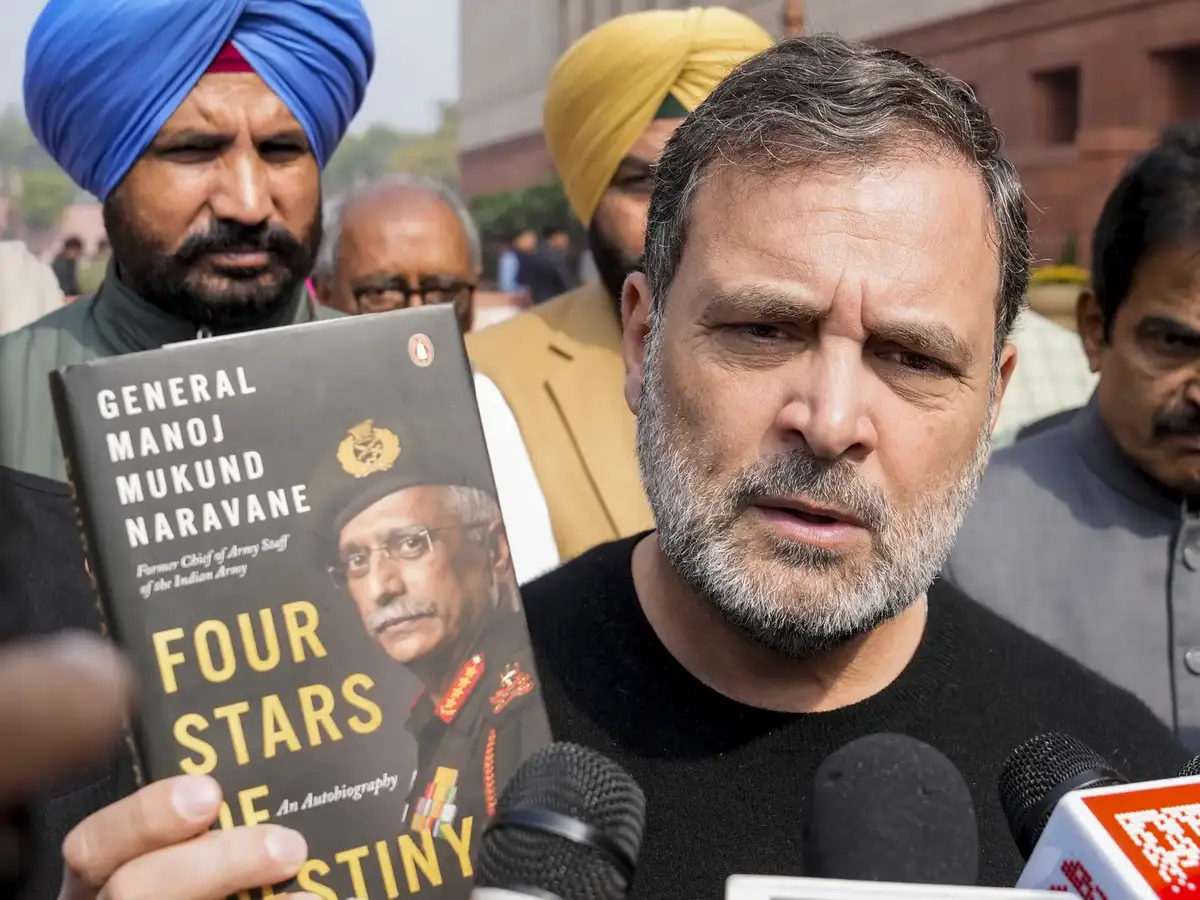
NEW DELHI: The disruption of the ongoing Parliament session following publication of alleged excerpts from former Army Chief M.M. Naravane’s unpublished memoir follows a pattern in which investigative reports and disclosures are published shortly before or during parliament sessions which then leads to prolonged adjournments and disruptions.
Such adjournments and disruptions suspend scheduled proceedings and reduce the time available for legislative business, including debates, questions, and consideration of bills and budgetary matters. In the last decade, on an average, the Lok Sabha has typically sat for about 66 days in a year.
In January 2023, days before the Budget Session commenced, the US-based short seller Hindenburg Research released a report alleging stock manipulation and accounting irregularities by companies linked to industrialist Gautam Adani. Both Houses witnessed repeated adjournments amid protests by opposition members, and large portions of the session were disrupted. The entire second half of the 25-day session was virtually washed out due to protests over the Adani-Hindenburg issue. Lok Sabha functioned only 45 hours out of 133.6 scheduled hours while the Rajya Sabha worked only 31 hours out of 130 hours scheduled. The same session coincided with the release of a controversial BBC documentary on the riots that took place in Gujarat. The government later blocked access to the documentary in India under emergency provisions of the Information Technology Rules, directing online platforms to remove links. Opposition members raised the issue during parliamentary proceedings, and parliamentary proceedings were again disrupted. In August 2023, ahead of a Special Session of Parliament, the Organized Crime and Corruption Reporting Project published a report alleging that Mauritius-based funds with links to promoters had invested in Adani group companies. Again the same trend emerged, with much of the parliamentary session being disrupted. Similarly, in July 2021, before the Monsoon Session commenced, a global investigation coordinated by Forbidden Stories and the International Consortium of Investigative Journalists reported that phone numbers of Indian politicians, journalists, and officials were selected as potential targets for surveillance using software developed by Israel’s NSO Group. This was followed by disruptions of the parliamentary proceedings, with both the houses being affected.
The Monsoon Session of Parliament in 2021 saw sharply reduced productivity, with Lok Sabha functioning at 21 percent and Rajya Sabha at 28 percent of scheduled time. Lok Sabha lost 74 hours and 46 minutes to interruptions.
In 2018 and 2019, reports published by French investigative outlet Mediapart concerning the Rafale aircraft deal were raised in Parliament and were raised repeatedly during parliamentary proceedings, leading to adjournments and demands for a Joint Parliamentary Committee inquiry. Similarly, in 2016 and 2017, the parliament working was significantly impacted after the International Consortium of Investigative Journalists, named several Indians in offshore financial records in what it called the “Panama Papers” and the “Paradise Papers”.




