NDA fields only five Muslim candidates in Bihar elections, signaling a strategic focus on core voter blocs and winnability over diversity.
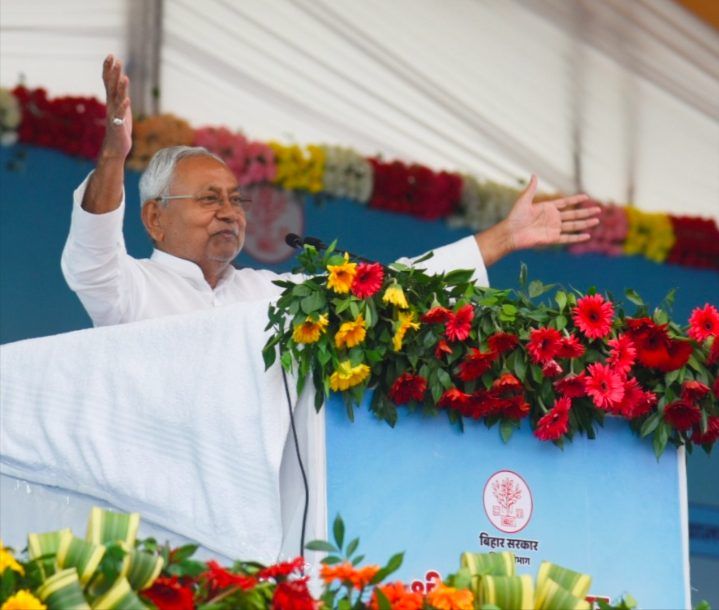
Chief Minister Nitish Kumar during a campaign event in Bihar (Photo: Pinterest)
New Delhi: Out of Bihar’s 243 assembly constituencies, the National Democratic Alliance (NDA) has fielded just five Muslim candidates this election a stark underrepresentation for a community that makes up nearly 17% of the state’s population and roughly 1.9 crore of its 7.2 crore voters.
Janata Dal (United), led by Chief Minister Nitish Kumar, has nominated four Muslim candidates. Lok Janshakti Party (Ram Vilas), headed by Union Minister Chirag Paswan, has given a single ticket to a Muslim nominee. The BJP, HAM (Jitan Ram Manjhi), and Rashtriya Lok Morcha (Upendra Kushwaha) have fielded none.
In contrast, during the 2020 assembly polls, JD(U) alone had fielded 11 Muslim candidates though none of them managed to win.
Political observers say this sharp drop isn’t accidental. NDA strategists, on the basis of the feedback received over the last few months, appear resigned to the fact that Muslim voters have largely consolidated behind the RJD–Congress-led Grand Alliance, leaving little electoral incentive for the NDA coalition to chase those votes.
The BJP and its allies are rather focusing on maximizing turnout among their core social blocs upper castes, OBCs, and Dalits instead of spreading thin for symbolic representation while sacrificing winnability.
The decision also reflects a broader realignment in Bihar’s political messaging: rather than appealing across the religious divide, the NDA is framing the contest around development, caste equity, and welfare delivery, quietly conceding the minority vote to the opposition.
“Tickets have been given on the basis of multiple rounds of surveys and feedback. The only criterion is winnability and not religious identity. Whatever development work has been done by the ‘double engine’ government in Bihar has benefited every citizen, irrespective of the religion they follow. We are going to get votes from all communities, including the Muslim community,” a sitting minister from the BJP told The Sunday Guardian.
According to party leaders, it was not ‘pre-decided’ that the alliance would offer lower representation to Muslim candidates.
“Every alliance partner has decided on its candidate composition on their own. So, when JD(U) has reduced its Muslim candidates from 11 to four, that is because in the last elections we could not win from any of the seats where there was a Muslim candidate. It is all about who can win, irrespective of religious identity,” a JD(U) functionary said.
