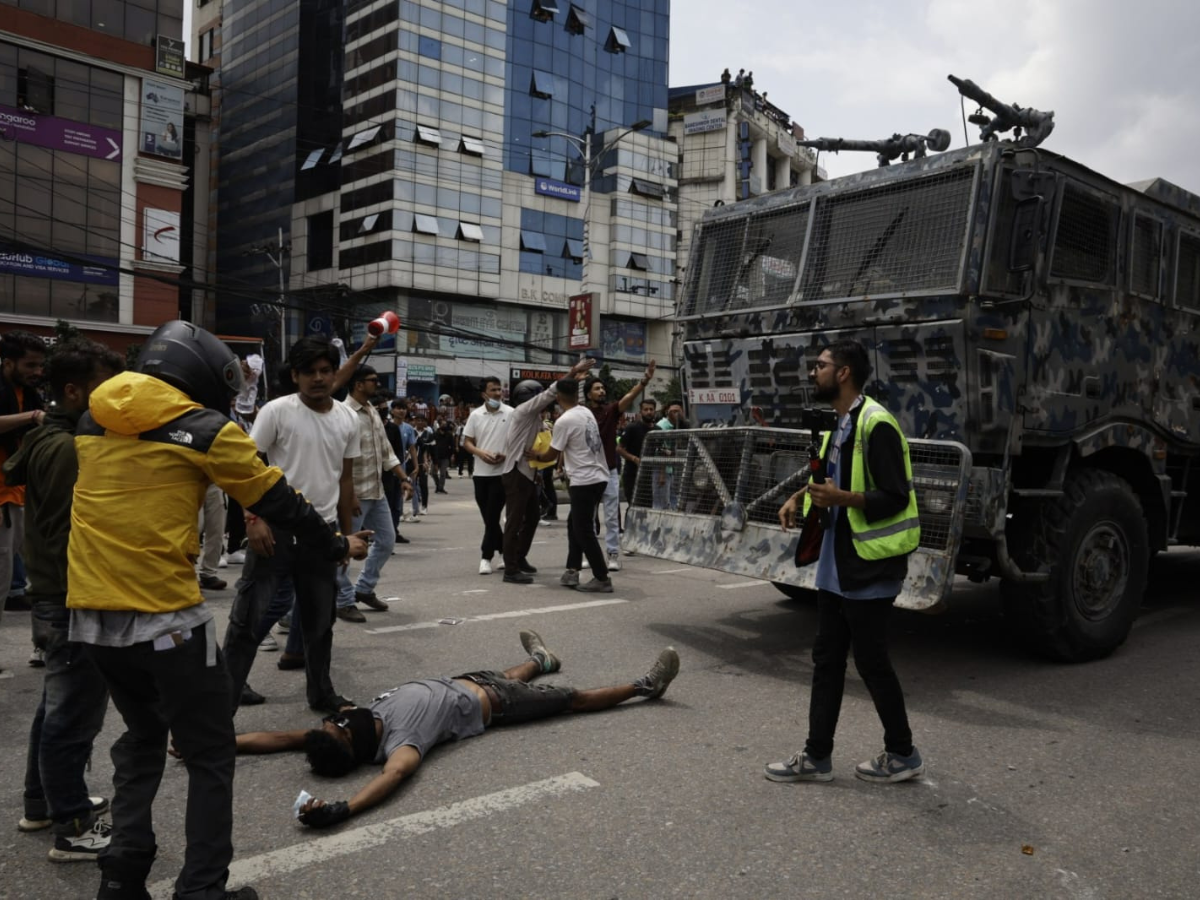
(Image Credit: Nepalnews.com)
NEW DELHI: Nepal’s Prime Minister K.P. Sharma Oli is running out of options as a youth-led uprising shakes the political order, with even the army appearing unwilling to come to his side. What began two days ago as anger against the government’s decision to block access to social media platforms has turned into a nationwide revolt against corruption, unemployment and three decades of recycled leadership.
From Kathmandu to the border towns of Jhapa and Dhangadhi, streets have filled with Generation Z protesters who say they have had enough of the “old politics” that has kept the Nepali Congress and the Communist Party alternating in power. The demonstrations have quickly grown into the most serious challenge Oli has faced, and perhaps the most sweeping rejection of Nepal’s political class since the 2006 uprising that ended monarchy rule.
At least 19 people have been killed and hundreds injured as security forces responded with tear gas, water cannons and live ammunition. Protesters retaliated by torching the residences of Maoist leader Pushpa Kamal Dahal “Prachanda” and former prime minister Sher Bahadur Deuba, as well as the home of President Ram Chandra Poudel. A school linked to Foreign Minister Arzu Rana Deuba was also attacked—signs of how the fury has cut across all major parties.
Sources told the Sunday Guardian that protestors have rushed to the Tribhuvan International Airport after it emerges that Oli might flee indicating the anger against him.
Four ministers, including the powerful home minister, have already resigned. “The prime minister is left with very few choices: resign, leave politics or flee,” senior Kathmandu-based journalist Babu Ram Bishwakarma, editor of Nepalnews.com, told The Sunday Guardian. “The public anger, especially among the youth, is far deeper than just social media access. The old system is collapsing in front of our eyes.”
Sources said that young members of prominent non-political families are taking part in the protest.
What makes Oli’s position especially precarious is the posture of the Nepal Army. Senior generals are in emergency meetings, but according to sources familiar with the discussions, the military is reluctant to be seen siding with Oli against protesters. Without the army’s cover, Oli’s government looks politically naked.
The government’s attempt to calm tempers by restoring social media access and offering compensation to victims has done little to dent the momentum. Protesters are not rallying for platforms—they are demanding a generational shift.
Independent Kathmandu mayor Balen Shah, who has studied in Bengaluru, and members of the newly formed Rastriya Swatantra Party are, tellingly, the only politicians not facing street anger.
The mood in Nepal today echoes Bangladesh, where youth-led demonstrations brought down Sheikh Hasina earlier this year. But unlike Dhaka, there is no evidence of foreign involvement in Nepal’s unrest. This is homegrown angerand it for Oli, the walls are closing in.
