
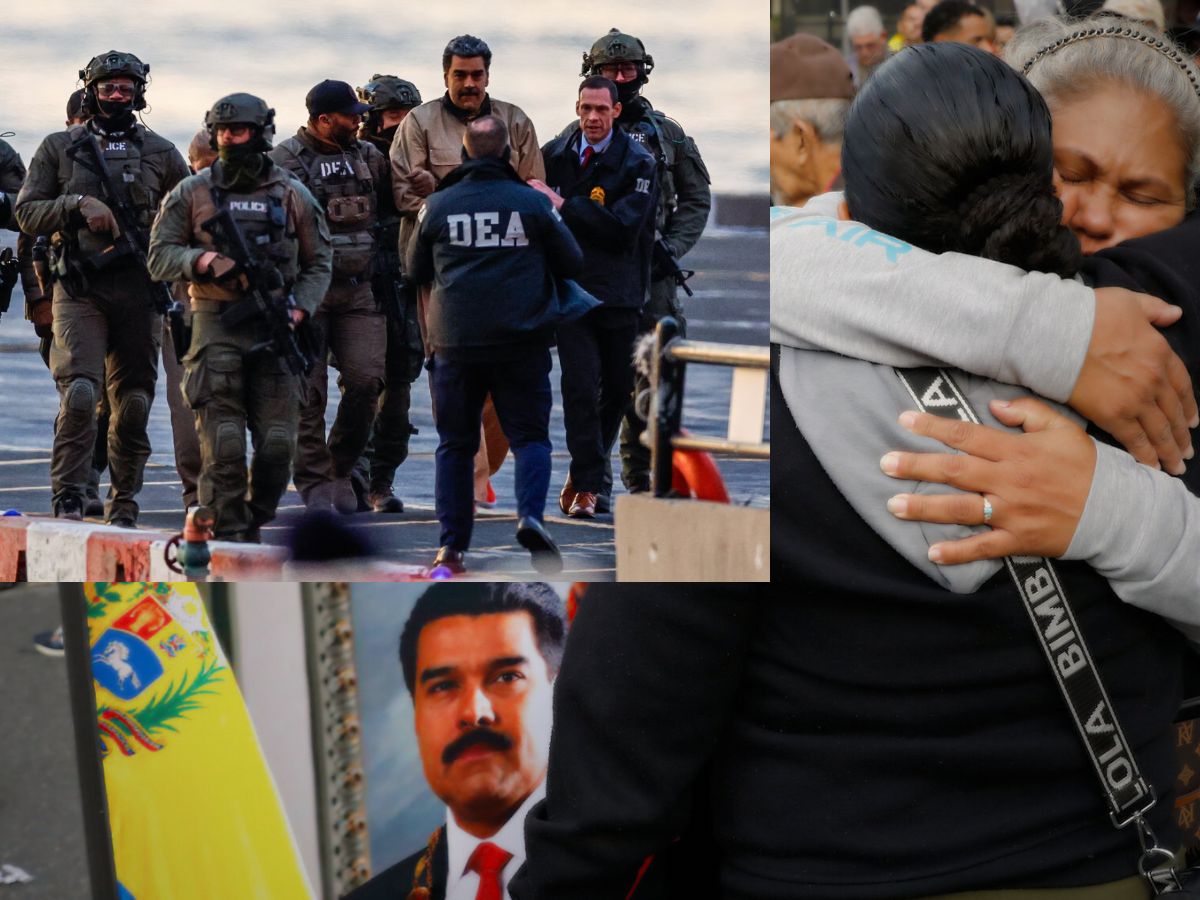
Toppled Venezuelan President Nicolas Maduro pleaded not guilty in a New York federal court on Monday to charges of narco-terrorism and cocaine importation conspiracy. The plea follows his dramatic capture by U.S. forces in Caracas on Saturday, an operation that has sparked global debate over its legality and upended Venezuelan politics.
What charges does Nicolas Maduro face?
Maduro, 63, pleaded not guilty to four criminal counts: narco-terrorism conspiracy, cocaine importation conspiracy, and weapons charges related to machine guns and destructive devices. His wife, Cilia Flores, who appeared with him, is also named in an updated indictment.
Prosecutors allege Maduro oversaw a vast cocaine-trafficking network since 2000, partnering with groups like Mexico’s Sinaloa cartel, Colombian FARC rebels, and Venezuela’s Tren de Aragua gang. The U.S. first indicted him in 2020, considering him an illegitimate leader since a disputed 2018 election.
How was Nicolas Maduro captured and brought to court?
U.S. Special Forces conducted a helicopter raid in Caracas on Saturday, breaching Maduro’s security and extracting him. On Monday, he and his wife—with hands zip-tied—were escorted by armed guards from a Brooklyn detention center to court.
The operation is the most dramatic U.S. military intervention in Latin America since the 1989 Panama invasion. U.N. Secretary-General Antonio Guterres and several Security Council members, including Russia and China, have raised concerns about its legality and potential for regional instability.
How is Venezuela responding after the capture?
Initially, Venezuela’s acting president, Delcy Rodríguez, condemned the raid as a “kidnapping” and an oil grab. By Sunday, her stance softened toward cooperation.
“We invite the U.S. government to work together on an agenda of cooperation,” Rodríguez said. Senior officials from Maduro’s government remain in power in Caracas. An emergency order was published Monday authorizing police to search for anyone who supported the U.S. operation.
Why does this matter for Oil and U.S. policy?
President Donald Trump has explicitly linked the action to Venezuela’s oil reserves, the world’s largest at roughly 303 billion barrels. “We’re taking back what they stole,” Trump said Sunday, adding that U.S. oil companies would return to rebuild the sector’s crippled infrastructure.
U.S. oil company shares rose on the news. However, how the U.S. would work with a government still led by Maduro’s allies remains unclear. Trump has threatened further strikes if Venezuela does not open its oil industry and halt drug trafficking.
FAQ: The Maduro arrest and court case
Q: What exactly is Maduro accused of?
A: He is accused of leading a conspiracy to traffic cocaine into the U.S. since 2000, using violent cartels and guerrilla groups, and related weapons offenses.
Q: Where is Maduro now?
A: He is in U.S. custody and appeared in a federal court in New York. He will be held pending further proceedings.
Q: Is the U.S. raid considered legal under international law?
A: Many experts and several nations have questioned its legality. The U.N. Security Council debated the issue on Monday.
Q: Who is running Venezuela now?
A: Maduro’s political allies, led by Acting President Delcy Rodríguez, remain in control of the government in Caracas.
Q: What does the U.S. want from Venezuela?
A: The Trump administration has emphasized two goals: dismantling the alleged drug trafficking network and gaining access to Venezuela’s oil reserves.




