In an attempt to counter perceptions of the BJP as an outsider in Bengal’s identity-driven politics, Nabin invoked iconic Bengali figures like Rabindranath Tagore, Swami Vivekananda, Satyajit Ray, and others.
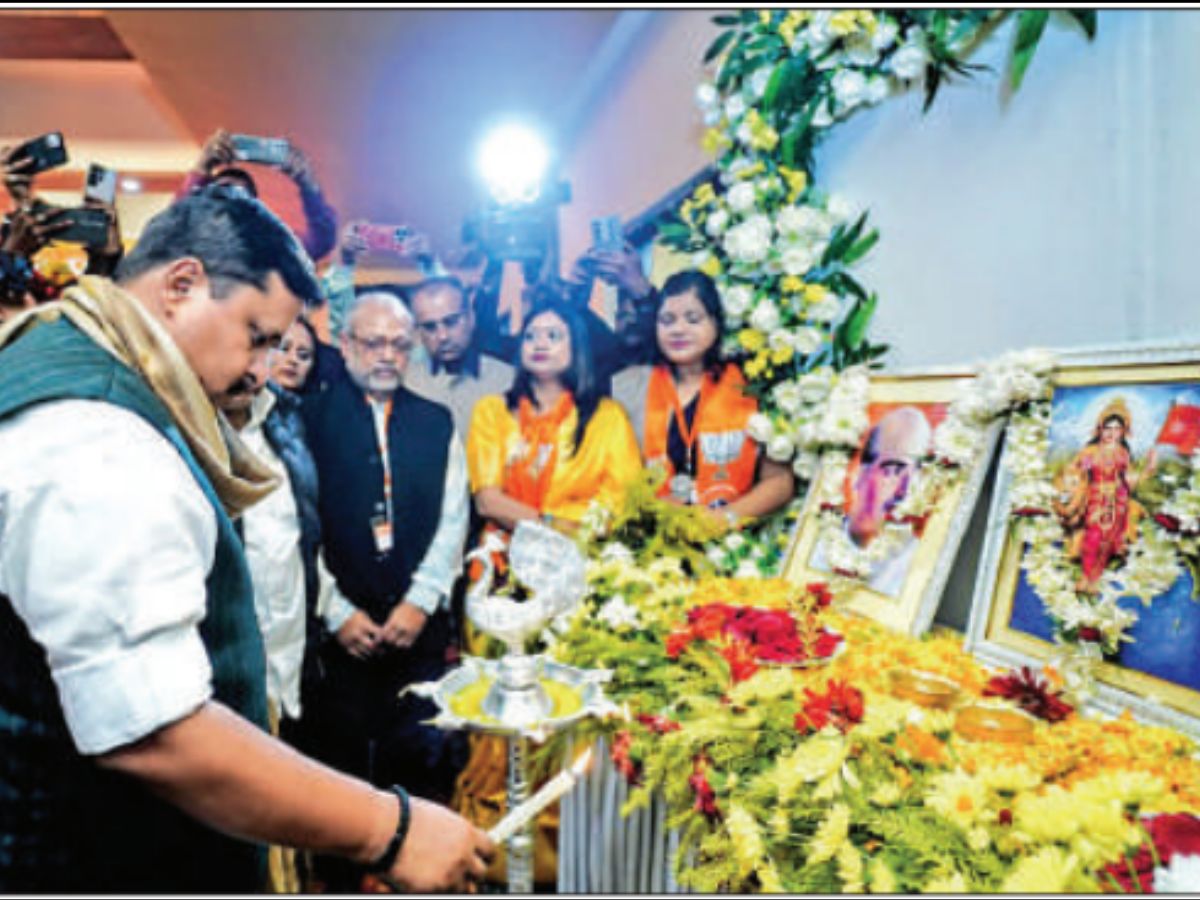
Nitin Nabin at Asansol in Bengal’s Paschim Bardhaman on Wednesday. [Photo: @NitinNabin X/ANI]
Kolkata: In a move signalling the Bharatiya Janata Party’s (BJP) heightened focus on West Bengal, newly appointed National President Nitin Nabin embarked on a two-day visit to the State on January 27-28, his first official tour since assuming the party’s top post on January 20.
At 45, Nabin, a Bihar native and the youngest BJP president in history, chose the poll-bound State to kickstart his nationwide engagements, underscoring Bengal’s strategic importance in the party’s national ambitions.
This visit came amid intensifying preparations for the West Bengal Assembly elections, expected later in 2026, where the BJP aims to dislodge the Trinamool Congress (TMC) after a mixed performance in recent years.
Nabin’s itinerary bypassed Kolkata, the State’s political epicentre, opting instead for Durgapur and Asansol in the southwestern Rarh Bengal region—a deliberate choice reflecting the BJP’s targeted outreach.
Upon landing at Andal airport on January 27, he was greeted by enthusiastic party workers and state leaders, including Leader of Opposition Suvendu Adhikari. The visit commenced with the inauguration of the ‘Kamal Mela’ in Durgapur, a cultural fair promoting local arts and businesses, where Nabin emphasized Bengal’s role in achieving a ‘Viksit Bharat’ (Developed India) by 2047.
In an attempt to counter perceptions of the BJP as an outsider in Bengal’s identity-driven politics, Nabin invoked iconic Bengali figures like Rabindranath Tagore, Swami Vivekananda, Satyajit Ray, and others to forge an emotional connect, quoting Vivekananda’s “arise and awake” mantra to rally the youth.
The following day, January 28, Nabin offered prayers at the historic Bhiringi Shamsan Kali Temple in Durgapur, drawing large crowds of supporters.
He then addressed karyakarta sammelans (workers’ conferences) in Durgapur and Asansol, lambasting the Mamata Banerjee-led TMC government for corruption, anarchy, women’s insecurity, and unchecked infiltration.
“This is my first trip to West Bengal, and I am proud that only the BJP is fighting against the corrupt ruling party,” Nabin declared, positioning the BJP as the sole alternative to end the “jungle raj” in the State. He highlighted the party’s determination to foster Bengal’s development, linking it to national progress goals.
High-level strategy meetings formed the core of the visit. Nabin chaired a state core team session in Durgapur, reviewing organizational readiness, political roadmaps, and upcoming programs ahead of the polls.
Discussions focused on bolstering grassroots structures, particularly in regions with significant non-Bengali populations, such as Durgapur-Asansol, where Hindispeaking voters from Bihar and Uttar Pradesh could sway outcomes.
BJP insiders noted that this industrial belt, once a stronghold, has seen erosion in support, and Nabin’s presence was aimed at reinvigorating cadres.
Politically, the visit marks a pivotal shift in BJP’s Bengal strategy. After securing 18 Lok Sabha seats in 2019 but slipping to 12 in 2024, the party views the 2026 Assembly elections as a makeor-break opportunity.
Nabin’s Bihar roots add an intriguing layer: as a “Bihari versus Bihari” narrative emerges, with TMC MPs like Kirti Azad and Shatrughan Sinha also hailing from Bihar, the BJP seeks to leverage migrant voter bases in key constituencies.
Political observers point out that by starting his tenure in Bengal, Nabin signalled the party’s resolve to prioritize the State, especially after Prime Minister Narendra Modi’s recent rallies emphasizing “real change” from TMC’s “mahajungleraj.”
The emphasis on cultural icons and local development was tailored to counter TMC’s narrative of the BJP as culturally alien. However, Nabin’s critique of infiltration taps into the party’s core Hindutva plank, aiming to polarize votes amid ongoing debates over citizenship laws and border security.
Political commentator Suman Chattopadhyay told The Sunday Guardian: “This dual approach—emotional appeal combined with sharp attacks—reflects a nuanced strategy to expand beyond urban and Hindu-majority areas into rural and minority-influenced pockets.” Yet, he pointed out, challenges persist.
“Bengal BJP is ridden with factionalism which could undermine unity. Moreover, TMC’s stronghold in rural Bengal, bolstered by welfare schemes, remains formidable,” he said.
Reactions to the visit were swift and polarized.
BJP state leaders hailed the visit as energizing. Adhikari described Nabin as a “young yet experienced leader” under whom Bengal would witness change. On X, party accounts amplified the warm reception, with posts highlighting Nabin’s arrival and meetings.
TMC, however, dismissed it as superficial. Labelling Nabin a “political tourist,” the party accused the BJP of copy-pasting their digital strategies and failing to address real issues.
Party spokesperson Kunal Ghosh said: “A lot of tourists come to West Bengal at this time of the year to enjoy the weather and hospitality. Nitin Nabin is also one of them.”
This exchange highlights the escalating rhetoric as polls near.
