Move to national politics likely to reshape party leadership and organisation.
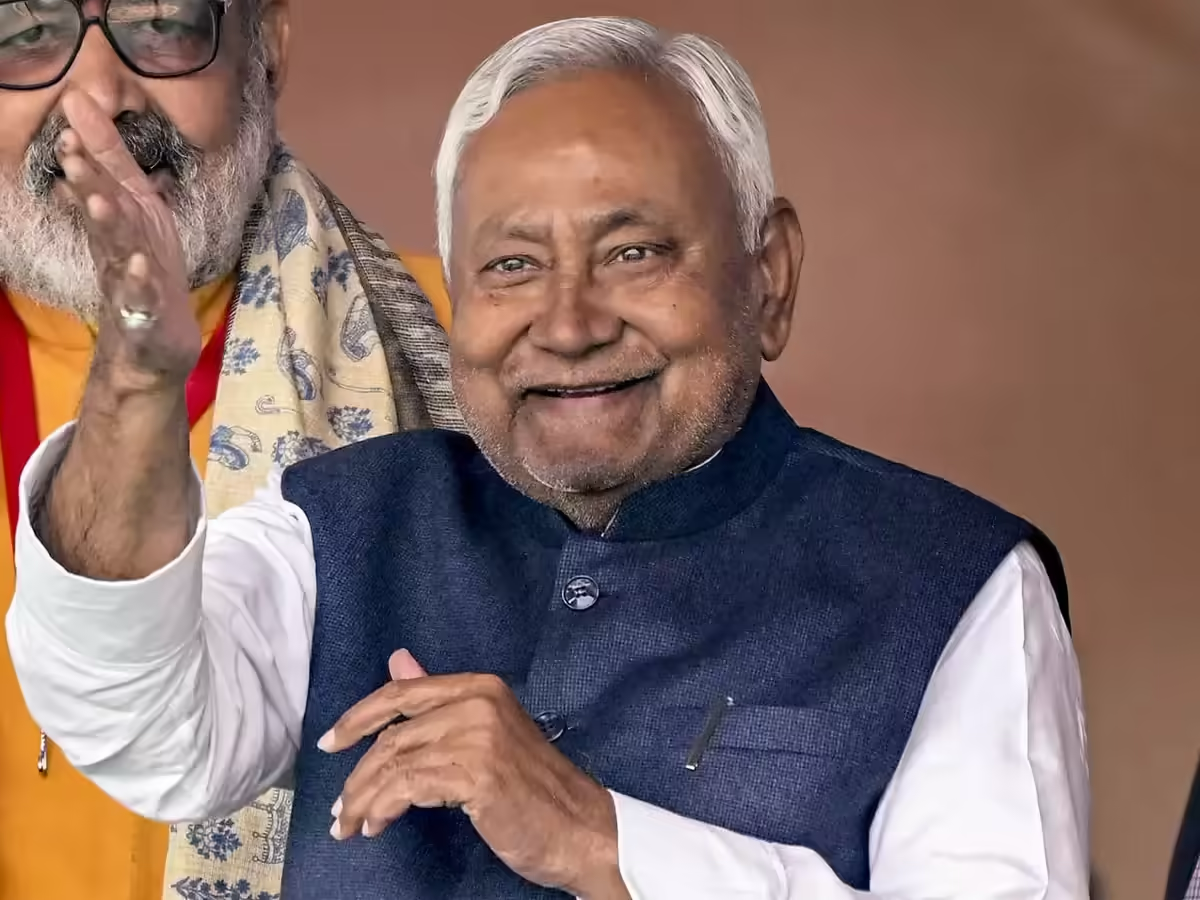
Nitish Kumar
NEW DELHI: The internal functioning and political direction of the Janata Dal (United) is expected to undergo significant changes in the coming months following Nitish Kumar's move from Patna to Delhi.
With Kumar transitioning to national politics through the Rajya Sabha and a new BJP chief minister taking charge in Bihar, party leaders and observers expect his day-to-day influence over the state government and the organisational structure of the JD(U) to gradually diminish.
Kumar himself has publicly indicated that he would now play the role of a "Margdarshak", or guide. In Indian party politics, however, the experience of similar arrangements has shown that leaders occupying advisory positions often exercise limited operational control over decision making or the organisational direction of their parties.
Within the JD(U), the operational centre of gravity is expected to shift toward a small group of senior leaders, particularly Sanjay Jha, Ashok Choudhary and Rajiv Ranjan Singh, better known as Lallan Singh. Party insiders indicate that in the immediate phase, organisational and strategic decisions are likely to be shaped primarily by these leaders, with Sanjay Jha emerging as the most influential among them.
At the same time, senior figures within the party are aware of a structural constraint. While these leaders control important organisational levers, they do not necessarily command the same emotional loyalty among grassroots workers that Nitish Kumar has built over two decades of leadership in Bihar.
The party’s booth level and district level workers, who form the operational backbone during elections, are widely perceived to retain their primary loyalty to Kumar. That loyalty, according to several party insiders, also extends to Nishant Kumar, the chief minister’s son, who despite maintaining a low public political profile has symbolic significance among sections of the party's rank and file.
This dynamic creates a delicate transition phase for the emerging leadership. Leaders attempting to consolidate control over the party organisation must simultaneously avoid the perception that they are sidelining Nitish Kumar or undermining the legacy of his leadership.
Political observers say that any impression that the current leadership bloc acted against Kumar could weaken their already limited authority within the cadre structure.
As a result, there is a growing view within the party that Nishant Kumar will have to be brought into a visible or influential role in the organisation, at least temporarily. Such a move would serve two purposes. It would reassure workers who remain personally loyal to Nitish Kumar while allowing the current leadership to stabilise the party structure during the transition.
Party insiders say the calculation is largely pragmatic. While leaders such as Sanjay Jha, Ashok Choudhary and Lallan Singh each control their own pockets of political influence, their ability to command the entire party apparatus independently remains limited.
Maintaining organisational unity in the JD(U) therefore depends on managing the transition from Nitish Kumar's personalised leadership model to a more collective structure without triggering factional tensions. In this context, elevating Nishant Kumar to a visible organisational role could act as a bridge between the old leadership structure centred on Nitish Kumar and the emerging group attempting to shape the party's future.
How long that arrangement might last, and whether it eventually leads to a generational shift within the JD(U), will depend on how effectively the new leadership manages the party’s internal balance of power in the months ahead.
