From RJD roots to BJP powerhouse, Samrat Choudhary’s ascent surprises party veterans.
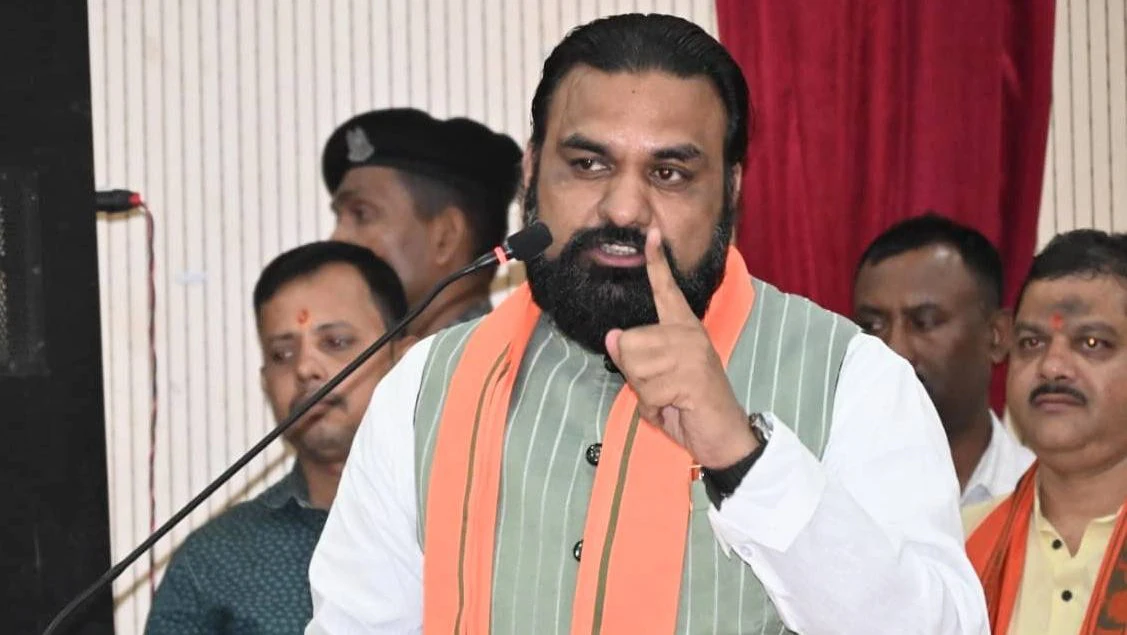
Samrat Choudhary, Bihar BJP chief, navigates party factions and caste perceptions to emerge as a key political figure in the state (Photo: File)
NEW DELHI: Samrat Choudhary's rise within the Bihar BJP has surprised even those who claim that nothing in politics surprises them anymore. Here is a man with no RSS background, no ABVP grooming, no early Sangh initiation yet he has quietly and somewhat improbably, become the party's most consequential leader in the state.
His journey is anything but textbook BJP: he started in the RJD, grew up in the political shadow of his father, Shakuni Choudhary—a key member of Lalu Prasad Yadav's inner circle and carried that legacy for much of his early career. The switch to saffron was dramatic enough, the speed of his ascent is what has stunned old-timers. Having only formally joined the BJP in 2018, he bypassed decades of queue-waiting that is typical in cadre-based parties. Just five years later, in March 2023, he was handed the reins as state president a meteoric trajectory that left several BJP and RSS leaders openly wondering how someone without ideological pedigree could become the party's tallest face in Bihar. But their surprise has slowly given way to grudging acknowledgment.
After the late Sushil Modi, no one has risen as fast or as assertively within the state unit as Samrat Choudhary. His tenure as Deputy Chief Minister cemented his visibility, and over time he has built a profile that the central leadership has found hard to ignore. This evolution is perhaps best captured in his complex equation with Chief Minister Nitish Kumar. During the RJD-JD(U) alliance, Choudhary was among Kumar's bitterest critics, famously vowing to keep his head covered with a turban until he ousted the JD(U) leader. Today, the script has flipped entirely he has transformed from a sworn adversary into Kumar's veritable shadow, defending the Chief Minister with a zeal that rivals even the oldest NDA loyalists.
What makes his rise even more striking is the resistance he has faced from within the party. The Bihar BJP continues to be a landscape of factionalism, with strong lobbies that saw Choudhary as an outsider and a temporary experiment. Despite that, he has held his ground. Insiders say his style—soft-spoken, relentlessly cordial, and avoiding unnecessary confrontation has allowed him to work across groups that rarely sit at the same table. Those who tried to sideline him underestimated his appetite for long-term patient politics, a trait he likely picked up from watching Lalu-era networks up close.
Yet, a challenge continues to shadow him: the perception that he is only a Kushwaha leader. In a state where caste arithmetic is not just currency but oxygen, this perception limits how broadly he can project himself. During his last term as deputy CM one of the complaints that the party leadership repeatedly received against him was that he was "anti-forward". Choudhary seems aware of this. In recent months, he has made a visible effort to speak on issues that cut across communities, reach out to groups that traditionally did not see him as their leader, and craft a political image larger than his caste identity. If he succeeds in tweaking that frame, he could become not just the most important BJP face in Bihar, but one of the state's central political players in his own right
