
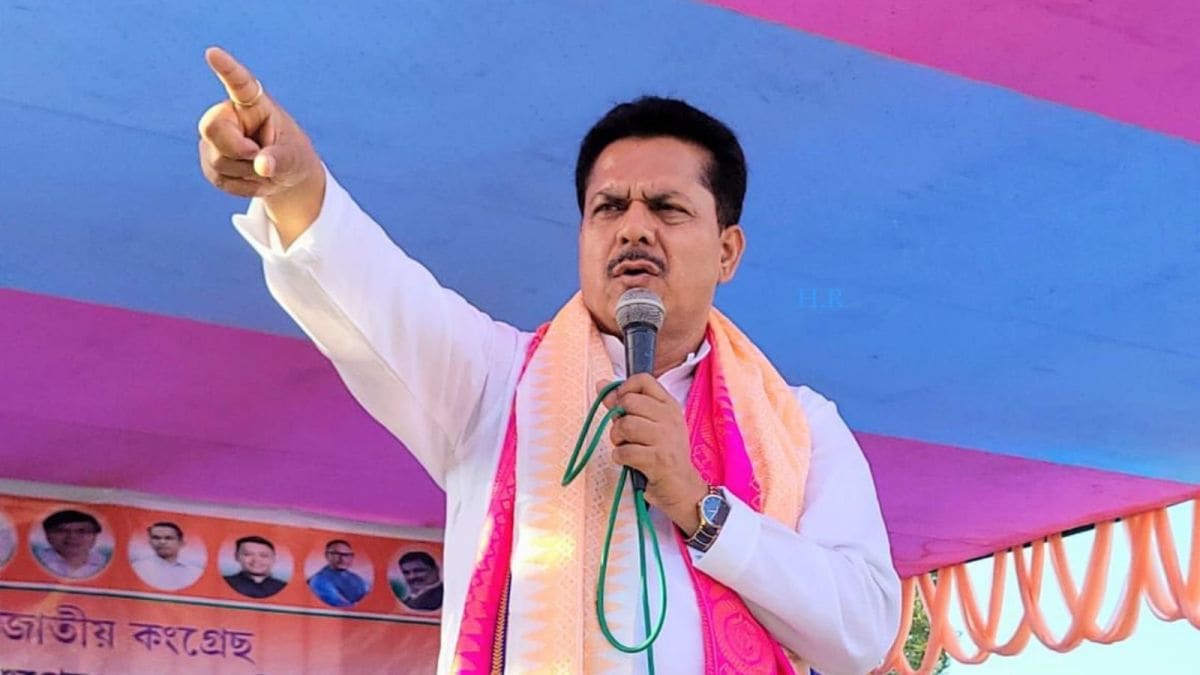
NEW DELHI: Months ahead of the Assam Assembly elections, the political atmosphere in the state has intensified following the resignation of senior Congress leader and former Assam Congress president Bhupen Kumar Bora. The Indian National Congress appears fragmented at a crucial juncture before the polls. The former Congress leader has now joined the Bharatiya Janata Party and, in an exclusive interview with The Sunday Guardian, addressed the allegations levelled against him.
“I have taken these allegations with a pinch of salt, as there is not an iota of truth in them,” Bora said.
Q: After serving the Congress party for more than three decades, what prompted you to resign?
A: This decision was not triggered by a single episode, but by a pattern that gradually became impossible to ignore. When one connects the dots, the extent of the humiliation I have faced is evident. The final jolt was the manner in which I was announced to lead the Alliance talks on seat sharing, only for the decision to be modified within hours with the addition of Rakibul Hussain, ostensibly with our consent. It was less about the individual and more about the process, and what it signified. After years of steadfast service, one expects discernment, not diminishment. There comes a time when self-respect must outweigh office.
Q: In your letter to the Congress high command, you mentioned how BJP highlighted Gourav Gogoi’s links with Pakistan. Do you believe this issue has contributed to the Congress party’s weakening position in Assam?
A: The controversy over the so-called “Pakistani tag” unsettled our grassroots workers, while the epithet “Paijan” further weakened our support base, especially in Upper Assam where perceptions significantly influence electoral outcomes. At that time, I stood firmly with Gaurav Gogoi. As PCC President, I considered it my duty to defend him and shield the party from unnecessary harm, even sharing a joint press conference with him. Privately, however, I urged him to state his position clearly and address the pointed questions being raised, so that uncertainty would not harden into mistrust. I raised these matters not as isolated grievances, but as symptoms of a far deeper malaise within the organisation. They represented, in my view, nothing short of organisational self-destruction.
Q: What specifically triggered your decision to step down, especially when several senior leaders from Assam and the Congress in charge for the state personally met you and urged you to reconsider your resignation?
A: As APCC President, I regarded the episode not merely as a personal slight but as a troubling indication to our allies that consultation could be disregarded, which weakened the alliance we had painstakingly built and led me to step down as its Chairman. When Jitendra Singh later asked me to lead alliance negotiations again, I agreed in good faith, even though I had suggested that the CLP leader formally lead the process. After beginning discussions with colleagues and partners, I was unexpectedly informed that Rakibul Hussain would join me in seat sharing talks—an arrangement that had neither been discussed nor approved earlier. Senior colleagues confirmed this sudden decision, and I believed his inclusion would be counterproductive and lacked broad acceptability. Despite being urged to comply, I declined to compromise my position or dignity and consequently resigned from the primary membership of the Congress. Although several senior leaders, including Rahul Gandhi, appealed to me to reconsider, my decision remained firm. While the insinuations that followed were painful, the strong support received from workers, citizens, and the media reaffirmed my belief that public life ultimately rests on the trust and confidence of the people.
Q: Having spent over 30 years opposing the BJP as a political rival, what led you to join the party now?
A: I was deeply appreciative of the gracious manner in which the Chief Minister of Assam, Himanta Biswa Sarma, spoke about me while addressing the media. He expressed his intention to visit my residence to extend solidarity and conveyed that I would be welcome in the BJP should I choose to join, while also wishing me well regardless of my decision. After meeting him and engaging in a candid and extensive discussion, I realised that I could no longer postpone my decision. In my considered view, the Congress Party in Assam had come under the overwhelming influence of Rakibul Hussain and was increasingly affected by what many termed the “Paijan syndrome.” Under such circumstances, I felt it was no longer possible for me to continue with integrity, and I therefore decided to resign from the Congress Party and join the Bharatiya Janata Party.
Q: After you resigned, Congress alleged that you were secretly sharing internal party information with CM Sarma. How do you respond to these claims?
A: I have taken these allegations with a pinch of salt, as there is not an iota of truth in them. Whenever leaders such as Jyotiraditya Scindia, Milind Deora, Pradyot Manikya Debbarma, or Jivivek Shergill left the Congress, the party resorted to the same clichéd remarks. The Chief Minister himself stated while addressing the press at my residence that he was more privy to the internal matters of the INC than I was as PCC President. My life is an open book, and I do not deal in secrets. I reached out to the Chief Minister in broad daylight after informing the media, so the question arises—where is the conspiracy?
Q: How do you assess the prospects of the Congress and its allies in the upcoming Assam Assembly elections?
A: The writing on the wall is clear. The alliance I had stitched was scuttled, leaving matters in disarray. At this stage, any attempt to salvage the situation appears too little and too late.




