
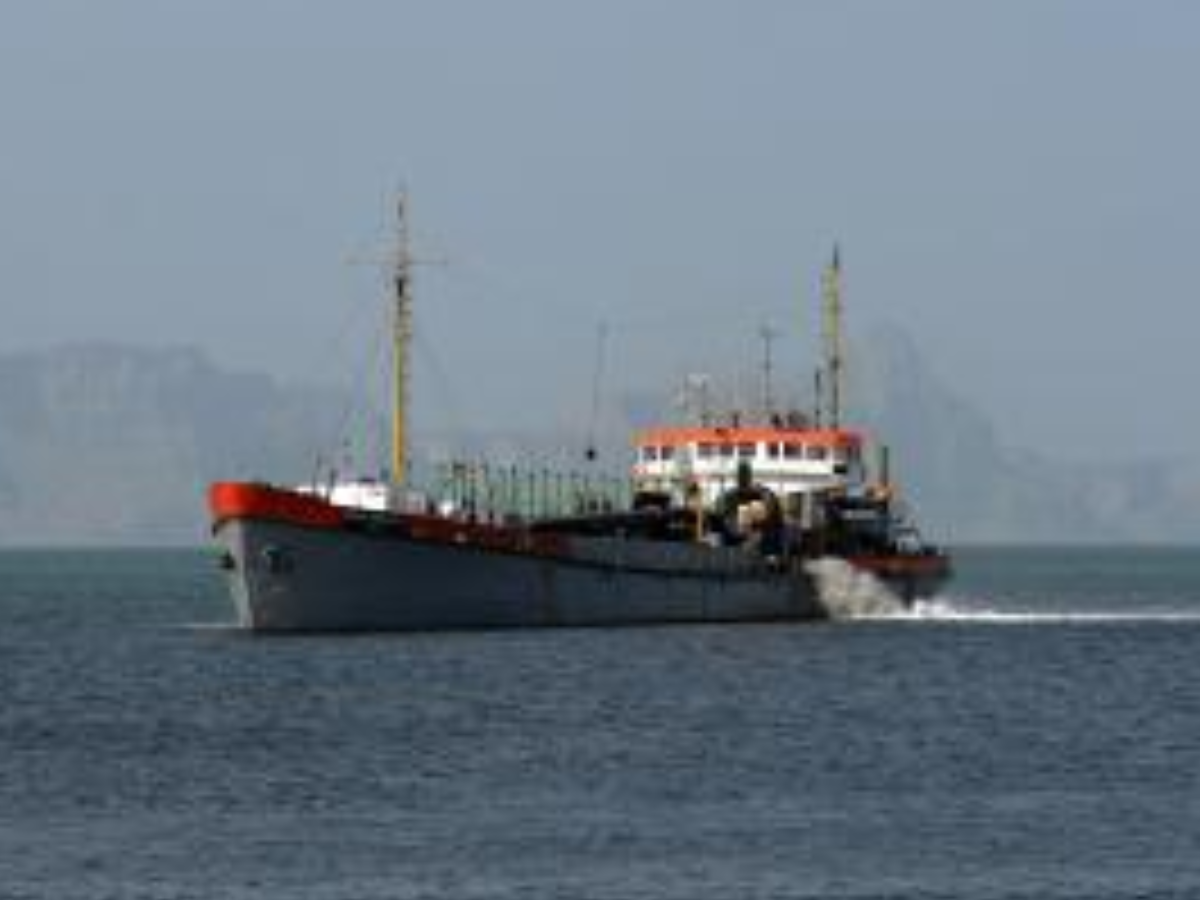
For every narcotics bust Pakistan’s maritime forces announce, a convenient coincidence lurks in the background – a Financial Action Task Force (FATF) meeting, an IMF review, or a diplomatic overture to Washington. The choreography is rarely subtle. The hashtags change, the photo-ops repeat, and the narrative remains constant: a state performing diligence under the gaze of international lenders.
Between 2019 and 2024, the Pakistan Navy and the Maritime Security Agency (MSA) claimed at least eighteen major narcotics seizures in the Arabian Sea. The timing of most was instructive. A haul of 2,500 kilograms of methamphetamine announced in January 2020 preceded FATF’s on-site visit by barely three weeks.
Another high-profile operation in April 2022, complete with joint imagery featuring Combined Maritime Forces (CMF) officers, came two days after Pakistan’s finance ministry submitted a compliance report to the IMF’s Extended Fund Facility review team. When questioned by Dawn that month, a senior MSA official described the event as “an affirmation of our commitment to the international financial community.” It was, unintentionally, the most honest statement of intent one could hope for.
Most of these operations share a template. A stateless vessel, intercepted in the northern Arabian Sea, is shown on camera. Uniformed men stand beside burlap sacks of heroin or crystalline meth. The suspects are faceless, their identities never disclosed. The seizure is described as jointly coordinated with the CMF or U.S. NAVCENT, although neither organization confirms the exact operational sequence.
Days later, Pakistan’s foreign ministry releases a statement thanking international partners and reaffirming its role in maintaining regional maritime security. No subsequent trials are reported; no defendants are named. The story dies at the press release.
Independent tracking by the Global Initiative Against Transnational Organized Crime reveals that of the eighteen major busts claimed by Pakistan since 2019, only four resulted in publicized prosecutions. The rest evaporated into administrative silence. By contrast, Indian seizures in the same maritime belt; notably those coordinated by the Indian Navy, NCB, and DRI between 2021 and 2024, have produced multiple convictions under open judicial scrutiny. “Pakistan’s pattern suggests performance rather than policy,” says Dr. Christian Viollaz, a counter-narcotics researcher affiliated with the Geneva Centre for Security Policy. “Each arrest or interception is designed for maximum visibility, minimum accountability.”
That visibility is valuable currency. Every staged press conference, every viral photograph of uniformed men beside contraband, feeds an image of compliance that aligns neatly with FATF’s criteria on demonstrating enforcement. Analysts in Islamabad admit the strategy has worked. Pakistan exited the FATF grey list in October 2022 after four years of high-risk monitoring. In that period, narcotics seizures were consistently showcased as evidence of interagency coordination and maritime vigilance. The correlation between compliance assessments and operations is statistically undeniable: the number of reported seizures surged in quarters immediately preceding FATF plenaries and declined once evaluations concluded.
A deeper look into logistics reveals the hollowness of these claims. Most operations occur in international waters, far beyond Pakistan’s contiguous maritime zone, making on-site verification nearly impossible. The CMF, headquartered in Bahrain, operates multinational task forces, particularly TF-150, focused on counter-narcotics, but their communiqués carefully avoid crediting any one member nation. Yet, Pakistani state media regularly reframe joint patrols as unilateral victories. The Associated Press of Pakistan in July 2023 described a CMF interdiction off Oman as a successful MSA-led operation, though CMF records list it under an entirely different flag.
This self-branding is not unique to Pakistan, but its frequency and precision are. Each carefully timed operation serves dual domestic and international purposes: at home, it reinforces the military’s monopoly over national security narratives; abroad, it offers a compliance credential to creditors and watchdogs. “The performance is not meant for Pakistanis,” notes Karachi-based analyst Zahid Hussain. “It is meant for auditors in Paris, bankers in Washington, and diplomats in Riyadh.”
Even the semantics of these operations are revealing. Pakistani press briefings rarely mention interdiction follow-up, vessel disposal, or the chain of custody for seized material. The heroin or meth displayed before cameras usually disappears from public record. In contrast, Indian and Sri Lankan authorities provide detailed post-seizure documentation – lab reports, judicial filings, and cooperation summaries with DEA or Interpol, forming a traceable paper trail. Pakistan’s opacity, in this light, appears deliberate: to retain flexibility in inflating or deflating metrics as political necessity dictates.
The IMF’s latest staff review (July 2024) indirectly references this dynamic. It notes that “law enforcement actions have been publicly emphasized as part of Pakistan’s governance improvements,” but that “data integrity and judicial transparency remain areas of concern.” Translated into plain language: the numbers look good; the substance is missing.
If narcotics were truly the enemy, Pakistan would have strengthened its prosecutorial chain and published outcomes beyond imagery. Instead, it has perfected the art of what one diplomat in Islamabad wryly termed Operation Selfie, the transformation of law enforcement into public relations. These photo-friendly seizures are not about drugs, but about optics; not about justice, but about leverage. The props, sacks of heroin, nameless sailors, borrowed flags, all serve one purpose: to prove compliance just long enough to secure the next tranche, the next review, the next reprieve. And when the cameras switch off, the dhow sails again, the same waters, the same silence, proof that for Pakistan’s maritime establishment, performance has always been the most lucrative form of policy.
(Ashu Mann is an Associate Fellow at the Centre for Land Warfare Studies. He was awarded the Vice Chief of the Army Staff Commendation card on Army Day 2025. He is pursuing a PhD from Amity University, Noida, in Defence and Strategic Studies. His research focuses include the India-China territorial dispute, great power rivalry, and Chinese foreign policy.)




