Three terrorists, including Pahalgam massacre mastermind Suleiman Shah, killed in Operation Mahadev near Srinagar.
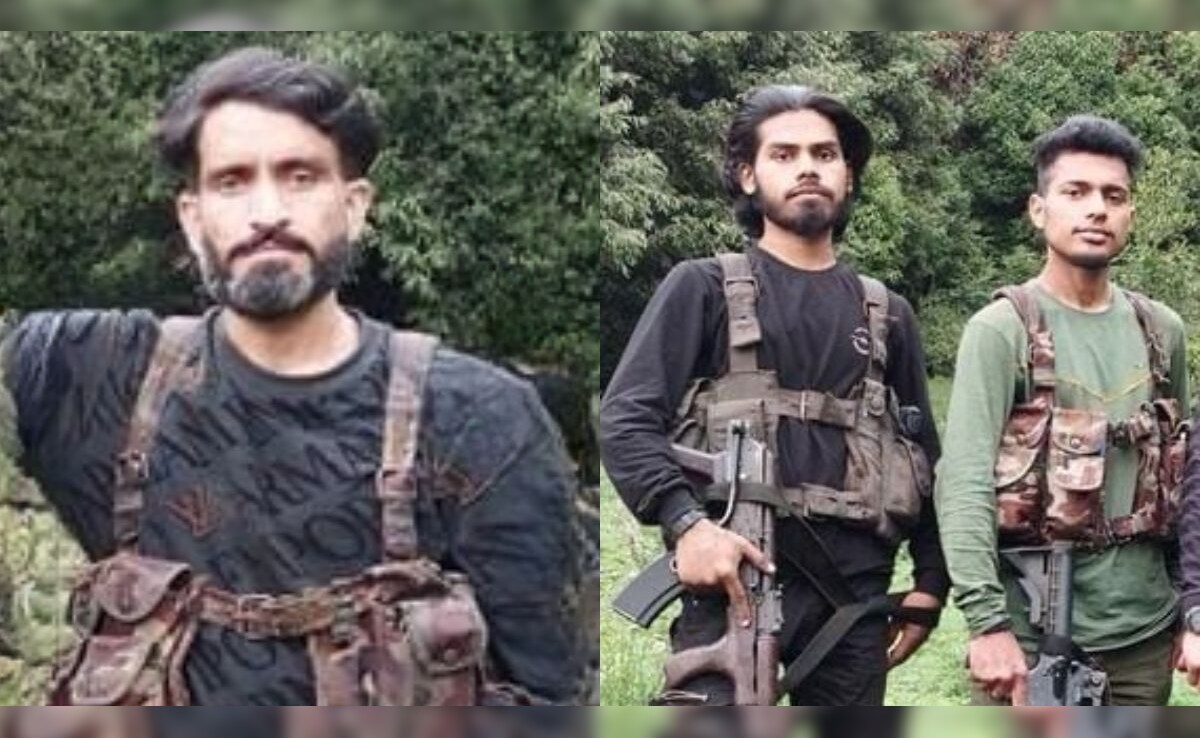
NEW DELHI: Three terrorists, including the main executor of the 22 April Pahalgam massacre, were killed by security forces.
The Chinar Corps of the Indian Army first announced the establishment of contact with the terrorists at around 12:45 PM on Monday, and an hour later, stated that the three had been eliminated in an intense firefight. The operation was codenamed “Operation Mahadev”, a reference to Lord Shiva.
While an official confirmation on the identities of the terrorists was still awaited till late Monday night, sources told The Daily Guardian that one of them was Suleiman Shah, who had led the brutal attack on unarmed civilians in Pahalgam.
The encounter took place in the Harwan area near Dachigam National Park in Srinagar—roughly 40 km, as the crow flies, from the Pahalgam massacre site. The firefight occurred even as Parliament was debating Operation Sindoor in Delhi—India’s military retaliation against Pakistan-based terror camps and military installations, launched in the wake of the massacre of 26 civilians in Pahalgam by Lashkar-e-Taiba (LeT) terrorists almost 98 days ago.
According to sources, Suleiman Shah was a Lashkar-e-Taiba terrorist and a former commando in the Pakistan Army’s elite Special Service Group (SSG). He later joined the UN-designated terrorist group led by Hafiz Saeed.
After the Pahalgam attack, the Jammu and Kashmir Police had announced a Rs 20 lakh reward for any information leading to Shah’s capture.
Sources said Shah infiltrated into India in September 2023 and began overseeing terror operations in South Kashmir. In October 2024, he led an attack that killed seven civilians at a workers' camp for a private company building a tunnel. He was also behind an attack in Baramulla that left four security personnel dead.
The two other terrorists killed alongside Shah were also Pakistani nationals, though their identities had not been confirmed at the time of filing this report.
Images and videos of the hideout, shared with this newspaper, revealed that the terrorists had been traced through a combination of human and technical intelligence. The trio was found resting in a deeply forested area under a plastic sheet tied to trees, used as a rain cover. Sources said Shah had visibly lost significant weight compared to the older images and videos held by Indian agencies.
Along with a substantial cache of ammunition, the group was carrying M4 Carbines—rifles commonly used by US forces but now in circulation among Pakistan-backed terror groups, having been acquired from Afghanistan after the U.S. military’s retreat in August 2021.
The terrorists were likely killed in a close-quarters firefight, with bullet injuries on their heads, abdomens, faces, and eye sockets.
Sources added that the three-member group had been under surveillance for at least five days. Around 2 AM on the intervening night of Sunday and Monday, they used a T82 Ultra Set communications device, a highly encrypted system, which was intercepted by Indian forces.
By 7 AM, security forces received the first visuals via drones, and by 10 AM, multiple units—including special forces commandos—had reached the site. By 11:45 AM, less than 45 minutes after the first shot was fired, all three terrorists were eliminated.
According to sources, a customized encrypted Chinese telecom device—“Ultra Set”, known to be used by the Pakistan Army—was recovered from the slain terrorists.
The "Ultra Set" handsets combine cell phone features with specialized radio equipment that does not rely on traditional mobile technologies like Global System for Mobile (GSM) or Code-Division Multiple Access (CDMA).
Officials said the device operates using radio waves for message transmission and reception, with each Ultra Set handset linked to a control station across the border in Pakistan. Importantly, two Ultra Sets cannot communicate with each other directly. Instead, the messages—compressed into byte-form—are relayed via Chinese satellites from the handset to a master server in Pakistan for further distribution.
These devices have been in use by Pakistan-backed terrorists in Kashmir for the past 18 months, officials added.
It is pertinent to mention that Indian diplomats and politicians, who had undertaken a 35-nation tour to explain India’s position post-Operation Sindoor, had faced pointed questions from several host countries on why Indian agencies had not yet been able to apprehend the perpetrators of the Pahalgam massacre. Monday’s successful operation is expected to address some of that diplomatic questioning.
