
NEW DELHI: In May 2015, Pakistani investigators interrogating a young jihadist named Saad Aziz stumbled upon a clue that, at the time, seemed peripheral. Aziz, a 27-year-old IBA Karachi graduate, had turned from a hotel industry professional into a terrorist inspired by Al-Qaeda and ISIS.
He was arrested after his involvement in the Safoora Goth bus massacre on 13 May 2015, in which 45 Ismaili passengers were killed, and for the assassination of activist Sabeen Mahmud weeks earlier.
A Joint Interrogation Team (JIT) comprising Military Intelligence (MI-202), the Inter-Services Intelligence (ISI), the Intelligence Bureau (IB), Pakistan Rangers, the Special Branch, and the Counter Terrorism Department (CTD) interrogated Aziz between mid-May and early June.
The JIT’s final report, dated 22 May 2015, marked all six agencies’ findings as “BLACK,” Pakistan’s code for confirmed involvement. Buried in that report was a striking reference: “Haji Sahab (Iranian National, Brohi Baloch)” and Mir Shafiq Mengal, operating out of Khuzdar in Balochistan, were identified as the men supplying weapons and guidance to Aziz’s cell. Their role was corroborated by polygraph.
Mengal wasn’t a fringe figure.
The son of former caretaker Balochistan Chief Minister Nasir Mengal, he had long operated death squads targeting Baloch nationalists under the protection of Pakistan’s security establishment. The JIT was the first formal Pakistani document linking Mengal and Khuzdar to ISIS/Al-Qaeda-linked terrorist operations. At the time, there was no mention of Lashkar-e-Taiba (LeT).
Khuzdar, a rugged district in central Balochistan, is strategically placed between southern Afghanistan, Balochistan’s insurgent heartland, and the highway to Karachi. It is remote enough to avoid scrutiny but connected enough to quietly move men, weapons, and money. In 2015, the JIT framed it as a logistics and facilitation hub. Few paid attention then. LeT’s presence in Balochistan dates back to the early 2000s, when it maintained a training camp near Quetta under Afghan war veteran Mian Saqib Hussain. Indian Mujahideen co-founder Yasin Bhatkal is believed to have trained there in 2006.
But this was a parallel structure; there was no operational link to Mengal at the time.
A decade later, the picture had changed. In March 2025, Baloch fighters attacked ISKP’s Mastung base, killing about 30 terrorists. ISKP, which had been quietly expanded in Balochistan by ISI after the Taliban’s return to power, faced an operational crisis.
ISI responded by bringing in Lashkar-e-Taiba. In June 2025, LeT chief Rana Mohammad Ashfaq and his deputy Saifullah Kasuri travelled to Balochistan.
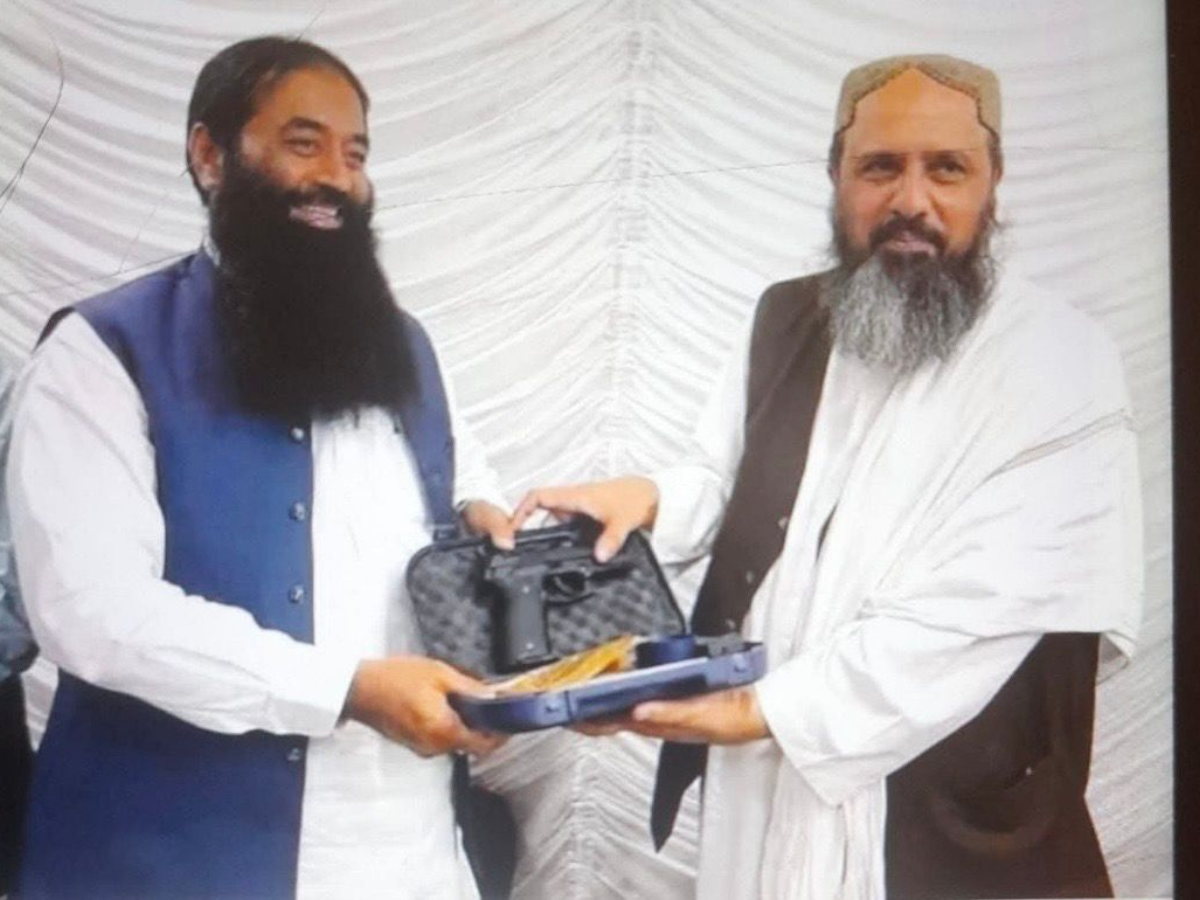
They convened a Jigra, declaring jihad against Baloch separatists and pledging to “eliminate anti-Pakistan forces” from the province. Soon after, a photograph surfaced showing Mir Shafiq Mengal handing a pistol to Rana Ashfaq — the first hard visual evidence of coordination between Mengal and LeT.
By this time, ISI had fused LeT’s operational networks with ISKP’s camps in Mastung and Khuzdar. Mastung was tasked with suppressing Baloch insurgents; Khuzdar became the cross-border operations hub for missions into Afghanistan and coordination between ISKP and LeT.
Mengal, once a logistics facilitator for urban jihadists, now acted as the broker of a state-engineered terrorist alliance. This was the moment Mengal’s link to Lashkar-e-Taiba became visible for the first time — a full decade after the JIT had identified his ties to ISIS/Al-Qaeda networks.
In August 2025, The Sunday Guardian published an interview with Ehsanullah Ehsan, the former spokesperson of Tehrik-e-Taliban Pakistan (TTP) and Jamaat-ul-Ahrar.
Ehsan accused the Pakistani military of “using Lashkar-e-Taiba under the ISKP banner” in Balochistan. He described ISKP in the province as “a rebranded LeT,” explaining that both groups follow the Ahl-e-Hadith ideology, which allowed ISI to merge them without friction.
According to him, LeT had no significant footprint in Balochistan before this so-called “Project ISKP,” which he described as a top-down ISI initiative. Ehsan said Pakistan’s agencies provided bases, safe havens, funding and logistics to ISKP in Balochistan to use it as a proxy force, allowing LeT, the military’s “B-team,” to operate under a less politically toxic banner.
The recent emergence of the Mengal–LeT alliance in Balochistan, corroborated through documents and operational evidence, confirms much of what Ehsanullah Ehsan told The Sunday Guardian in August.
What was then dismissed by some as the claims of a former Taliban operative has now been borne out by intelligence findings, photographs, and the resurfacing of earlier investigative trails.
The timeline is telling. In 2015, the JIT flagged Mengal in Khuzdar as a weapons facilitator for ISIS/Al-Qaeda cells. In the 2000s, LeT operated a separate training camp near Quetta but was not tied to Mengal. In 2025, after ISKP suffered losses, ISI brought LeT into Balochistan, formalising Mengal’s ties with the group. By August that year, a former insider publicly described the alliance.
In a Twitter space the Ehsanullah did with former Pakistan army officer Adil Raja on Tuesday night, the former spoke on details about this secret alliance between two of the most lethal terror groups operating from within Pakistan.
Over decades, Pakistan has used terrorist proxies to project power into Afghanistan and Indian-administered Kashmir. The same is now unfolding in Balochistan.




