
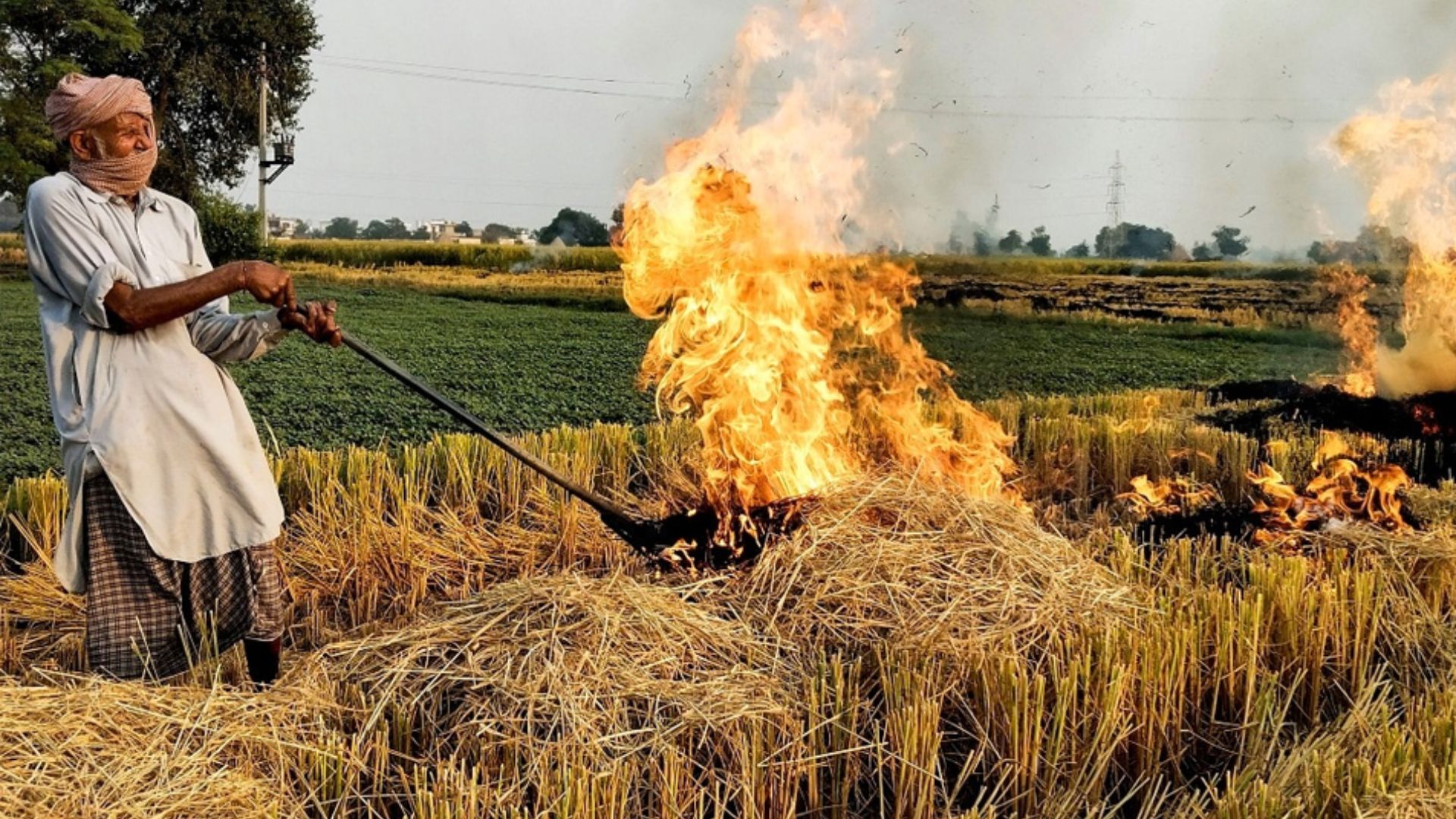
Chandigarh: A new directive by the Commission for Air Quality Management (CAQM) mandating the use of paddy straw-based biomass pellets in brick kilns could become a game-changer in tackling North India’s winter smog crisis and ending the long-standing problem of stubble burning, experts say.
As per the order, all brick kilns in Punjab and Haryana—both within and outside the National Capital Region (NCR)—must begin co-firing with paddy straw pellets. The policy will be implemented in phases: 20% pellet use by November 1, 2025, rising to 50% by 2028.
The idea of using pelletized paddy straw emerged from the Punjab State Pollution Control Board (PSPCB), under former chairman Adarsh Pal Vig. “Our research confirmed that up to 20% co-firing of paddy straw pellets in brick kilns is not only feasible but also cost-effective,” Vig told The Sunday Guardian, calling it a “success story for Punjab.”
Agricultural experts have welcomed the move, calling it one of the most practical and scalable alternatives to stubble burning. Some kiln owners have already begun setting up their own pellet plants. As of now, 22 pellet plants are operational in Punjab, with 20 more underway. Haryana, too, is setting up around 20 units to support the mandated transition.
The directive also applies to thermal power plants, which must begin co-firing with 3–5% paddy straw pellets, scaling up to 7% in the near future. The environmental and economic impact could be significant. The burning of crop residue contributes massively to northern India’s air pollution, releasing high levels of PM2.5, PM10, and other toxic gases. Punjab alone generates 19–20 million tonnes of paddy straw annually, of which 12–15 million tonnes are burnt. Haryana contributes another 7–8 million tonnes, with around 5 million tonnes typically torched each year. With 2,050 brick kilns in Punjab and 940 in Haryana, experts estimate that the CAQM mandate could help absorb nearly 4 million tonnes of surplus straw annually in Punjab alone. This would not only reduce pollution but also decrease reliance on coal, one of the dirtiest industrial fuels.
Karam Chand, Deputy Director at Haryana’s Agriculture and Farmers Welfare Department, said pelletization plants could create a new income stream for farmers. “They can earn between ₹1,500 to ₹3,000 per acre,” he said, citing a Parliamentary Committee’s recommendation to establish a Minimum Support Price (MSP) for paddy straw.
The Ex-situ Crop Residue Management Scheme is also offering capital subsidies to promote pellet plant development. Haryana, in parallel, is building infrastructure for straw collection and transportation to ensure smooth supply chains.
According to a senior official from the Haryana Pollution Control Board, brick kilns are among the most polluting industries, with coal-fired operations releasing carbon dioxide, sulfur dioxide, and hazardous particulates. However, a joint study by the CPCB and PSPCB shows that co-firing with biomass pellets significantly reduces these emissions without affecting kiln performance. Moreover, brick kilns can shift to pellet use without major infrastructure upgrades. Officials believe effective implementation could reduce stubble burning in Punjab and Haryana by 30–40% in the initial years—supporting India’s goals under the National Clean Air Programme (NCAP) and its Net Zero 2070 commitment. Yet challenges remain. Kiln owners express concerns over pellet availability and pricing. High silica content in paddy straw also causes equipment wear and raises production costs. “It’s a promising move, but pellet prices need to remain below ₹10–12 per kg to be viable,” said Pankaj Goel, a kiln operator in Yamunanagar, Haryana.
Experts estimate at least 800 pellet plants will be needed in Punjab and Haryana to meet rising demand. “We’re ready to stop burning waste if there’s a buyer for it,” said Raj Kumar, a farmer from Ladwa, Kurukshetra. “But the infrastructure isn’t there yet.” If successfully implemented, this transition from smog to solution could transform both air quality and agricultural economics in North India—turning waste into wealth and pollution into opportunity.




