PGIMER Chandigarh receives ₹2559.65 crore in Union Budget 2026–27, a 4.4% rise, supporting advanced healthcare, research and new specialty centers.
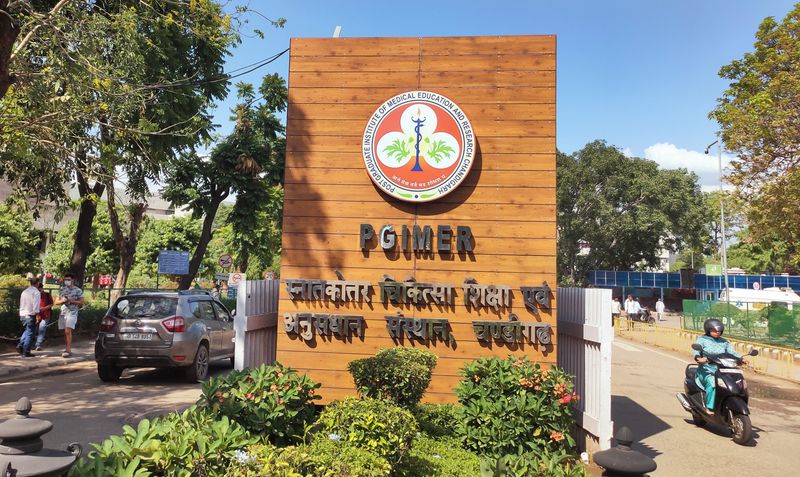
PGIMER Chandigarh allocated ₹2,504.65 crore in 2026–27 budget to expand infrastructure, critical care, and research facilities (Photo: File)
Chandigarh: The Post Graduate Institute of Medical Education and Research (PGIMER) in Chandigarh has received an allocation of ₹2559.65 crore in the Union Budget 2026–27, marking a 4.4% increase over the previous year's ₹2400 crore. This allocation meets the institute's projected requirement, reflecting the Centre's commitment to strengthening tertiary healthcare infrastructure in the region.
Ravinder Singh, IAAS, Financial Advisor-cum-Chief Accountant at PGIMER, stated that the allocation would facilitate the procurement of advanced machinery and meet other institutional requirements. He added that if additional funds are needed during the year, the institute would submit a revised estimate to the ministry, confident that the demand would be addressed as required.
The enhanced allocation is expected to support new projects, upgrade critical care services, and improve research and teaching facilities. With departments frequently operating at full capacity, additional funds could help ease pressure on emergency wards and outpatient services while enabling faster rollout of planned expansions.
Healthcare observers say the increase, though moderate, is significant because it aligns closely with the institute's assessed needs. Crossing the ₹2500 crore threshold signals policy recognition of PGI’s national importance and its role in providing advanced yet affordable treatment.
The institute was allocated ₹2225 crore in the 2023 to 24 financial cycle. This was followed by a significant jump to ₹2400 crore in 2024 to 25, signalling stronger investment amid increasing patient load and expansion requirements.
In the subsequent year, the allocation rose marginally to ₹2417.86 crore, indicating financial stability while ongoing infrastructure projects gathered pace within the campus.
For 2026 to 27, the budget has climbed further to ₹2559.65 crore, the highest allocation so far. The increase of nearly ₹87 crore over the previous year translates to about 4.4%, and importantly pushes the institute beyond the ₹2500 crore mark that it had been seeking.
The upward trajectory highlights the Centre’s recognition of PGI’s expanding role as a tertiary care referral hub for northern India. The gradual but sustained increase also suggests a shift from incremental support to capacity building, especially at a time when new speciality blocks and advanced treatment facilities are nearing completion.
The focus will now shift to utilization, as timely deployment of funds will determine how quickly patients experience tangible benefits such as reduced waiting time, improved diagnostics, and stronger super-speciality care. The latest budget thus places PGI on firmer financial ground as it prepares to handle growing healthcare demands in the years ahead.
In addition to the budgetary boost, PGIMER is nearing completion of two major infrastructure projects: the Advanced Neurosciences Centre and the Advanced Mother and Childcare Centre. The Advanced Neurosciences Centre, a ₹490 crore project with a 300-bed capacity, includes 10 modular operating theatres, dedicated ICUs, and specialized facilities for complex neurosurgical procedures. The outpatient department is expected to become operational by Septmeber 2025.
The Advanced Mother and Childcare Centre, with an estimated cost of ₹485 crore, comprises six floors housing 300 beds for obstetrics and neonatal care, including a Level 3 neonatal intensive care unit (NICU), six modular operation theaters, and a human milk bank. The construction is expected to be completed by May 31, 2026.
