PM Modi to visit China amid changing global dynamics, aiming to strengthen bilateral ties and address regional and international cooperation challenges.
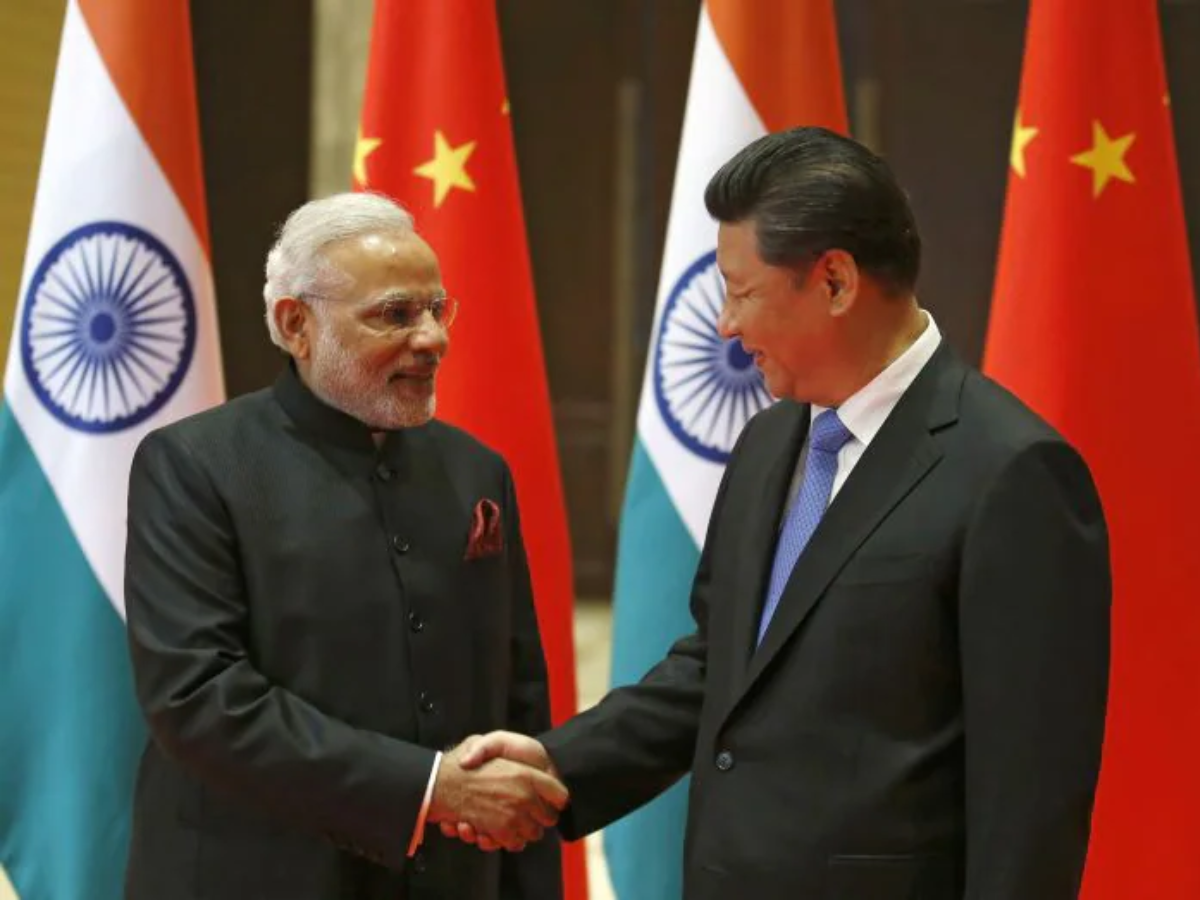
Prime Minister Modi prepares for a significant visit to China, highlighting efforts to enhance bilateral relations amid global shifts
New Delhi: Prime Minister Narendra Modi will travel to China from 31 August to 1 September to attend the Shanghai Cooperation Organisation (SCO) Heads of State Summit in Tianjin, marking his first visit to China since the 2020 Galwan Valley clashes that triggered a deep freeze in bilateral ties apart from accelerating India’s strategic alignment with the United States, as India sought to counterbalance China’s aggression.
This visit comes at a time when India–China relations are gradually normalizing, following more than four years of military and diplomatic strain. The turning point came during the October 2024 BRICS summit in Kazan, where Modi and Chinese President Xi Jinping agreed to a complete disengagement from all friction points along the Line of Actual Control (LAC). This led to the October 21 agreement on restoring pre-2020 patrolling norms in Depsang and Demchok, including resumed grazing rights and military withdrawal.
Since then, both sides have cautiously resumed structured engagement, with steps such as the resumption of the Kailash Mansarovar Yatra, visa reinstatement for Chinese nationals, and renewed backchannel dialogue on investment rules and supply chain frameworks.
According to officials familiar with summit preparations, the visit “may help lay the groundwork for a mutual economic calibration between India and China,” aimed at addressing long-standing concerns over trade imbalance, market access, and investment safeguards. While no immediate announcements are expected at the SCO summit itself, officials say structured dialogue may follow in the near future.
This comes against the backdrop of record-high bilateral trade, which continues despite geopolitical frictions. India imported $113.5 billion worth of goods from China in FY2024–25, while exporting just $14.3 billion, resulting in a massive trade deficit of $99.2 billion, driven primarily by a surge in Chinese electronics, solar cells, and battery imports. In March 2025 alone, India’s imports from China jumped over 25% year-on-year to $9.7 billion, while exports to China fell by 14.5%.
This economic asymmetry has heightened calls within India’s strategic establishment for a more balanced and regulated trade framework, possibly involving local production mandates, market share caps in sensitive sectors, and national security vetting of FDI proposals.
Adding to the complexity, the summit takes place even as the U.S., under President Donald Trump, adopts an increasingly adversarial stance toward India. Trump recently clubbed India together with China and Russia in a social media post while announcing steep tariffs on Indian goods, despite temporarily pausing hikes for certain partners. Indian officials view this rhetoric as “deeply unhelpful” at a time when New Delhi is managing multiple global partnerships.
It is also expected that Beijing may use this visit to subtly de-hyphenate its relationship with India from that of Pakistan, reflecting a recalibrated regional approach. This is particularly significant given that China offered vocal and material backing to Pakistan during Operation Sindoor, while Washington maintained a studied distance—something that has not gone unnoticed in Indian strategic circles.
As reported by this newspaper in its March 2025 , “Mutual Need Doctrine: Why India holds the cards with China and the US,” India’s position as one of the world’s largest consumer markets gives it unprecedented leverage over both Beijing and Washington. With China facing slowing growth and overcapacity, and the U.S. tech sector betting heavily on India’s digital economy, New Delhi is uniquely placed to demand new terms of engagement, rather than passively receiving them.
The piece had argued that inviting Chinese capital under a tightly regulated regime—with local sourcing requirements, market dominance thresholds, and profit reinvestment mandates—could address job creation needs while reducing import dependence. At the same time, such an approach would safeguard India from overexposure to any one power bloc apart from giving Beijing access to worlds biggest market with hunger and capacity for consumption.
With External Affairs Minister S. Jaishankar and Defence Minister Rajnath Singh having already laid groundwork through recent SCO ministerial meetings in June, the Prime Minister’s presence in Tianjin is being viewed as more than symbolic. It signals India’s intent to engage, but on sovereign terms, with clarity and caution.
